Delhi Chief Minister Rekha Gupta has stated that her administration requires at least 27 months to address the national capital's severe air pollution crisis, a problem she attributes to a backlog of 27 years. Her comments came in direct response to a series of escalating public protests demanding urgent government action against what demonstrators are calling an "air emergency."
Government Response to Rising Public Anger
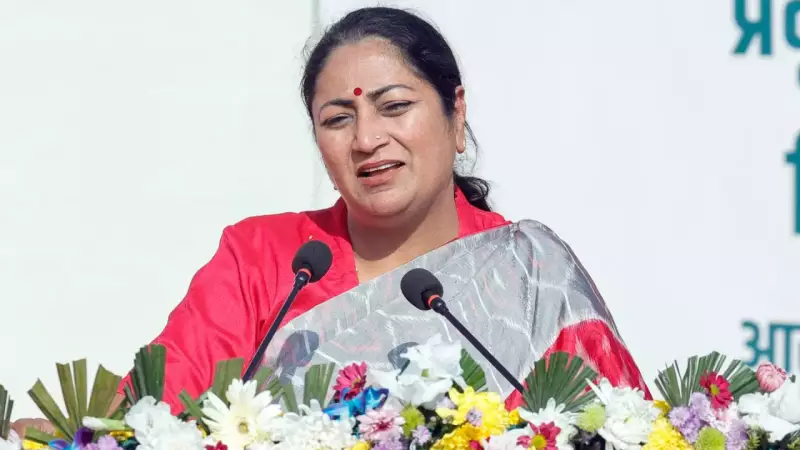
Speaking at an event in Delhi's Pitampura area on Sunday, CM Gupta countered the protesters gathering at India Gate and other locations. "Those who make big statements and protest at India Gate… pollution is not something that appeared today, it has been a problem for years," she said. The Chief Minister pointedly questioned the role of previous governments and the protesters themselves, asking where they were in prior years. "This is a backlog of 27 years. The government needs at least 27 months to clear the backlog of 27 years," Gupta asserted, setting a clear timeline for her administration's planned efforts.
Protests Highlight Health Crisis and Lead to Detentions
The political statement followed intense demonstrations across the city, including a significant gathering at India Gate termed a "clean air protest." The protests turned deeply symbolic and emotional, with some women bringing their children who carried nebulisers and medical prescriptions. These were used as stark reminders of the direct health impact of Delhi's toxic smog on the most vulnerable.

The situation escalated when police detained at least 15 individuals connected to the protests. A senior police officer reported that the group had refused official orders to disperse and allegedly used pepper spray on personnel, which led to a brief scuffle.
November Emerges as One of the Worst Polluted Months
Meanwhile, data reveals the alarming scale of the crisis that triggered the public outcry. November has been one of the most polluted months in recent years for the entire Delhi-National Capital Region (NCR). A report highlighted that all of India's top 10 most polluted cities were located in this region, with Ghaziabad ranking as the worst and Delhi itself placed fourth.
According to the Centre for Research on Energy and Clean Air (CREA), except for Bahadurgarh in Haryana, none of these cities recorded a single day of clean air throughout the month. The findings underscore how pollution in the NCR is interconnected, with emissions in one urban centre negatively affecting air quality across the entire region.
The capital's air quality metrics were particularly dire. Delhi recorded a monthly average PM2.5 concentration of 215 micrograms per cubic metre (µg/m³), which is double the October average of 107 µg/m³. The city endured 23 days categorized as 'very poor' and six days as 'severe,' starkly illustrating the intensity of the winter smog cycle and the profound challenge facing the government and residents alike.