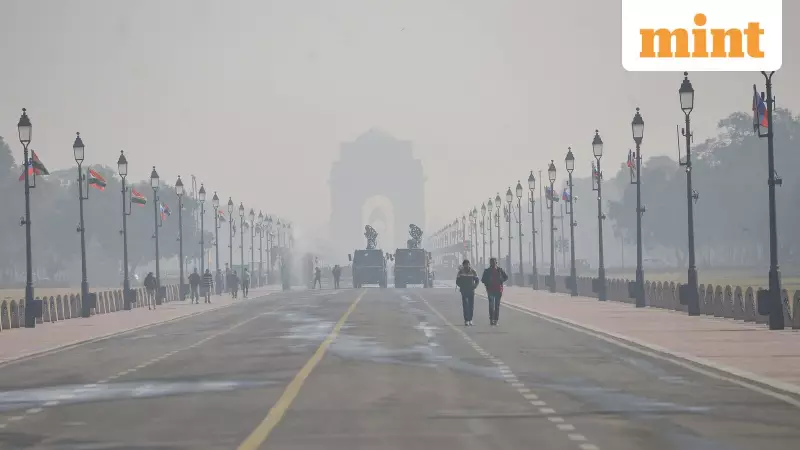
Delhi's air quality crisis persisted over the weekend, with pollution levels firmly entrenched in the 'very poor' category across the national capital. Data from monitoring stations painted a grim picture, prompting the city government to announce the formation of a high-level expert body to tackle the perennial problem.
Stations Report Dangerous Air Quality Levels
According to data sourced from the Central Pollution Control Board's (CPCB) Sameer application, a significant majority of monitoring stations recorded hazardous air. On Saturday evening, 31 out of 40 stations were in the 'very poor' band. The situation was particularly severe in areas like Nehru Nagar, which reported an Air Quality Index (AQI) of 369.
Further data reported by PTI indicated that the count of stations in the 'very poor' category rose to 36. The worst-affected location was Mundka, where the AQI soared to a alarming level of 387.

A Week of Fluctuating and High Pollution
The air quality in Delhi has shown sharp fluctuations throughout the past week, consistently remaining in the unhealthy zone. The city recorded an AQI of 279 last Sunday, which worsened to 304 on Monday. Pollution peaked on Tuesday with an AQI of 372. While there was a slight improvement to 342 on Wednesday, the levels climbed back up, registering 304 on Thursday and 327 on Friday.
Delhi Government's Response: A New Expert Group
In response to the deteriorating environmental conditions, the Delhi government has constituted an expert group focused on air pollution mitigation. An official told PTI that this panel will be responsible for providing evidence-based guidance on the prevention, control, and long-term management of air quality in the city.
The primary purpose of this expert body is to advise the government on necessary sector-specific interventions, evaluate emerging technologies, and recommend policy reforms. The group aims to address pollution stemming from both human activities and natural factors.
Functioning as a high-level advisory panel, it will guide, evaluate, and strengthen Delhi's overall air quality management strategy. Its mandate includes:
- Providing independent, science-based, and actionable advice to mitigate air pollution.
- Recommending both short-term emergency responses and long-term structural reforms.
- Actively monitoring and reviewing pollution control programs run by various departments.
- Suggesting policy measures aligned with global best practices based on its assessments.
The expert group has been formed for an initial period of six months and has been directed to meet at least once every month, either in person or virtually. The government retains the authority to extend its tenure or modify its composition as required.