Warning: This article contains discussion of cancer which some readers may find distressing.
A Father's Candid Account of Silent Cancer Symptoms
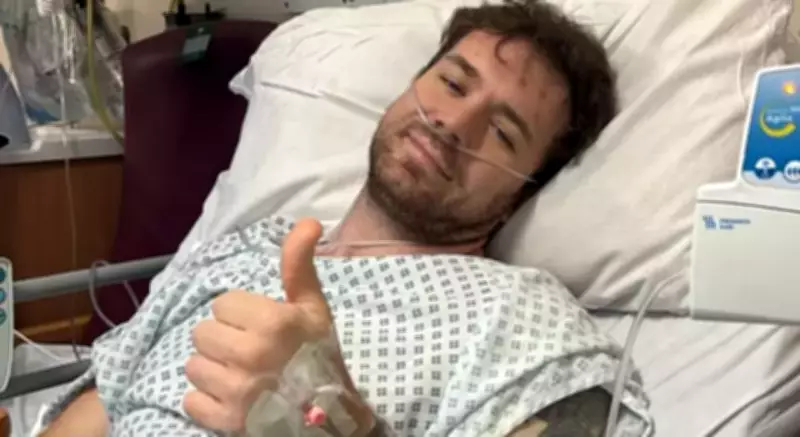
A father-of-three who received a stage two bowel cancer diagnosis at just 31 years old has opened up about the early warning signs he initially overlooked, describing the disease as "great, big and ominous" precisely because of how quietly it developed. Chris Kirt, a cloud engineer from Northamptonshire, was training regularly at the gym and considered himself fit and healthy when he first noticed something was wrong during the summer of 2024.
The Symptoms He Initially Brushed Aside
The first indication was blood after using the toilet. "It was the tiniest bit. It was so insignificant, but it never happened to me before," Chris revealed in an interview. "You Google it, right? You talk yourself out of it. So I didn't go to doctors." Over the subsequent weeks, the bleeding persisted and intensified. "It was almost like what a woman would typically lose on her period. It was kind of that sort of bleeding," he explained.

When he finally consulted his GP, initial investigations provided reassurance rather than clarity. "They originally did a full blood test, and it all came back normal," Chris recalled. "They just said it would be piles. But I said, 'I'm not satisfied with what you're telling me because you've not seen or felt what's causing the bleeding'." He was then given a FIT test, a faecal immunochemical test used to detect traces of blood in stool, which ultimately led to further medical referral.
The Life-Altering Diagnosis
Around this same period, Chris traveled to Rome to propose to his partner. "I proposed to her on day one of getting there in the evening, and it was amazing. She said, 'Yes'," he shared. The following day, his symptoms escalated dramatically. "We're drinking heavy. I don't really drink. I'm drinking heavy and things. And the next day, I'm just losing a tremendous amount of blood. My stools were basically just black and full of red blood."
Back in the United Kingdom, a colonoscopy confirmed Chris's worst fears the moment he saw the screen. "And I just saw this great, big, ominous tumour, which was just awful looking," he said. "As soon as I saw it, I panicked. I tried to get up, and I said 'that's cancer'." Medical professionals informed him they were "99 percent sure this is cancer," pending biopsy results.
Breaking the news to his partner proved devastating. "So I walk into this waiting room and I just shook my head, and she just broke down," Chris recounted. "To add to all this, we had just had a little girl who was three months old at the time, and I got two other kids." The diagnosis shocked his wife and three young children, adding profound emotional strain to an already stressful period.
Treatment, Recovery and the Vital Warning He Now Shares
Chris was scheduled for surgery in November 2024, though his first operation was cancelled when his surgeon fell ill. He later underwent robotic surgery to remove the tumour. "They took a third of my bowel out and stitched it together," he explained. "I have had no issues toileting afterwards. It's actually better than what it was." By December, he received the welcome news that the cancer had not spread and that he was in remission. "The very end of it all was the cancer had not spread. It had not spread anywhere else. So I'm good. I'm in remission."
Now aged 33, Chris is leveraging his experience to raise awareness about what he terms bowel cancer's "silent" symptoms, signs he believes are too frequently minimised, particularly among younger patients. Reflecting back, Chris can identify a pattern of symptoms that only became meaningful following his diagnosis.
The initial symptom he properly noticed was night sweats. He began waking drenched, not merely overheated but completely soaked through. "I'd wake up soaked from head to toe like I'd been in a swimming pool," he said, remembering how the bed itself would be wet. At that time, he didn't connect it to anything serious.

Fatigue followed closely. After work, he would sit down on the sofa and fall asleep almost immediately. "I'd get in, sit on the sofa, and I'd just knock out," he described. For someone who trained regularly and considered himself fit, the exhaustion felt abnormal, though not alarming enough to prompt immediate action. "That wasn't normal," he reflected later. "That was chronic fatigue."
His bowel habits were also changing in ways that were easy to rationalise away. He never felt completely empty after using the toilet and noticed his stools fluctuating dramatically, sometimes soft and almost melted, other times hard, fragmented and painful. This inconsistency was uncomfortable and persistent.
Then there was the bleeding. Initially, it appeared bright red. Later, it became darker and more concerning. He now understands that blood in stool can present differently depending on where the bleeding originates, but at the time, it was merely another symptom he hoped had a simpler explanation.
One particular episode remains vivid. Before his diagnosis, Chris experienced sudden, severe abdominal pain that radiated into his chest. "I thought I was having a heart attack," he said. He called emergency services, convinced something catastrophic was occurring. Only later did he suspect it might have been caused by a partial blockage in his bowel.
According to the NHS and Bowel Cancer UK, symptoms such as persistent bleeding, unexplained fatigue, night sweats, abdominal pain and changes in bowel habits should always be medically evaluated, even though they can overlap with conditions like irritable bowel syndrome or haemorrhoids.
Chris now shares his story on social media platforms and has launched a cancer preparation kit designed to help individuals advocate for themselves during GP appointments. "I think the biggest thing is mentioning how silent this thing is," he emphasised. "You've gotta be aware of your symptoms."
Since completing treatment, he has transformed his lifestyle. "I run more. I eat better. I quit red meat. I don't smoke. Don't drink. I don't vape," he stated. "I quit all of that because I'm constantly worried that it's gonna come back." His message is not one of fear, but of vigilance, especially for younger people who might assume cancer is something that occurs later in life, or happens to someone else.