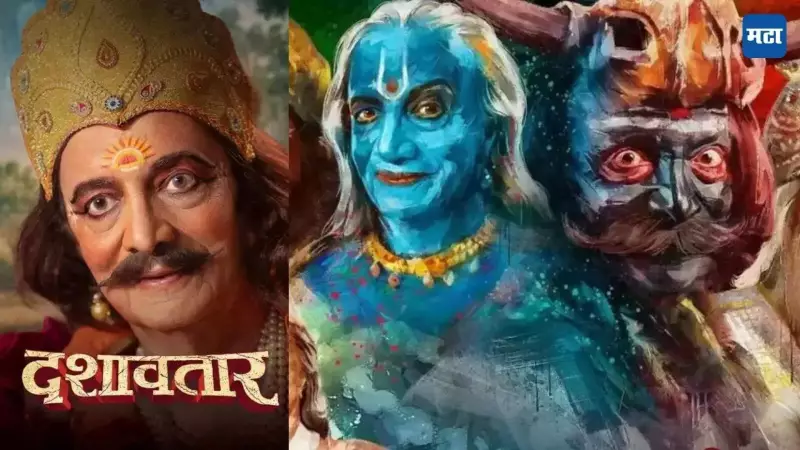
The Marathi film industry has witnessed a remarkable success story with director Subodh Khanolkar's socio-thriller drama 'Dashavatar'. Starring veteran actor Dilip Prabhavalkar, the film, made on a modest budget of ₹5 crore, has turned into a box office juggernaut. Released in Marathi on September 12, 2026, it went on to earn an astounding ₹25 to 28 crore worldwide, crowning it the year's most profitable Marathi project.
From Marathi Blockbuster to Pan-India Experiment
Encouraged by the overwhelming response, the film's makers embarked on a unique experiment. On December 12, 2026, they released a Malayalam-dubbed version of 'Dashavatar'. Early reports suggest the film is receiving an equally enthusiastic reception in the southern states. Social media platforms are abuzz with praise, with audiences lauding the powerful performances, compelling storyline, and assured direction that offers a rich cinematic experience.
Director's Vision: A Story Beyond Language
In an exclusive conversation with ETimes, the film's director, Subodh Khanolkar, shared his elation and the thought process behind the multilingual release. He revealed that the core intention while making 'Dashavatar' was to create a universal story, not one confined by language.

"We firmly believed that if a film has a strong visual language, emotions that resonate universally, and a theme that speaks to everyone, it can connect with audiences across languages," Khanolkar stated. The global success of the Marathi version confirmed this belief, as the film performed well not just in Maharashtra but internationally.
The director explained that a strong demand emerged for the film in other languages. Treating it as a learning experience, the team decided to dub the film into Malayalam. They collaborated with native Malayalam-speaking artists for authentic dubbing and even recreated the songs in Malayalam, which were reportedly very well-received. The Malayalam version has been released on a limited scale.
Breaking New Ground for Marathi Cinema
An elated Khanolkar highlighted the significance of this move. He noted that the response from audiences and critics has been immensely encouraging, with active engagement on social media platforms like Twitter, Instagram, and Facebook.
"This is perhaps the first time that a Marathi film has been independently released in the Malayalam language," he added. Khanolkar emphasized that this was a conscious attempt to expand the horizons of Marathi cinema and help Marathi-language stories reach audiences beyond traditional linguistic boundaries.
The journey of 'Dashavatar' from a modestly-budgeted Marathi film to a pan-India phenomenon underscores a growing trend of content transcending regional limits, powered by strong storytelling and a director's visionary approach.