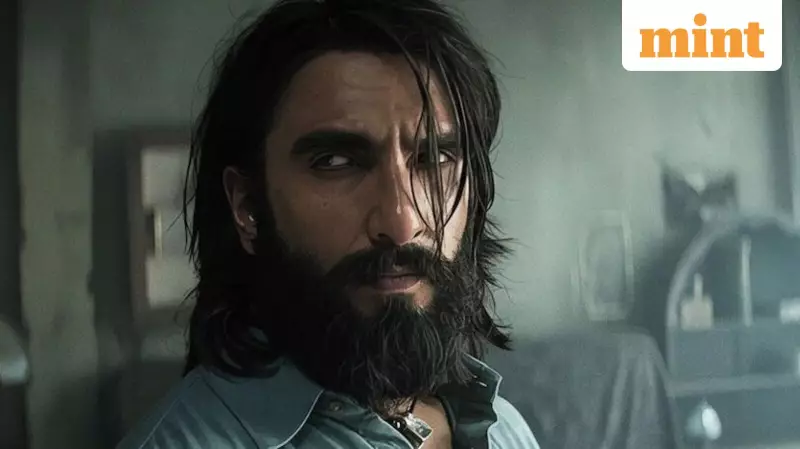
The massive success of Ranveer Singh's action spectacle Dhurandhar, which has stormed past ₹538 crore at the Indian box office, has set the stage for its sequel due in March 2026. This triumph has reignited a crucial debate within the Hindi film industry: is the strategy of producing and releasing two-part film franchises a guaranteed path to box office glory, or a high-risk gamble that often backfires?
The Allure of the Two-Part Franchise Formula
For big-budget Hindi cinema, the financial model is increasingly leaning on the potential of a successful first film to bankroll and guarantee a profitable sequel. The makers of Dhurandhar, who reportedly invested around ₹300 crore into shooting both installments together, are poised to reap significant benefits by capitalizing on the fresh buzz of the first film's success. This approach, where much of the material for two films is shot concurrently, aims to economize on marketing and production costs while leveraging established brand value and audience familiarity.
Rahul Puri, Managing Director of Mukta Arts, explains the core principle: "The second part always benefits from the success of the first, but the basic idea is that the story has to lend itself to a franchise where more than one film can be shot together or released in quick succession." He adds that this strategy helps create an expansive world for the film, even if both parts aren't identical in scale. He cites the example of the 2015 film Baby (₹95 crore), which led to the smaller spin-off Naam Shabana (₹36 crore).

A Track Record of Mixed Results
However, the formula has delivered inconsistent outcomes. While the epic Baahubali duology shattered records and justified its ₹400 crore plus budget, other ambitious plans have stalled. The sequels to Ranbir Kapoor's Brahmastra have not moved forward because the first part's returns were not deemed sufficiently profitable. Similarly, a planned sequel to John Abraham's Attack was shelved.
Yusuf Shaikh of Janta Cinema highlights the dependency on the first film's performance: "Many abandon the idea of future instalments if the first film doesn’t do well. The whole energy is depleted... The economics may work if you have a lot of material... but it only makes sense if the first is successful." He notes, however, that a hit first film makes pre-release sales for OTT and satellite rights for a sequel far easier.
Currently, the makers of the sci-fi epic Kalki 2898 AD, made on a colossal ₹600 crore budget with its Hindi version earning nearly ₹300 crore, are assembling a second part, portions of which were already shot.
The Reality Check for Bollywood's Sequel Spree
The industry is currently facing a sobering reality check. With nearly 50 sequels lined up for release between 2025 and 2026, many not shot back-to-back, the tactic of cashing in on brand value without robust writing and planning is proving ineffective. Recent underperformers like Dhadak 2, Son of Sardaar 2, War 2, Andaaz 2, and Baaghi 4 clearly indicate that audiences are discerning and will not automatically support a sequel.
Film trade expert Girish Johar agrees that the two-part model is seen as a way to draw audiences back to cinemas with a familiar brand. "But it is equally possible for the move to backfire. If the story doesn’t lend itself to a franchise, viewers will not come," he cautions.
In conclusion, while Dhurandhar's success story fuels optimism, the Bollywood two-part film strategy remains a double-edged sword. Its success is inextricably linked to a powerful first chapter and a narrative truly worthy of expansion, proving that in the quest for box office gold, there is no substitute for a compelling story.