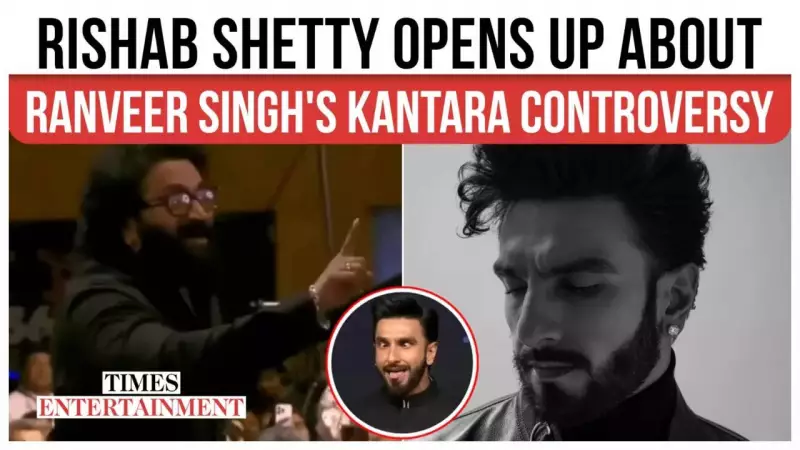
A recent public appearance by Bollywood star Ranveer Singh has ignited a major controversy, leading to police complaints and a heated debate about cultural appropriation and respect. The incident occurred during the International Film Festival of India (IFFI) in Goa, where Singh's on-stage act imitating a sacred sequence from the blockbuster film 'Kantara' was met with severe backlash.
The Stage Act That Sparked Nationwide Outrage
During an event at IFFI Goa, Ranveer Singh performed an impromptu imitation of the powerful and spiritually significant 'Daiva' possession sequence from the hit Kannada film 'Kantara'. This sequence, originally portrayed by the film's director-actor Rishab Shetty, is deeply rooted in the traditional Bhoota Kola ritual of the Tulu Nadu region. For many communities, it is not merely a cinematic scene but a sacred representation of their faith and cultural heritage. The viral video of Singh's performance, which many perceived as casual and disrespectful, quickly spread across social media platforms, drawing immediate criticism.
Legal Repercussions and the Actor's Apology
The public outcry translated into tangible legal action. Multiple First Information Reports (FIRs) were filed against Ranveer Singh by individuals and groups who found his act offensive and insulting to their religious sentiments. Facing mounting pressure and a growing wave of criticism from various quarters, the actor issued a formal public apology. In his statement, Singh expressed regret for any hurt caused, clarifying that his intention was never to disrespect any culture or tradition, but to pay homage to a powerful cinematic moment.

Rishab Shetty's Response and the Bigger Cultural Conversation
The creator of 'Kantara', Rishab Shetty, also responded to the escalating situation. While Shetty acknowledged the homage, he subtly emphasized the profound cultural and spiritual weight the Daiva sequence carries beyond its cinematic value. This incident has sparked a broader debate that extends far beyond a single film or performance. It has forced a conversation about the fine line between artistic appreciation and cultural appropriation, especially when dealing with indigenous traditions that are integral to the identity of a community. The controversy highlights the need for greater sensitivity and understanding when portraying or referencing deeply held cultural practices, even in celebratory contexts.
This episode serves as a stark reminder that in a culturally diverse nation like India, artistic expression must be balanced with respect for local traditions and beliefs. The debate continues even as another major film, 'Dhurandhar', dominates the box office, proving that discussions on cultural representation remain at the forefront of the national discourse.