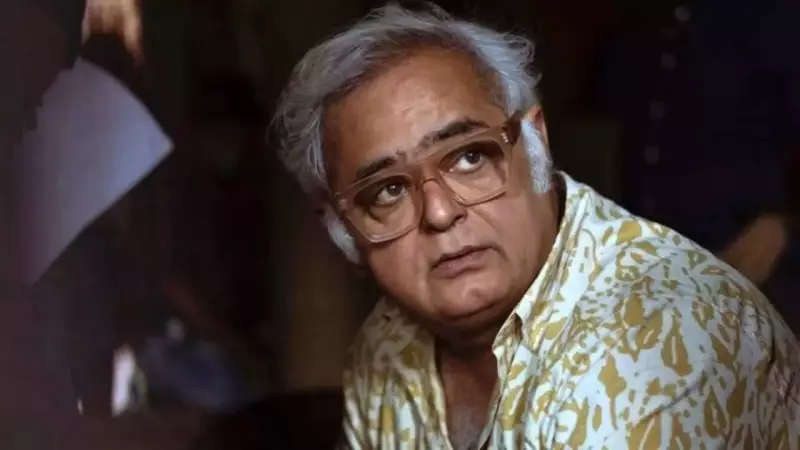
Renowned filmmaker Hansal Mehta, celebrated for his hard-hitting and socially conscious cinema, recently opened up about the significant challenges he faced with the Central Board of Film Certification (CBFC) during the making of his 2017 film 'Omerta'. The film, a brutal biopic of British terrorist of Pakistani origin Ahmed Omar Saeed Sheikh, ran into major objections from the censor board over a particularly provocative sequence.
The Scene That Sparked a Major Controversy
In a candid interview, Mehta recalled the specific moment that triggered intense scrutiny. The scene is set inside an Indian prison on Independence Day. As the National Anthem plays and the tricolour is hoisted, all inmates stand in respect. However, the protagonist Omar Saeed Sheikh, imprisoned for his crimes, remains inside his cell and deliberately urinates, showing blatant disrespect.
"He’s in jail; it’s Independence Day… the National Anthem is playing. And this guy has taken off his pants and is peeing in his cell," Mehta explained, describing the visual. The filmmaker's artistic intent was to portray the character's deep-seated hatred and angst against the Indian state. He argued to the board that the scene was a powerful depiction of the antagonist's mindset, but the CBFC remained unconvinced.

CBFC's Firm Stand and the Road to the Revising Committee
The CBFC's objection was strong and unambiguous. The board firmly told Mehta, "You can’t do that over the National Anthem." Despite Mehta's defence that the act was meant to highlight the anti-India sentiments of a Pakistani terrorist, the officials refused to clear the scene in its original form. This stalemate led to the film being referred to the revising committee, a move that filled the director with anxiety.
This stage was described as highly stressful by Mehta, as the entire project risked facing severe cuts or even more restrictive certifications that could have diluted its narrative impact. The fate of his uncompromising vision hung in the balance.
An Unlikely Ally: Vivek Agnihotri's Crucial Support
In a surprising revelation, Hansal Mehta shared that he found a staunch defender within the CBFC itself. He credited filmmaker Vivek Agnihotri, who was a member of the censor board at that time, for being the film's most vocal advocate. "The man who fought the most for the film, not to get it cut, was Vivek Agnihotri," Mehta stated.
According to Mehta, Agnihotri's understanding of cinematic narrative and his support during the deliberations were instrumental in protecting 'Omerta' from heavy-handed censorship. This intervention ensured that the film retained much of its raw and unsettling power, allowing it to reach audiences as the filmmaker had intended.
'Omerta', which delves into the life of the terrorist involved in the 2002 kidnapping and murder of American journalist Daniel Pearl, was widely praised for its audacious and unflinching storytelling. This behind-the-scenes account of its tussle with certification adds another layer to the film's controversial legacy, highlighting the ongoing tensions between creative expression and regulatory frameworks in Indian cinema.