UGC's Equity Regulations Ignite Widespread Student Protests Across Uttar Pradesh
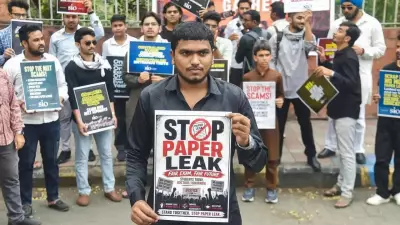
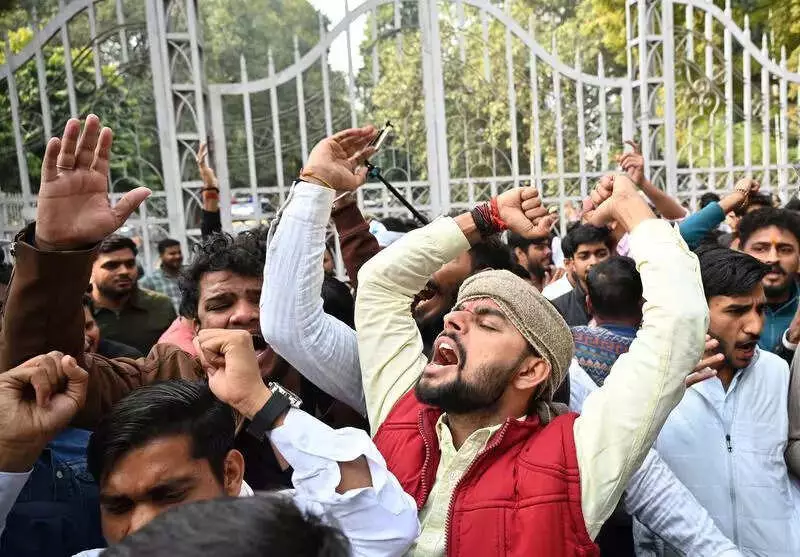
The University Grants Commission's newly introduced equity regulations in higher education have sparked massive protests by university students across multiple districts and campuses in Uttar Pradesh. On Tuesday, demonstrations erupted at various educational institutions, with students expressing strong opposition to what they term as "black laws" that could potentially create new forms of discrimination.
Lucknow University Takes Center Stage in Protest Movement
At Lucknow University, a significant number of students led by student leaders organized a protest march, raising slogans and displaying placards against the new regulations. The demonstration culminated with students submitting a memorandum to ACP Mahanagar Ankit Kumar, outlining their grievances against the UGC's directives.
"The new regulations give committees unchecked authority and offer no safeguards for students," stated LU student Jatin Shukla. "Anyone could be falsely accused and have their academic career destroyed. Instead of offering protection, these rules make students — especially those from the general category — more vulnerable. We believe in equity and fairness, but it must be transparent and just for everyone."

Another protester, Vivek Mishra, emphasized concerns about transparency and accountability. "Students fear being falsely accused. These rules must be paused, reviewed, and student voices must be heard. Equality without protection is not true equality," he stressed during the demonstration.
Protests Spread Across Multiple UP Districts
Similar protests were organized in Varanasi, Sonbhadra, Rae Bareli, Kanpur, and Pratapgarh, indicating widespread discontent among the student community. In Sonbhadra, demonstrators gathered at the Collectorate premises under the banner of 'Savarna Army,' expressing concerns that the UGC rules would exacerbate inequalities and lead to social fragmentation.
"These rules will spark division, suspicion, and misuse," said a student participant. "We are not against equity. We're against injustice being done in the name of it." The protestors clarified that their movement was not against equality principles but rather against what they perceived as ambiguity and potential misuse of the regulations.
Legal Community Joins Student Protests
In Pratapgarh, lawyers extended their support to protesting students by boycotting judicial work at the collectorate gates. They organized a protest march from the Collectorate to Ambedkar Chowk, demanding the withdrawal of the UGC regulations. Carrying banners and shouting slogans, the legal professionals criticized the rules as unconstitutional and contrary to the principles of natural justice and inclusivity.
"How can the government talk about 'Sabka Saath, Sabka Vikas' on one hand and implement rules that divide students on the other," questioned a participating lawyer, highlighting the perceived contradiction in policy implementation.
Multi-Dimensional Opposition Across the State
The protest movement took various forms across Uttar Pradesh:

- In Kanpur, the Chhatrasangh Bahali Morcha organized a protest march, with student leader Abhijeet Ray describing the regulations as "anti-student" and discriminatory
- Ghatampur witnessed joint protests by advocates and villagers against the UGC law, with participants submitting a memorandum addressed to the President demanding withdrawal
- In Unnao, office bearers of Sarv Sanatan Utthan Seva Samiti protested against the regulations
- Aligarh saw members of Rashtrawadi Chhatra Sangathan and Kshatriya Mahasabha blocking the cavalcade of Hathras BJP MP Anoop Pradhan at the district collectorate
- Sambhal's Chandausi witnessed members of Brahmin Shakti Sangh raising slogans and submitting a memorandum through district administration
- Kushinagar saw protests by Brahmin community members led by International Brahmin Organisation at district headquarters
Legal and Expert Criticism Mounts
Senior advocate Satyendra Kumar Pandey issued a strong statement calling the UGC regulations "anti-national, illegal, and socially divisive." "This rule turns education into a political experiment. It divides institutions into rigid ideological categories on the pretext of equality. It violates the spirit of equal opportunity enshrined in the Constitution and is against India's ancient values of inclusive education," Pandey asserted. He demanded immediate withdrawal of the regulations and called for comprehensive public consultation before implementing such measures.
Education expert Maulindu Mishra offered perspective on the practical aspects of teaching and evaluation. "A teacher recognises a student's abilities not only in the classroom but also during practical examinations and other activities," he explained. "Teachers never enquire about a student's caste, as their focus is solely on identifying talent and nurturing potential."
UGC Stands Firm Amid Growing Opposition
Despite the widespread protests across Uttar Pradesh, the University Grants Commission has maintained its position, asserting that the regulations will effectively curb discrimination and enhance inclusiveness in higher education institutions. However, critics argue that without proper framework, clarity, and consultation, even well-intentioned rules can create confusion, fear, and unintended consequences that undermine their original purpose.
The ongoing protests highlight the complex challenges in implementing equity measures in India's diverse higher education landscape, where concerns about implementation mechanisms, transparency, and potential misuse continue to fuel student activism across multiple districts.