Delhi's Double-Shift Schools: A System Under Scrutiny
The Delhi government has announced a phased plan to convert all double-shift schools under its jurisdiction into single-shift institutions. This decision marks a significant shift in the city's education landscape, affecting thousands of students across 284 schools currently operating with separate morning and evening shifts.
The Current Reality of Double-Shift Schools
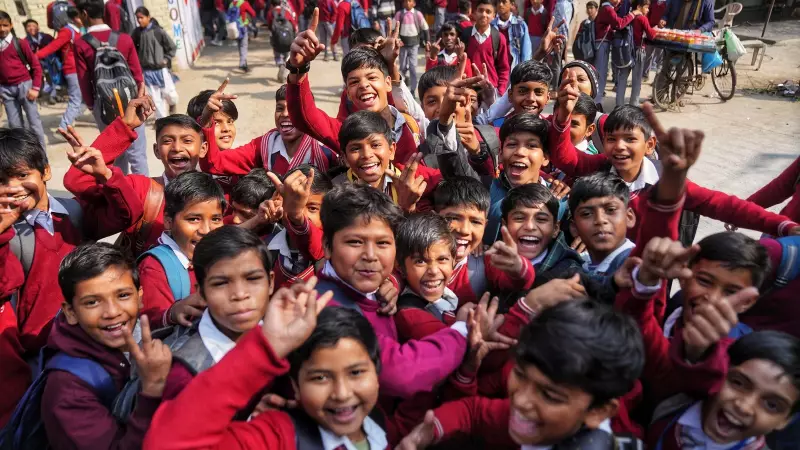
In these unique educational setups, girls typically attend classes during the morning shift from 7 am to 12:30 pm, while boys study in the evening shift from 1 pm to 6:30 pm. This system emerged as a practical solution to accommodate a burgeoning student population within limited infrastructure. Currently, Delhi has 1,086 government schools, with approximately 284 operating under this dual-shift model.
The morning shift at a typical double-shift school in Northwest Delhi accommodates around 1,800 girls, while the evening shift serves about 1,200 boys. These schools share infrastructure but maintain separate administrative staff and teaching faculty. The conversion to double-shift schools often occurred due to overcrowding, as was the case with one Northwest Delhi school that transitioned from a single-shift co-educational institution in 2023.

Student Perspectives: Advantages and Challenges
Students have mixed reactions to the double-shift system. For some like Harsh, a 16-year-old who runs an egg stall after school, the evening shift proves convenient. "I prefer the evening shift. My work ends late at night, so in the morning I cannot open my eyes," he explains. His daily routine involves working until 1 am and waking at 8:30 am, making afternoon classes more suitable.
However, other students express concerns about the extended school day. Abhishek, a 14-year-old student, voices a common complaint: "I do not want to stay in school till evening. I get tired and cannot concentrate." This sentiment echoes among many evening-shift students who report fatigue affecting their learning capacity.
Akhilesh, a 16-year-old student in East Delhi, highlights how the shift system has altered his daily life. "The whole day goes in school, then coaching. There's no time to play or to learn anything new like guitar lessons or sports," he says, describing the packed schedule that leaves little room for extracurricular activities.
Academic Performance and Attendance Disparities
Data reveals significant differences between morning and evening shifts. Attendance in morning shifts typically ranges between 75-80%, while evening shift attendance drops to around 70%. Teachers attribute this gap to many boys working part-time jobs to support their families, causing them to miss classes regularly.
Academic performance metrics further highlight these disparities. In 2024, the Class XII pass percentage for morning shifts stood at 96.96%, compared to 95.33% for evening shifts. The Quality Index, which measures the quality of marks rather than just pass percentages, showed 312.63 for morning shifts versus 296.20 for evening shifts in the same year.
Teachers report additional challenges in evening shifts, including issues with discipline, substance abuse, and violence. One principal observes, "Such problems would not occur in a single-shift co-ed school. Boys are more disciplined when they study with girls."
Teacher Deployment and Infrastructure Challenges
The double-shift system creates complex staffing arrangements. In one East Delhi school, the girls' morning shift faces teacher shortages, with 392 students in Classes I to V handled by just nine teachers - a ratio of nearly 44:1, well above the prescribed norm of 30:1. Meanwhile, the boys' evening shift maintains more balanced ratios of approximately 32:1.
Despite better teacher-student ratios in some evening shifts, educators report that "fatigue, lower attentiveness" and disrupted routines continue to affect classroom engagement and learning outcomes.

Government Plans and Implementation Challenges
Delhi Education Minister Ashish Sood explains the government's approach: "At present, 70 blocks of land have been identified, of which 50 are free from all encumbrances. Very soon, we will start construction on these sites." He acknowledges the challenge of land availability in high-density areas while criticizing previous administrations for not making serious efforts to acquire land for new school construction.
A Directorate of Education official provides context on the gradual transition: "On average, about five schools have been converted into single-shift schools every year in the past decade. This is done by merging two double-shift schools and making them two single-shift schools."
Expert Opinions on the Transition
Education experts offer nuanced perspectives on the planned phase-out. Ameeta Mulla Wattal, chairperson of DLF Schools, cautions that "a sudden withdrawal of evening shifts without alternatives could push a section of working children out of the system altogether." She acknowledges that while evening shifts prevent children from dropping out completely, they create a "strange sense of low self-esteem" among students who feel they're studying in leftover spaces.
Latika Gupta, Assistant Professor at the Department of Education, University of Delhi, emphasizes the need for thoughtful planning: "If the government is serious about its target, it must rethink school construction. If there are more children, what kind of buildings should we design? Nobody has thought seriously."
Parent Perspectives and Practical Considerations
For some families, the evening shift offers practical benefits. Om Prakash Singhal, who cycles across East Delhi supplying goods to shops, finds the evening shift preferable for his son: "Travelling very early is difficult, especially in winter. The evening shift is better." However, this convenience comes with reshaped family responsibilities, as his wife must drop off and pick up their son daily due to safety concerns.
The transition from double-shift to single-shift schools represents more than just a scheduling change - it involves addressing complex issues of infrastructure, student welfare, academic quality, and social dynamics. As Delhi moves forward with this ambitious plan, balancing practical realities with educational ideals will remain a central challenge for policymakers, educators, and families alike.