Massive Educational Fraud Uncovered: University Accused of Duping Students
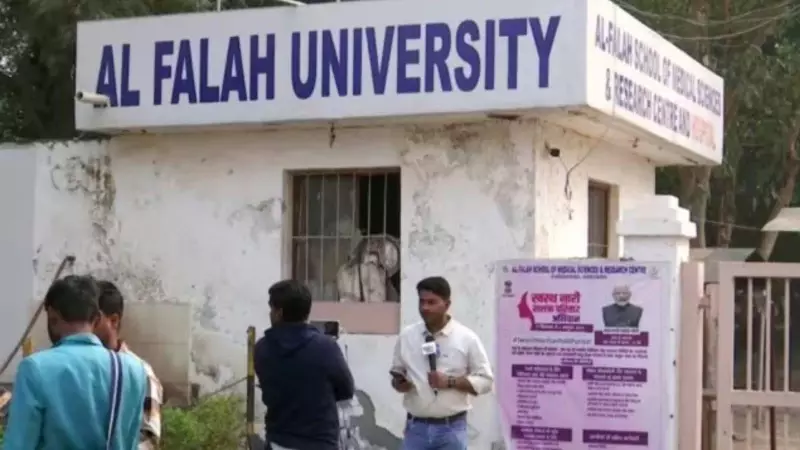
The Enforcement Directorate (ED) has made shocking revelations about Al Falah University, alleging the institution generated Rs 415.10 crore in illegal proceeds by deceiving students with false accreditation claims. The central probe agency presented these findings before a Delhi court on Tuesday night, leading to the arrest of the university's chairman and founder, Jawad Ahmed Siddiqui.
Court Grants Extended Custody for Investigation
In a late-night hearing that concluded at 1 am on November 19, Additional Sessions Judge Sheetal Chaudhary Pradhan of Saket Court granted the ED 13-day custody of Jawad Ahmed Siddiqui. The court noted the gravity of the offense and the early stage of investigation while approving the extended remand period. Siddiqui was arrested on Tuesday evening following coordinated searches at 25 locations connected to the Al Falah group across Delhi-NCR region.
False Claims and Student Exploitation
The ED, represented by Special Public Prosecutor Simon Benjamin, detailed how the university systematically misled students. Al Falah University falsely claimed NAAC accreditation and UGC recognition under Section 12(B), using these fabricated credentials to attract students and collect substantial fees. The National Assessment and Accreditation Council (NAAC) operates as an autonomous body under the University Grants Commission (UGC) to assess educational institutions.

In its remand papers, the agency emphasized the profound impact on students: Students invest their most valuable and productive years, along with their families' hard-earned finances, based on the credibility and statutory recognition of an institution. The ED highlighted that when such recognition proves false, it diminishes the value of obtained degrees, affecting eligibility for higher education, government jobs, research opportunities, and professional advancement.
Connection to Red Fort Blast Investigation
The scrutiny of Al Falah University intensified after three doctors working at the institution were identified as suspects in the November 10 Red Fort blast that claimed 12 lives. The financial investigation was initiated following a high-level meeting chaired by Union Home Minister Amit Shah, which reviewed progress in the blast case investigation. The meeting, lasting one and a half hours, directed the ED to examine the university's financial trail.
The ED's investigation builds upon two FIRs registered by the Delhi Police Crime Branch. According to the agency, Al Falah Charitable Trust, which operates the educational institutions, deliberately deceived students to accumulate the massive Rs 415 crore sum through fees and other educational receipts, all of which have been classified as proceeds of crime.
Financial Diversion and Shell Companies
Investigators have uncovered evidence suggesting that funds obtained from students were diverted for personal use. The ED stated that incriminating evidence indicates diversion of duped funds and student fees for private purposes. Various individuals have admitted that financial decisions were primarily taken by the arrested accused, Jawad Ahmed Siddiqui.
The probe has also revealed nine shell companies registered at the same address linked to the Al Falah group. These entities are currently under examination as part of the broader investigation into financial irregularities and money laundering activities.
Broader Implications and Ongoing Probe
The case highlights serious concerns about educational fraud in India and the exploitation of students' aspirations. The ED noted that the university enriched itself at the cost of students' trust, future, and legitimate expectations through these deceptive practices. The agency continues to investigate the complete financial network and money trail associated with the alleged fraud.

With Siddiqui in custody for the next 13 days, investigators aim to uncover the full extent of the financial operations and identify all individuals involved in the scheme. The case represents one of the significant educational fraud investigations in recent times, combining elements of financial crime with national security concerns.