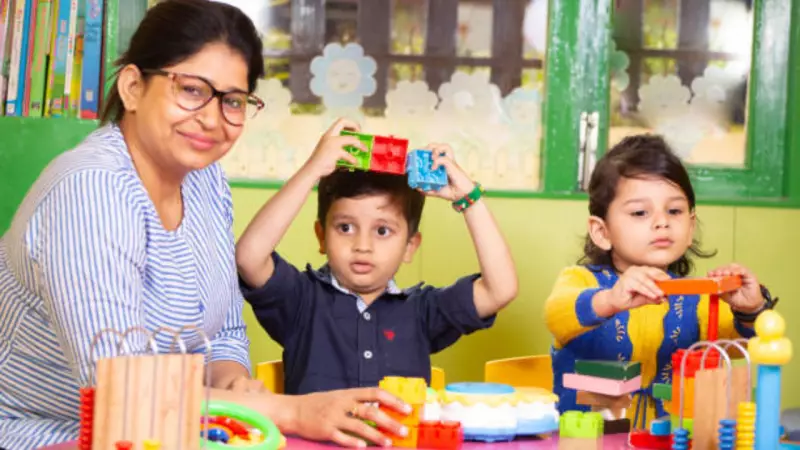
When parents begin contemplating preschool readiness, their thoughts often gravitate toward academic tools: worksheets, alphabet charts, and school supplies. The very term "preschool" carries an educational weight, naturally steering preparation in that direction. However, a truly preschool-ready home typically revolves less around formal teaching and more around the subtle, everyday functioning of the household. It's about establishing small, consistent systems rather than delivering grand lessons. Interestingly, many families already have these elements in place without even recognizing their significance.
The Home Shouldn't Mimic a Classroom
Transforming your living space into a preschool-ready environment doesn't require plastering every wall with educational charts. In reality, excessive visual clutter can overwhelm and distract young children. What proves far more crucial is creating a layout where the child can navigate freely and comprehend where items belong. Consider incorporating low shelves, a child-sized table, and easily accessible cupboards. These simple adjustments quietly foster independence and self-reliance.
Children at this developmental stage naturally imitate adults. When everyday objects are positioned at their eye level, they instinctively begin using them without constant assistance. Tasks like tidying up toys become more intuitive. Similarly, sitting quietly with a book for a few minutes each day offers substantial benefits. This approach isn't primarily about instilling discipline; it's about minimizing obstacles and making daily activities smoother. Parents frequently express concern that their home lacks sufficient educational value, yet homes are inherently rich with learning opportunities. The essential strategy is to avoid overcrowding these natural spaces with superfluous materials.

Routines Outperform Formal Lessons
Preschool life heavily depends on structure and routine, and the home environment should reflect this, even if implemented flexibly. Establishing consistent wake-up times, meals within a predictable window, and regular nap or quiet periods can significantly ease the transition. These routines need not be rigid, but their presence provides a comforting framework. Children tend to settle more quickly when they have a sense of what typically comes next.
This doesn't imply micromanaging every hour of the day. Rather, it means preventing each day from feeling entirely chaotic. Even minor anchors can make a substantial difference: breakfast following tooth-brushing, a bedtime story before sleep, or cleaning up before dinner. When children enter preschool, they are suddenly expected to adhere to a structured schedule. A child already acquainted with simple domestic routines will adapt more swiftly, requiring less explanation and experiencing reduced anxiety.
Everyday Tasks as Skill-Building Exercises
Many parents overlook how much preschool focuses on fundamental life skills rather than academic knowledge. Abilities like sitting attentively for short periods, listening to instructions, and waiting for a turn aren't cultivated through worksheets. They emerge organically from daily household participation.
Inviting children to help set the table, sort laundry by color, or carry their own water bottle might seem trivial, but these activities gradually build concentration, coordination, and a sense of responsibility. They also instill in children the understanding that they are integral contributors to the household's functioning. There's no necessity to transform these tasks into formal lessons; merely allowing the child to participate is sufficient. Constant praise isn't required either. Normalizing effort and contribution holds greater value than excessively celebrating every small achievement.
Prioritize Simple, Open-Ended Play
Modern parenting often faces pressure to invest in "smart" toys or elaborate activity kits. In truth, most young children don't require these specialized items. Open-ended play materials consistently prove more effective: building blocks, pretend kitchens, dolls, toy cars, and crayons. These are toys that don't perform actions on their own, instead relying on the child's imagination and creativity.

Preschool classrooms are fundamentally designed around this principle. Children are encouraged to imagine, collaborate, share, and solve problems during playtime. If they are already accustomed to such play at home, the preschool environment will feel familiar and less intimidating. Screen time frequently enters this discussion. The concern isn't the mere existence of screens but the proportion of time they consume. If screen-based activities entirely displace unstructured, free play, children may face greater adjustment challenges later.
Emotional Readiness: Cultivating a Sense of Security
Preschool often marks a child's first prolonged separation from home and primary caregivers. A preschool-ready home cannot eliminate separation anxiety entirely, but it can significantly mitigate it. Children who are accustomed to brief periods away from parents, interacting with other trusted adults, or engaging in independent play typically adapt more smoothly.
This doesn't imply forcing independence prematurely. It means gently permitting it: allowing a child to play alone for short intervals, letting another adult occasionally take charge, and refraining from immediately intervening to solve every minor problem. When children feel fundamentally secure and supported at home, they gain the confidence to explore and step into new environments like preschool.