Beyond Admission: UGC's 2026 Equity Guidelines Challenge India's Merit Debate
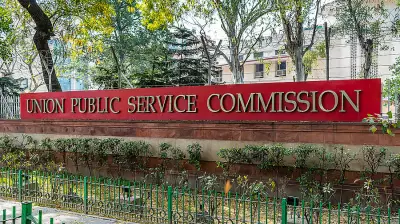
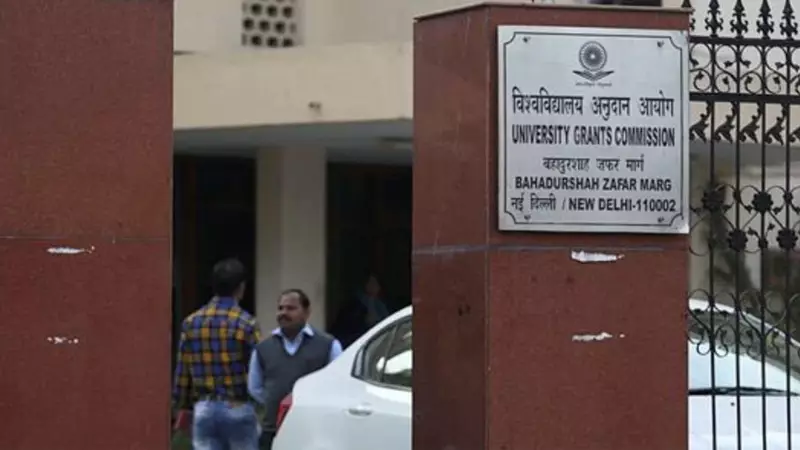
The University Grants Commission's Promotion of Equity in Higher Education Institutions Regulations, 2026 has ignited a fresh wave of discussion about what constitutes merit in an inherently unequal society. These guidelines, which supersede the 2012 version, aim to address systemic barriers that persist in India's academic institutions.
The Persistent Merit Versus Quota Divide
In many classrooms across India, a simple question about Dr. B.R. Ambedkar often reveals a troubling perception. Students frequently describe him as the figure who "took away" their "merit" through reservation policies. This sentiment underscores how the merit-versus-quota debate continues to polarize the nation, largely because society refuses to critically examine what merit truly means when starting points are fundamentally unequal.
The recent outcry over the UGC's routine regulatory revision has been particularly disheartening. What's more concerning is that these criticisms are echoed by prominent academic voices who fear these regulations might lead to discrimination against dominant caste groups. This perspective assumes potential misuse by the 85 percent comprising SC, ST, and OBC communities against the remaining 15 percent.

The Stark Reality of Underrepresentation
This viewpoint glaringly overlooks the substantial underrepresentation of these communities in higher education, both as faculty and students. Parliamentary data presents a sobering picture:
- Of 423 sanctioned professor posts for OBC category in central universities, only 84 have been filled
- For ST category, 83 percent of posts remain vacant with only 24 of 144 positions occupied
- In the SC category, 64 percent of sanctioned posts are vacant, with merely 111 of 308 positions filled
Further data tabled in the Lok Sabha in December 2023 revealed that over 13,500 students from SC, ST, and OBC categories dropped out of central universities, Indian Institutes of Technology, and Indian Institutes of Management in the preceding five years.
When Discrimination Becomes Invisible
When humiliation, excessive scrutiny, isolation, and exclusion become routine experiences, discrimination stops appearing extraordinary—it simply becomes invisible. In such environments, dropouts cannot be dismissed as individual failures but must be recognized as collective systemic failures.
The tag of "not found suitable," rising suicide cases in premier institutions like IITs, and persistent criticism of reservation policies have created an atmosphere where efforts to establish parity and equity repeatedly get derailed. This raises crucial questions about why decades of reservation have failed to achieve proportional representation and why, despite quotas, these communities remain underrepresented in media, judiciary, and other power corridors.
Equity as More Than Just Admission
Equity transcends mere admission to educational institutions. It encompasses the ability to survive the academic journey with dignity. While UGC guidelines alone cannot enforce this transformation, they serve as important moral signals that demand institutional accountability.
These regulations represent a step toward acknowledging that true merit cannot be measured in a vacuum but must be understood within the context of unequal social conditions that produce unequal opportunities. The conversation must evolve beyond simplistic merit-versus-quota binaries to address the structural barriers that prevent equitable participation in India's educational landscape.