Tactile Mathematics Laboratory Inaugurated at Pune's NFBM Jagruti School for Blind Girls
A groundbreaking tactile mathematics laboratory has been officially inaugurated at the NFBM Jagruti School for Blind Girls located in Alandi, Pune. This innovative educational facility has been established with crucial support from the MIT Academy of Engineering, Alandi, through corporate social responsibility assistance under the Arise Plus programme of the Tech Mahindra Foundation.
Revolutionizing Mathematical Learning for Visually Impaired Students
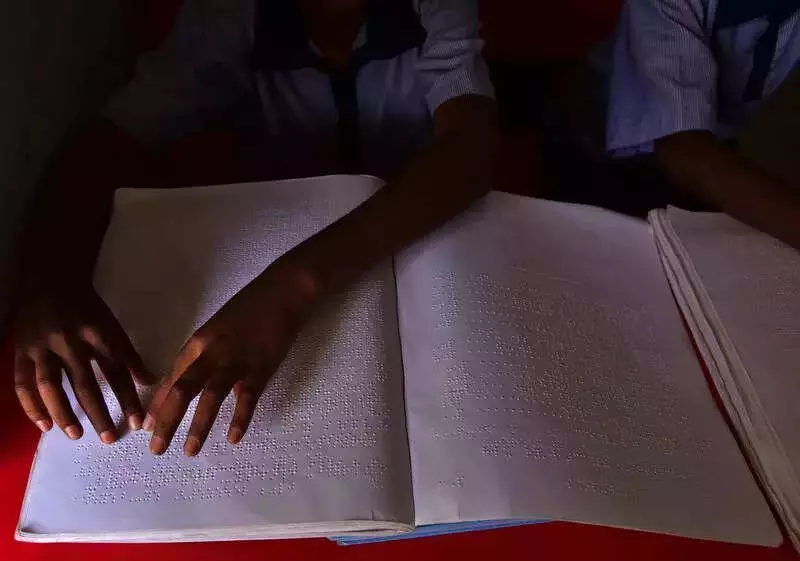
The primary objective of this specialized laboratory is to empower visually impaired students to comprehend complex mathematical concepts through touch-based experiential learning methodologies. Unlike traditional mathematics education that relies heavily on visual elements, this laboratory employs specially designed tactile models that emphasize texture, shape, proportion, movement, and spatial understanding.
The tactile approach transforms abstract mathematical ideas into tangible experiences, allowing students to physically explore geometric shapes, understand proportions through different textures, and grasp spatial relationships through movement-based learning tools. This hands-on methodology represents a significant advancement in inclusive education for visually impaired learners in the Pune region.

Distinguished Inauguration Ceremony
The inauguration ceremony witnessed the presence of several distinguished guests and stakeholders. Sangram Gaikwad, principal commissioner of the Central Income Tax Department, graced the occasion as a key dignitary. The event also saw active participation from representatives of the MIT Academy of Engineering, officials from the Tech Mahindra Foundation, faculty members of the school, administrative authorities, and dedicated student coordinators.
The collaborative effort between educational institutions and corporate foundations demonstrates a growing commitment to creating accessible learning environments for students with visual impairments. This laboratory serves as a model for how technology, education, and corporate social responsibility can converge to address specific learning challenges faced by differently-abled students.
Future Implications for Special Education
This tactile mathematics laboratory represents more than just a physical space—it symbolizes a paradigm shift in how mathematical education can be made accessible to visually impaired students. The initiative has the potential to:
- Enhance mathematical literacy among blind and visually impaired students
- Develop innovative teaching methodologies that can be replicated in other institutions
- Bridge the educational gap between visually impaired and sighted students
- Create new pathways for STEM education accessibility
- Foster greater independence and confidence in mathematical problem-solving
The establishment of this laboratory in Pune marks a significant milestone in India's journey toward inclusive education, particularly in the specialized field of mathematics instruction for visually impaired learners.