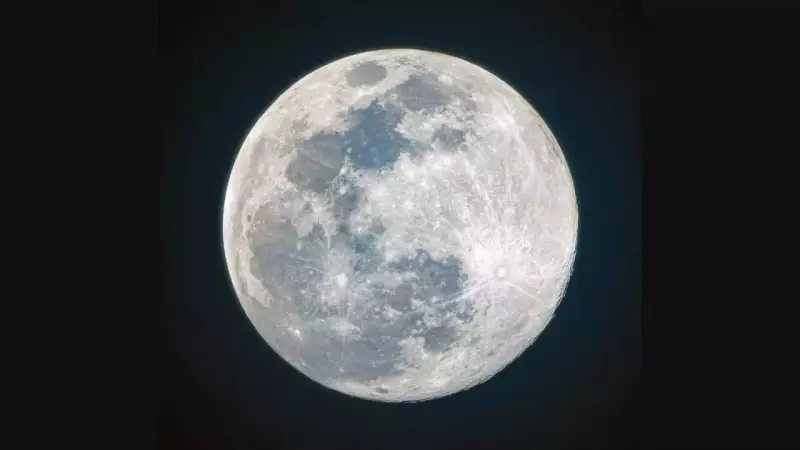
The night sky over India on 5 December 2025 presented a breathtaking farewell to the lunar year. Skywatchers across the nation were treated to the final supermoon of the year, which also carried the evocative traditional name of the Cold Moon. This celestial event combined a striking orbital alignment with deep cultural roots, offering a view of a Moon that appeared significantly brighter and larger than usual.
The Science Behind the Brilliant Cold Moon
The December full Moon earned its supermoon status because it coincided with the Moon's closest approach to Earth, known as perigee. The Moon's orbit is elliptical, meaning its distance from our planet varies. On 5 December 2025, the full phase occurred near perigee, making the lunar disc appear roughly 14 percent larger and noticeably more luminous than a typical full Moon. This scientific reality was clearly visible to the naked eye, requiring no special equipment for observers.
The clear, sharp winter air typical of December in much of India provided perfect viewing conditions. The early nightfall and atmospheric clarity amplified the Moon's intensity, allowing its light to wash over urban landscapes and create a diffuse glow in rural areas. This brightness wasn't just an aesthetic phenomenon; it had tangible effects on nocturnal wildlife, influencing animal activity patterns and predator-prey dynamics under the illuminated night.

Cultural Heritage and Seasonal Markers
The name 'Cold Moon' is deeply rooted in tradition, marking the arrival of winter's low temperatures and long nights in the Northern Hemisphere. Older names like the Long Nights Moon or the Moon Before Yule connect this phase to annual cycles of darkness and seasonal transition. These names served as practical calendar markers for agricultural and cultural life. The 2025 event showed how this cultural memory persists, linking modern skywatching to ancient rhythms.
The event's digital footprint was significant. An official social media post describing the Moon as a 'frozen silver coin' drew wide engagement, highlighting how traditional lunar naming intersects with modern digital culture when a stunning celestial event captures public imagination.
Why This Moon Appeared Higher and Larger
The 2025 Cold Moon gained an extra visual advantage from its position in the sky. As the December solstice approached, the Sun traced its lowest arc. Being opposite the Sun, the full Moon climbed to a comparatively high elevation. This high lunar altitude meant moonlight passed through less atmosphere, reducing haze and glare and resulting in stronger ground-level illumination. For many in India, this combination of perigee brightness and high altitude created some of the clearest nighttime visibility of the month.
Many observers also experienced the famous 'moon illusion,' where the Moon appears enormous near the horizon. Although its angular size doesn't change, the human brain interprets it as larger when compared to terrestrial objects like trees or buildings. This illusion was particularly pronounced for viewers watching the Cold Moon rise from open coastal areas or plains, providing a dramatic start to the celestial show.
In summary, the night of 5 December 2025 offered India a powerful blend of astronomy and tradition. The Cold Moon supermoon served as a bright reminder of our planet's celestial mechanics and the enduring human practice of naming and finding meaning in the rhythms of the sky.