While high-rise buildings and independent houses across Hyderabad's bustling IT corridor struggle with severe water shortages each summer, spending thousands on water tankers, two educational institutions in the same area have charted a different path. The International Institute of Information Technology, Hyderabad (IIITH) and Maulana Azad National Urdu University (MANUU) have become shining examples of water self-sufficiency through smart groundwater recharge and recycling initiatives.
MANUU's Remarkable Transformation
MANUU has dramatically reduced its dependence on expensive water tankers. The university, which consumes approximately 4.5 lakh liters of water daily, previously spent between Rs 20 to Rs 25 lakh each summer on tanker supplies. That expenditure has now plummeted to just about Rs 2 lakh.
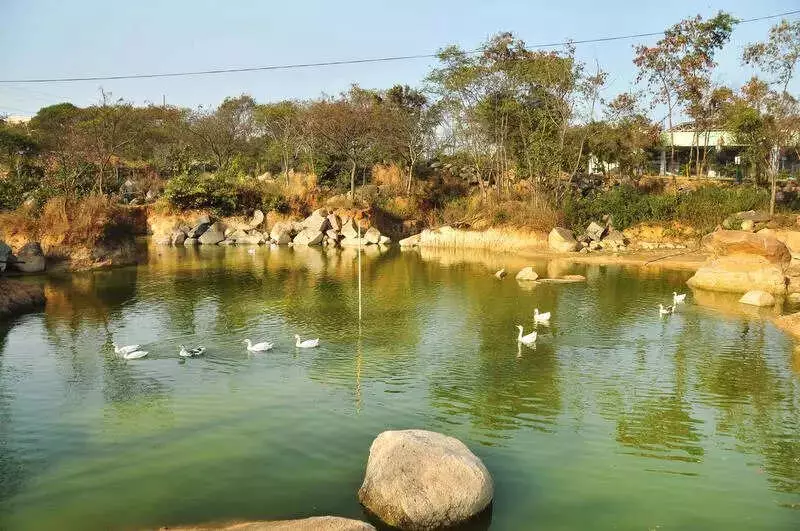
"In 2024, we developed a biodiversity pond on campus, and since then our dependence on tankers has reduced drastically," explained Sk Ishtiaque Ahmed, registrar of MANUU. "Used water from lawns and other areas is diverted to this pond, which can store water up to 20 feet deep and helps recharge groundwater. We clearly saw the impact last summer."

Creating Ecosystems While Conserving Water
The biodiversity pond has evolved beyond its water conservation function. It has transformed into a small ecosystem, now home to various fish species and attracting migratory birds throughout the year. This dual benefit demonstrates how environmental initiatives can serve multiple purposes simultaneously.
Spread across nearly 200 acres of rocky terrain in Khajaguda, MANUU encompasses academic blocks, six student hostels, four guest houses, and numerous residential buildings for faculty and staff. The university has strengthened its water recycling systems and rainwater harvesting infrastructure to further minimize reliance on borewells and external water supplies.
IIITH's Decades-Long Success Story
IIITH, located on similar rocky terrain, has achieved comparable results through systematic water management. The 66-acre campus, which consumes about 8,000 to 10,000 kiloliters of water monthly, has not relied on water tankers for nearly fifteen years.
The institute monitors every aspect of water usage through an integrated system that tracks flow, distribution, quality, groundwater levels, and rainwater harvesting efficiency. This comprehensive approach ensures no aspect of water management goes overlooked.
Smart Technology Solutions
IIITH deploys innovative technological solutions to optimize water management. The campus utilizes in-house sensors and a digital twin system—a virtual model of its physical pipeline network that enables real-time monitoring and control. This technological infrastructure supports over 1,800 students and nearly 100 faculty members while maintaining water sustainability.
Faculty members emphasize that understanding consumption patterns represents the crucial first step in addressing water stress. "You have to measure usage, plug leakages and eliminate illegal connections," noted one researcher, highlighting the importance of data-driven approaches to water conservation.
Aiming for Net-Zero Water Status
"We aim to become a net-zero campus one day. In fact, when it comes to water, we are almost there," said Ramesh Loganathan of IIITH. "Our total consumption is lower than the amount of groundwater we recharge. We do use municipal water and may call for a tanker or two only during municipal supply breakdowns."
These institutions demonstrate that proactive water management strategies can transform water-scarce campuses into models of sustainability. Their success stories offer valuable lessons for other organizations facing similar challenges in water-stressed regions.