In a significant move to bridge the gender gap in higher education, the Central government is considering a major national programme to construct safe and affordable hostels exclusively for girl students across India's districts. With a proposed outlay of around ₹10,000 crore in the upcoming Union Budget, this initiative directly targets one of the most persistent barriers keeping girls from continuing their studies after school.
The Blueprint for Change: District-Level Hostels
The ambitious proposal, as detailed by government officials, envisions establishing at least one dedicated girls' hostel in each of India's 806 districts over the next five years. These facilities will be standalone structures, not attached to any specific institution, and are likely to be built at district headquarters close to clusters of colleges and universities. This strategic location is crucial for accessibility.
Importantly, the reservation norms applicable to higher education institutions will also govern admissions to these hostels, ensuring equitable access. The hostels will cater to students enrolled in undergraduate and postgraduate courses. While a nominal fee may be charged for maintenance, the primary goal is to provide a secure and affordable residential option.

Addressing a Critical Gap in the System
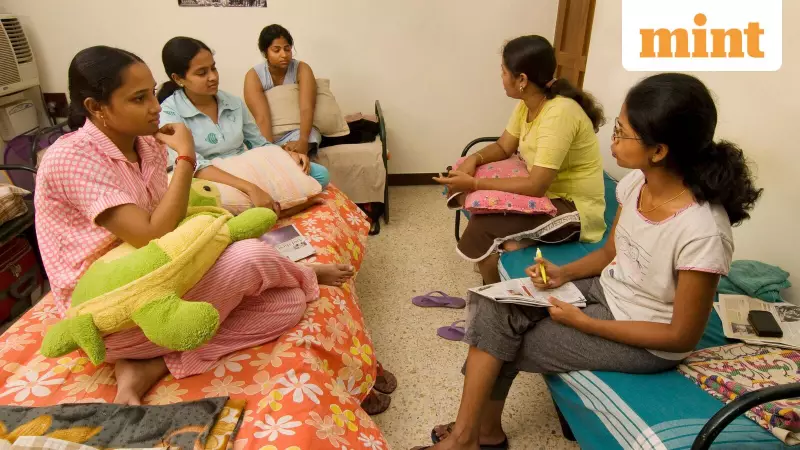
Millions of young women in India are forced to abandon their higher education dreams simply because there is no safe place for them to live near a college or university. This is especially acute in rural and semi-urban areas, where families often discontinue their daughters' education after Class XII, even when opportunities exist within the district, due to the infeasibility of daily commuting.
While some hostel support exists through schemes like the UGC's Girls' Hostel Scheme and the Working Women Hostel Scheme, their coverage is limited and uneven, largely concentrated in metro cities. There is no universal district-level provision comparable to residential school systems like Jawahar Navodaya Vidyalayas or Kasturba Gandhi Balika Vidyalayas.
The new programme aims to systematically plug this gap. The budgetary allocation is meant to cover construction, basic furnishings, accommodation for wardens, kitchens, sanitation, and critical safety infrastructure like boundary walls and surveillance systems. The design will allow states to adapt to local conditions.
Expert Views and Implementation Challenges
Education experts have welcomed the proposal, highlighting its potential to instill a sense of security among parents, particularly in rural India. Nishant Kumar, Associate Professor at JNU's Centre for Political Studies, noted that while the initiative is positive, emphasis must be placed on ensuring uniform standards and smooth operations, as state-Centre cost-sharing models can face hurdles in fiscally constrained states.
Arun Kumar, former professor at JNU, added that alongside infrastructure, the government should focus on introducing new-age reforms in higher education to equip all students, including girls, with contemporary skills and enhance research and development.
The funding model—whether based on a state-Centre sharing arrangement or fully funded by the Centre—is still being finalized. Officials indicated that the spending may be phased over multiple years to ease the fiscal burden and allow states to align projects with land availability and local needs.
This initiative aligns with the government's broader focus on women-centric schemes like Ujjwala Yojana and Lakhpati Didi. It comes at a time when India, despite running one of the world's largest higher education systems, continues to grapple with a sharp gender gap, with female literacy at 74.6% compared to male literacy at 87.2%, as per the latest PLFS data.