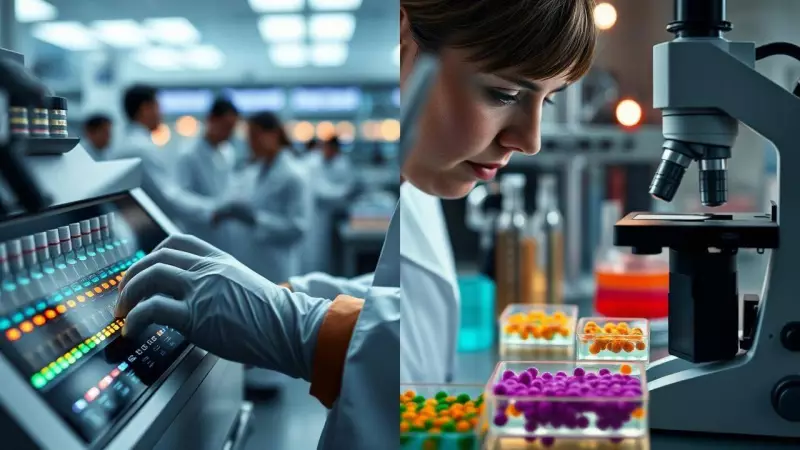
For countless students in India, a fascination with biology begins in school classrooms. Lessons delving into the mysteries of cells, the mechanisms of diseases, and the complexities of the human body ignite a passion that often leads to a dream of working in a laboratory. However, when the crucial time arrives to select an undergraduate programme, this dream encounters a common crossroads: the choice between BSc Biotechnology and BSc Microbiology.
Decoding the Core Curriculum and Lab Experience
While both degrees are firmly rooted in the biological sciences and promise extensive hands-on laboratory work, their core focus areas are distinct. Understanding this difference is the first step toward a confident decision.
BSc Biotechnology is fundamentally an applied science. It teaches students how to harness biological processes and organisms to develop technologies and products that solve real-world problems. The curriculum delves deep into the workings of genes, proteins, and cells at a molecular level. Key subjects include genetics, molecular biology, cell biology, and biochemistry. The lab work is intensive and modern, involving techniques like DNA manipulation, protein analysis, and cell culture. This course is ideal for students intrigued by how scientific knowledge translates into tangible outputs like new medicines, agricultural improvements, or industrial enzymes.

In contrast, BSc Microbiology zooms in on the vast world of microorganisms—bacteria, viruses, fungi, and protozoa. The programme explores how these microbes interact with humans, impact health, influence the environment, and affect our food supply. Important topics covered are medical microbiology, immunology, virology, and food microbiology. The laboratory sessions are intensely practical, focusing on skills like culturing microbes, staining techniques, and identifying pathogens from clinical or environmental samples. This path is perfect for those drawn to the world of diagnostics, disease mechanisms, and public health.
Career Trajectories and Future Opportunities
Graduates from both fields enter a domain of promising, though initially modest, career prospects where growth is steady and experience is highly valued.
Holders of a BSc Biotechnology degree typically begin their careers in entry-level technical roles. They find employment as lab technicians, research assistants, or quality control analysts in diverse settings. These include biopharmaceutical companies, agricultural research institutes, environmental science firms, and vaccine manufacturing units. The application-based knowledge opens doors in sectors focused on innovation and product development.
For BSc Microbiology graduates, the career path often leads directly to healthcare and diagnostics. Common entry points are roles as microbiologists, clinical lab technologists, or food safety officers. They are in demand in hospital pathology departments, diagnostic chains, public health organizations, and the food processing industry, working on infection control, sample testing, and safety protocols.
A critical point for students in both streams is that higher studies significantly enhance career growth. Pursuing an MSc and later a PhD is common for those aiming for senior research positions, specialized roles, or careers in academia and teaching.
Making the Right Choice for You
The decision ultimately hinges on personal interest and inclination. Students fascinated by genetic engineering, molecular tools, and bioprocessing should lean towards Biotechnology. Those more curious about infectious diseases, microbial behavior, and diagnostic techniques will likely find Microbiology more fulfilling.
There is no universally superior choice. The best course is the one that aligns with your innate curiosity and keeps you motivated through years of study. A decision made with clear understanding and passion lays the strongest foundation for a rewarding and successful career in the dynamic world of science.