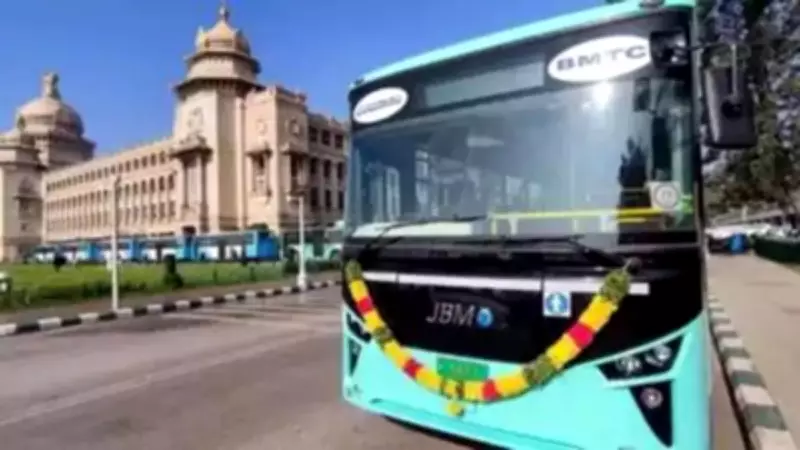
Bengaluru's Bus Shortage Ignites Heated Public Transport Debate
The future mobility of India's premier tech hub, Bengaluru, has come under intense scrutiny as a severe bus shortage sparks a fiery debate between government officials and industry leaders. Karnataka Transport Minister Ramalinga Reddy and former Infosys CFO TV Mohandas Pai recently engaged in a public sparring match on social media platform X, highlighting deep divisions over how to solve the city's growing transportation crisis.
Pai's Scathing Critique: "Inadequate" 7,000 Buses
TV Mohandas Pai launched a direct attack on the current state of Bengaluru's public transport system, declaring that the city's 7,000 buses are woefully inadequate to meet daily commuter demands. "Bengaluru requires at least 15,000 buses today," Pai asserted, accusing the government of maintaining a harmful monopoly that prevents necessary expansion.
Pai didn't mince words in his criticism of Minister Reddy's approach: "As a minister, you thoroughly failed to ensure adequate public transport because of your dogmatic attitude, saying only PSU works. Why? People need public transport irrespective of who provides it." The tech veteran emphasized that Bengaluru's rapid growth – with approximately 85,000 new vehicles added monthly – demands immediate and innovative mobility solutions.

Government's Defense: Scale, Efficiency and Expansion Plans
Transport Minister Ramalinga Reddy presented a robust defense of the state-run transport system, highlighting its impressive operational scale. According to Reddy, Bengaluru's buses cover more than 13 lakh kilometers daily through approximately 66,000 trips – a feat he described as "the highest in India."
The minister revealed comprehensive statistics about Karnataka's transport network: the state operates 26,054 buses overall, serving nearly 45 lakh commuters in Bengaluru alone. The city's current fleet includes 7,108 buses, with 1,686 being electric vehicles as part of green mobility initiatives.
Political Counterattack and Expansion Timeline
Reddy didn't shy away from political confrontation, challenging Pai to "show me a single BJP-ruled city or state, including Prime Minister Narendra Modi's home state of Gujarat, that matches this scale and efficiency." The minister outlined an ambitious expansion plan, noting that over 5,800 new buses were inducted in the past two years, with another 2,000+ scheduled for addition by March 2026.
Philosophical Divide: PSU Model Versus Private Participation
The debate reveals a fundamental philosophical divide about public transport governance. Minister Reddy championed the state-owned model, arguing that public service corporations operate with a social mandate rather than profit motives. "They do not cherry-pick profitable routes," Reddy explained, detailing that 30% of routes run at a loss to ensure connectivity, 30% operate at break-even, while only 40% generate profits.
In contrast, Mohandas Pai advocated for a multi-operator model similar to Singapore's successful system. He argued that commuters would willingly pay for better services and that private participation could rapidly address the supply-demand gap. Pai pointed to the government's three-year stagnation in fleet expansion as evidence that the current approach is failing Bengaluru's citizens.
Broader Implications for India's Tech Capital
This confrontation transcends mere political bickering, touching on critical questions about Bengaluru's future as India's premier technology hub. The city's notorious traffic congestion and inadequate public transport threaten both quality of life and economic productivity. As thousands of tech professionals navigate daily commutes, the resolution of this transport crisis will significantly impact Bengaluru's global competitiveness and urban sustainability.
The debate between Reddy and Pai represents a microcosm of larger discussions happening across Indian cities about public-private partnerships in infrastructure. With Bengaluru serving as a bellwether for urban development challenges, the outcome of this transport controversy could influence policy decisions nationwide as cities grapple with similar mobility issues in an era of rapid urbanization and technological transformation.