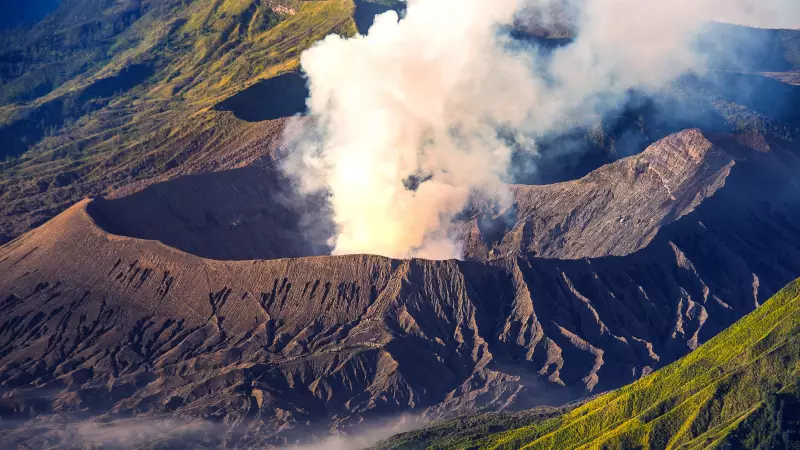
A volcanic eruption in Ethiopia, located approximately 4,000 kilometers away, has unexpectedly disrupted air travel in the Indian capital, leading to the cancellation, delay, and rerouting of several flights from Delhi.
The Distant Eruption and its Long Reach
The disruption began with the eruption of the Hayli Gubbi volcano in Ethiopia. This was a significant event as the volcano, which had been dormant for several thousand years, erupted for the first time in recorded history. The powerful explosion sent a massive plume of volcanic ash several kilometres high into the atmosphere.
This ash cloud then embarked on a long-distance journey, sweeping across the Red Sea and passing through the airspace of Oman and Yemen before its presence was detected over Delhi. The plume, moving at speeds between 100 and 120 km per hour, was observed at high altitudes ranging from 15,000 to 45,000 feet.

Immediate Impact on Indian Aviation
In response to the potential danger, India's aviation authority, the Directorate General of Civil Aviation (DGCA), issued an urgent advisory to all airlines. The regulator instructed them to "strictly avoid" the areas affected by the volcanic ash and to adjust their flight paths and schedules accordingly.
This directive had an immediate and tangible effect. On November 23, several flights operating to and from Delhi were impacted. Passengers faced cancellations, experienced delays, or found their aircraft had been rerouted to avoid the hazardous cloud.
Why Volcanic Ash is a Grave Threat to Aircraft
The extreme caution exercised by aviation authorities is due to the severe risks volcanic ash poses to aircraft. Unlike ordinary dust, volcanic ash is highly abrasive. When ingested by jet engines, it can cause catastrophic damage by eroding engine turbine blades and clogging essential sensors.
Furthermore, the extreme heat inside a jet engine can cause the fine ash particles to melt and then re-solidify on cooler engine parts, potentially leading to engine stalling or a complete flameout. The ash cloud also carries toxic gases and tiny fragments of glass and rock, which can compromise cabin air quality and pose health risks to passengers and crew.
As a standard safety procedure, the DGCA has mandated that airlines report any encounters with ash and conduct thorough inspections of runways and taxiways if ash fallout affects airport operations.
Despite the significant disruption to air travel, experts have provided some reassurance regarding ground-level conditions. They have stated that while the full extent of the ash contamination is not yet known, the volcanic plume is unlikely to impact the air quality in the affected regions on the ground.