

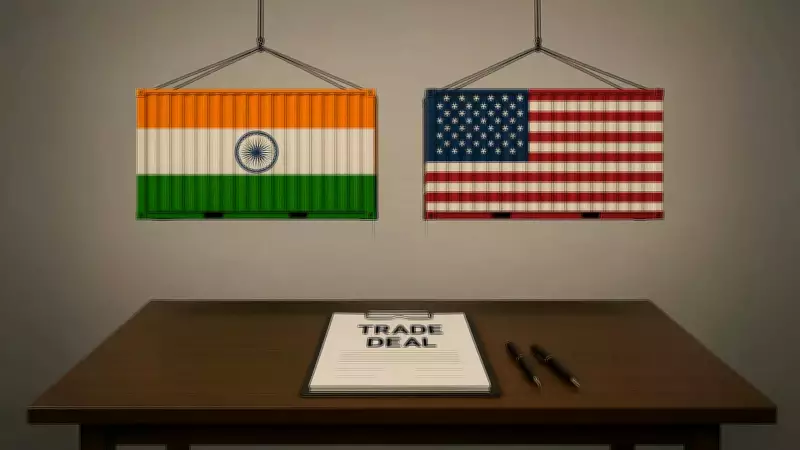
US-India Trade Deal to Strengthen Economic Growth Momentum
NEW DELHI: A landmark trade agreement between the United States and India is poised to amplify the already robust growth trajectory of Asia's third-largest economy, transforming uncertainty into widespread optimism among investors and policymakers alike.
From Uncertainty to Optimism: The Tariff Turnaround
Earlier this year, the economic landscape faced turbulence when former US President Donald Trump imposed stringent tariffs of 50% on India in August for its purchase of Russian oil. This move sent shockwaves through financial markets, creating choppy conditions and raising concerns about the sustainability of India's growth path. However, the economy demonstrated remarkable resilience, maintaining strong momentum despite these external pressures.
The recent surprise announcement late Monday night to reduce these tariffs to 18% from the previous 50% has effectively removed what analysts term "significant uncertainty" from the equation. This development is expected to substantially boost market sentiment and revive investor interest that had waned during the period of trade tension.

Robust Growth Projections and Economic Resilience
India's economic fundamentals have remained strong, bolstered by a series of reform measures implemented by the government, including strategic GST rate cuts. Latest estimates indicate that the economy is on track to grow by an impressive 7.4% in the current fiscal year ending March. Looking further ahead, projections for FY27 suggest growth will continue in the healthy range of 6.8% to 7.2%.
This resilience is particularly noteworthy given that the Indian economy is primarily driven by domestic demand, which has remained intact throughout the period of trade uncertainty. The economy successfully navigated the turbulent period, emerging with its growth momentum not only preserved but potentially enhanced by the new trade developments.
Quantifying the Economic Impact
Financial institutions have begun assessing the potential economic benefits of the tariff reduction. According to a report from Goldman Sachs, "We estimate an incremental boost of around 0.2 percentage point of GDP (annualised), if the new lower tariffs are enforced. This estimate is based on India's goods exports exposure of roughly 4% of GDP to US final demand and a goods export demand elasticity of approximately 0.7."
Earlier assessments had suggested the impact on GDP growth could range between 30 to 50 basis points. As Barclays noted in their analysis, "Statistically speaking, we estimate lower tariffs will add 30 basis points to headline GDP growth (essentially reversing the threat posed by 50% tariffs until now)."
Broader Economic Implications and Market Response
The tariff reduction carries significant implications for India's export sector. Moody's Ratings highlighted that "the reduction of the US tariff rate on most Indian goods will reinvigorate India's goods export growth to the US, which remains the country's largest goods export market, accounting for about 21% of India's total goods exports for the first eleven months of 2025."
This development is expected to influence monetary policy as well. Barclays added in their note, "We continue to expect a dovish hold in the upcoming RBI monetary policy committee meeting on February 6 as this tariff reduction becomes a meaningful tailwind."
The combination of strong domestic fundamentals and improved international trade conditions positions India's economy for sustained growth, with the US-India trade deal serving as a catalyst for enhanced economic performance and renewed investor confidence in the coming fiscal periods.






