

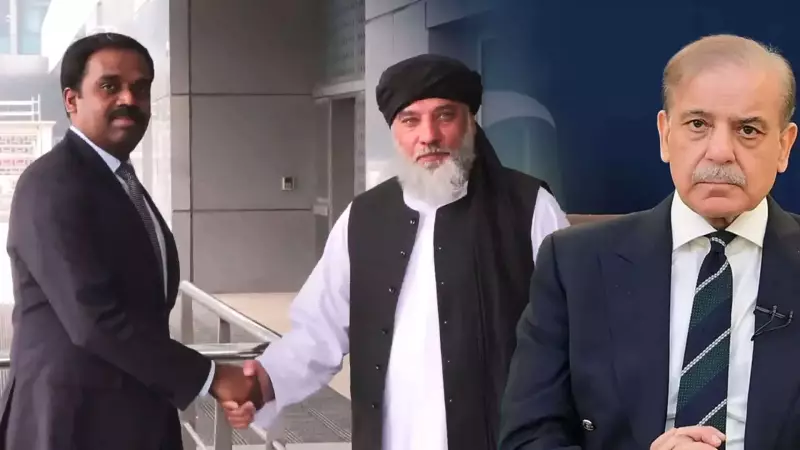
In a move signaling a historic geopolitical shift, the Taliban's acting Minister for Trade and Industry, Nooruddin Azizi, has landed in New Delhi for a significant five-day official visit. This high-level engagement underscores a dramatic realignment in South Asia, where Afghanistan is actively seeking to reduce its decades-long economic dependence on Pakistan.
The End of an Era: Afghanistan's Strategic Pivot
For years, Pakistan served as Afghanistan's primary gateway to the world, controlling its access to the sea through the Karachi port and key border crossings like Torkham. However, deteriorating political ties and a crumbling Pakistani economy have forced Kabul to look for more stable and reliable partners. This has triggered a strategic pivot towards India and Iran, a process that Minister Azizi's visit aims to solidify.
The discussions in Delhi are building upon earlier talks focused on establishing robust frameworks for cooperation. Key agenda items include setting up joint trade committees, creating clear investment pathways, and forging partnerships in the energy and mineral sectors. This visit, which began on November 19, 2025, is a milestone moment in this rapidly evolving relationship.

Chabahar Port: The Game-Changer in Regional Trade
A central pillar of this new alignment is the India-developed Chabahar Port in Iran. This strategic port has already empowered Afghanistan to bypass traditional routes through Pakistan. Trade between Iran and Afghanistan has now skyrocketed, officially surpassing the volume of trade conducted via Pakistan. More importantly, Chabahar offers Afghanistan a sanctions-resilient corridor to access global markets, a critical advantage for the isolated nation.
Simultaneously, India is ramping up its own engagement. India is expanding both humanitarian aid and commercial exports to Afghanistan. In a parallel development, Afghan cargo flights have significantly slashed their rates, a clear move to deepen economic and logistical integration with India and bypass land routes controlled by Islamabad.
A New Regional Economic Order Emerges
The consequences of this shift are profound. As Pakistan reels under the pressure of successive IMF bailouts and a loss of geopolitical influence, India is rising as a stable and reliable economic anchor for landlocked Afghanistan. This transition is not just about changing trade partners; it is about redrawing the economic map of South Asia.
The visit of the Taliban's trade minister to Delhi is more than a diplomatic formality. It is a powerful symbol of a new regional economic order, one where India's role as a key player in Afghanistan's future is being formally recognized and actively pursued by the Taliban administration.






