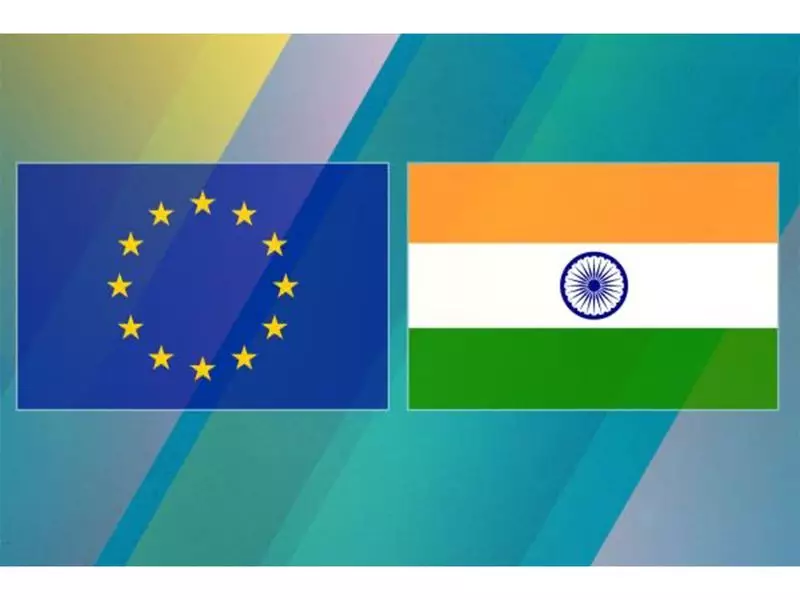
Senior Congress leader and Member of Parliament, Jairam Ramesh, has issued a crucial recommendation for the ongoing negotiations between India and the European Union (EU). He insists that the proposed Free Trade Agreement (FTA) must explicitly address the significant challenges posed by the EU's new Carbon Border Adjustment Mechanism (CBAM).
The Core Challenge: EU's Carbon Border Tax
The European Union's CBAM, which officially entered its transitional phase on October 1, 2023, represents a major shift in global trade policy. This mechanism is designed to impose a carbon tax on imports of certain carbon-intensive goods into the EU. The primary objective is to prevent "carbon leakage," where companies might relocate production to countries with less stringent climate policies.
However, for major exporting nations like India, CBAM poses a substantial economic threat. Key Indian export sectors such as iron, steel, aluminium, cement, fertilizers, hydrogen, and electricity are directly in the crosshairs of this regulation. Without adequate safeguards, Indian manufacturers could face severe cost disadvantages, making their products less competitive in the critical European market.

Ramesh's Strategic Recommendations for Negotiators
In his detailed communication, Jairam Ramesh outlined specific measures that Indian negotiators should pursue within the FTA framework to mitigate CBAM's impact. His suggestions are grounded in the need for fairness and recognition of India's developmental context.
First, he advocates for the exclusion of Indian exports from CBAM through the FTA. This would be a direct and powerful shield for domestic industries. Second, he emphasizes that any carbon-related measures must fully account for the principle of "Common But Differentiated Responsibilities and Respective Capabilities" (CBDR-RC). This is a cornerstone of the UN climate framework, acknowledging that developed nations like those in the EU bear a greater historical responsibility for emissions and should therefore support developing nations.
Furthermore, Ramesh argues that the EU must recognize and accommodate India's own domestic policies aimed at reducing emissions intensity. He pointedly mentions that Indian products should not be penalized simply because India has not implemented an economy-wide carbon pricing system identical to the EU's. The FTA, he asserts, must create a level playing field that considers these national differences.
Broader Implications and the Road Ahead
The intervention by the senior parliamentarian highlights the growing political and economic consensus in India regarding the potential pitfalls of CBAM. The mechanism is not just a trade barrier but is increasingly viewed as a protectionist tool that could unfairly target developing economies. India has consistently opposed such unilateral trade measures in international forums like the World Trade Organization (WTO).
The ongoing FTA negotiations, which have seen renewed momentum after a long hiatus, now carry this additional layer of complexity. Successfully integrating provisions to counter or neutralize CBAM's effects will be a critical test for Indian diplomacy and trade strategy. The outcome will have direct consequences for thousands of businesses and jobs in India's industrial and manufacturing sectors.
As the EU's CBAM moves towards its fully operational phase in 2026, the clock is ticking for India to secure a favorable deal. The stance articulated by Jairam Ramesh underscores the necessity for a robust and strategically astute agreement that protects India's economic interests while engaging constructively on global climate goals.