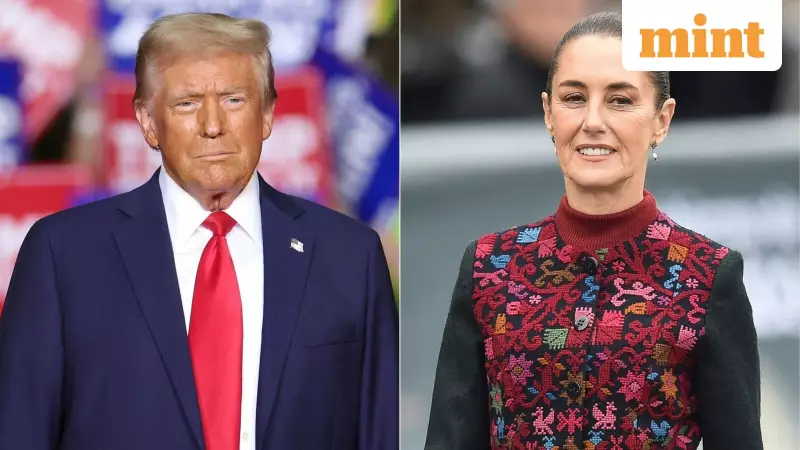
In a move widely interpreted as pre-emptive compliance with Donald Trump's aggressive trade agenda, Mexico has imposed steep new tariffs that directly impact Indian exporters. The Mexican Senate, in a swift vote last week, approved a sweeping 50% tariff rate on goods from a list of countries including China, India, Brazil, South Korea, Vietnam, and Taiwan.
A Vote of "Pre-emptive Obedience"
While politicians from President Claudia Sheinbaum's ruling Morena party framed the decision as a measure to protect local industry and boost revenue, few in international circles are convinced. The legislation was pushed through with unusual speed, bypassing normal committee discussions, and passed 76-5 with opposition abstentions. Analysts see this not as a bold act of economic independence, but as the opening of a new front in Trump's cascading global trade conflict.
The timing is critical. The decision comes just six months before a mandatory review of the US-Mexico-Canada Agreement (USMCA), the crucial trade pact that succeeded NAFTA. Trump has recently hinted he might let the deal expire or renegotiate it, a prospect that terrifies Mexico. With about 80% of its exports heading north to the US tariff-free under USMCA, Mexico's economy is deeply vulnerable to American pressure.

Indian Auto Sector in the Crosshairs
The new tariffs deliver a sobering blow to one of India's standout export success stories: auto components. This industry had carved a profitable niche by supplying parts to giant manufacturing plants along the US-Mexico border. The 50% duty threatens to render these Indian inputs uncompetitive, disrupting supply chains built to feed America's car market.
However, the damage extends beyond just components for the US market. Mexico itself is a major destination for finished Indian goods, consistently ranking among the top three or four global markets for small, fuel-efficient cars from India. These vehicles are meant for Mexican consumers, not Americans, yet they have been slapped with the punitive tariffs regardless. In effect, Sheinbaum is paying what some call "protection money" to Trump, but the cost is being extracted from the pockets of Indian manufacturers.
Cascading Consequences and a Divided World
The repercussions for Mexico are also severe. Opposition lawmakers noted that official models couldn't even estimate the policy's full impact. Economists at Citigroup warn it could keep domestic inflation above 4% in the coming year. The predictable downsides of protectionism—loss of competitive edge, supply chain crunches, and retaliatory measures—are now Mexico's to bear.
This move shatters the hope held by many Asian nations that Trump's "America First" policy might unite them against Chinese manufacturing dominance. Instead, Sheinbaum's action reveals a different path: some countries will quietly enact the US president's policies for him. This could push other nations, potentially with China at the forefront, to seek a multilateral path that isolates such collaborators.
The episode is a stark reminder that Trump's trade war is not a controlled confrontation but a cascading global conflict. Countries now face threats not just in their direct relationship with the US, but with multiple other nations being pressured into Trump's high-tariff "dreamworld." The Mexican president may have picked a side, but at a high cost to her own economy and her trade partners. As one observer noted, Trump once promised to make Mexico pay for a border wall. With these tariffs, he may have finally succeeded—only this wall is built of trade barriers, not bricks.