India is charting an ambitious course to significantly increase its stake in global maritime commerce. By harnessing its vast coastline through strategic public-private partnerships (PPPs), legislative reforms, and substantial financial investment, the nation aims to enhance port efficiency and become a more formidable player in international shipping lanes.
The Foundation: India's Coastal Network and the Need for Reform
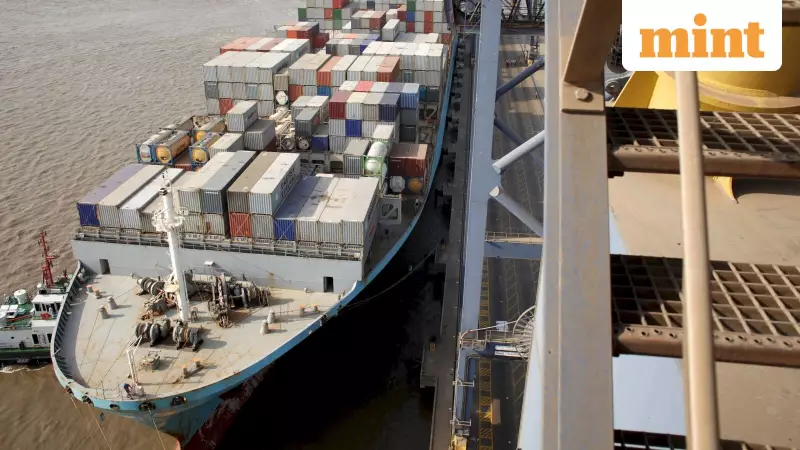
With a sprawling 11,098-kilometer coastline, India's maritime infrastructure includes 12 major ports and 217 non-major ports (OMPs). These gateways are critical, handling approximately 95% of the country's trade by volume and 68% by value. However, a World Bank assessment at the government's request revealed that publicly run major ports were underperforming against global benchmarks, increasing costs and hurting competitiveness.
This diagnosis spurred India's first wave of port reforms in the 1990s and early 2000s, aligning with a global trend. The solution centered on adopting a landlord port model, where port authorities manage the land and infrastructure while private operators run terminals. The landmark move came in 1997 when the Jawaharlal Nehru Port Trust (JNPT) awarded a Build-Operate-Transfer (BOT) concession for a container terminal to a consortium led by P&O Ports, marking the first such transaction at a major Indian port.

The PPP Evolution and Regulatory Maturity
Over the last 29 years, about 100 BOT port projects have been approved in major ports, attracting investments worth roughly ₹650 billion (approximately $8 billion). The share of cargo handled by PPP operators and captive berths in major ports has surged from 26% (156.2 million tonnes) in 2015-16 to 60% (516.9 million tonnes) in 2024-25.
The framework governing these partnerships has matured through iterative learning. Early concessions had rigid tariff regulations set by the Tariff Authority for Major Ports (TAMP). Over time, the model shifted from a cost-plus formula to benchmarking with nearby terminals, culminating in the introduction of a completely market-based tariff regime under the Major Port Authorities Act of 2021. This act granted major ports greater managerial autonomy to compete with OMPs, which traditionally enjoyed more flexibility.
Financing the Future and Global Ambitions
Complementing these structural reforms is a robust financial package. The government has announced an $8 billion (₹69,725 crore) maritime development fund alongside a $2.2 billion domestically funded fleet expansion. Key components include a $2.5 billion Maritime Development Fund for equity, $2.3 billion in shipbuilding financial assistance, and the establishment of the Sagarmala Finance Corporation, a new non-banking lender to fund port expansion.
India's vision, outlined in the Maritime India Vision 2030, projects that about 85% of major-port cargo will be handled by PPPs and private operators by 2030. To create a level playing field, the proposed Indian Ports Act, 2025 seeks to align all ports with international standards on security, safety, and digitalization.
Simultaneously, India is advancing its global maritime footprint through initiatives like the India-Middle East-Europe Economic Corridor (IMEC), the Eastern Maritime Corridor, and by acquiring select overseas port operating rights. With a comprehensive strategy encompassing enabling policies, significant capital, and global corridor development, India is poised to navigate a transformative journey towards becoming a leading maritime nation.