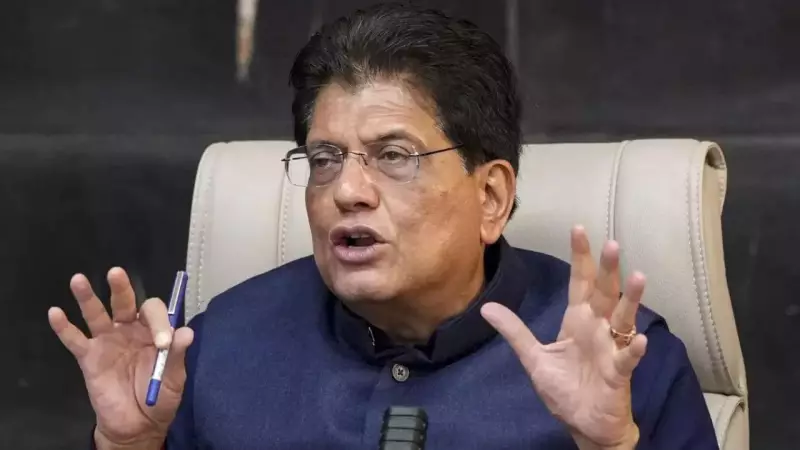
In a significant move balancing trade and domestic interests, India has concluded a Free Trade Agreement (FTA) with New Zealand that includes a carefully guarded investment plan for the dairy sector. Commerce and Industry Minister Piyush Goyal, addressing the media in New Delhi on Monday, clarified that the pact will allow New Zealand companies to process dairy inputs in India exclusively for re-export, while the domestic market remains completely insulated.
A Ring-Fenced Investment Model
Under this unique arrangement, firms from New Zealand can import dairy raw materials or ingredients into India. These inputs will be processed within the country to create value-added products. However, the critical condition is that 100 per cent of the output must be exported overseas. Minister Goyal emphasized that this will operate through a fast-track investment mechanism designed to boost such export-oriented manufacturing.
"We have done an agreement to promote greater investments that they should bring here raw materials or ingredients to India, process them and make high-quality dairy products in India, and 100 per cent will be re-exported from India," Goyal stated. Officials confirmed that this fast-track route applies only to units manufacturing goods solely for export, ensuring no spillover into the local market and protecting Indian dairy producers.

No Concessions, A Firm Red Line
Reiterating India's longstanding position, the minister asserted that India has not offered any duty concessions on dairy imports under this agreement. The dairy sector itself remains outside the formal scope of the FTA, which is scheduled for implementation next year. Goyal underlined that India has "never" opened its dairy sector in any past trade pact and will "never" do so in the future, citing the sector's sensitivity and its importance to millions of small and marginal farmers.
Addressing queries about a side letter attached to the agreement, which mentions consultations on dairy during future reviews, Goyal clarified it was included at New Zealand's request and carries no binding commitment for India. He explained that New Zealand sought an assurance for consultations if India ever opened dairy to a comparable economy in the future, a scenario he dismissed as improbable.
Context and Current Trade
New Zealand, a global dairy export powerhouse, currently has minimal dairy trade with India. Data shows its dairy exports to India in the 2024-25 financial year stood at a modest $1.07 million. This included items like milk and cream ($0.40 million), natural honey ($0.32 million), mozzarella cheese ($0.18 million), butter ($0.09 million), and skimmed milk ($0.08 million).
This FTA provision represents a strategic compromise. It allows India to attract foreign investment and boost its manufacturing and export footprint in processed dairy without compromising the economic well-being of its vast dairy farming community. The model sets a precedent for how India can engage in global trade while firmly safeguarding sectors deemed vital for livelihood and food security.