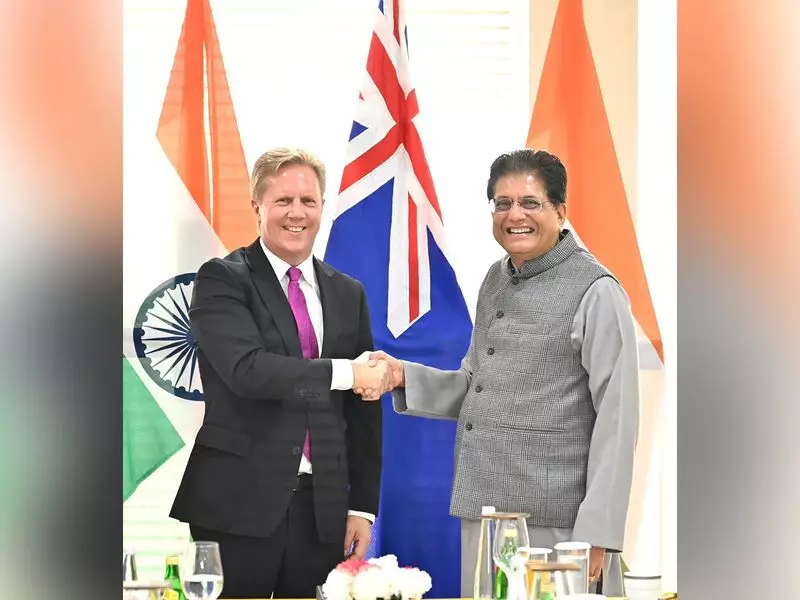
In a significant move to bolster economic ties, India and New Zealand have officially signed a comprehensive Free Trade Agreement (FTA). The pact, inked by Commerce and Industry Minister Piyush Goyal and New Zealand's Minister of Trade Todd McClay, signals a strategic partnership that aims to transcend conventional trade barriers and foster deeper, more sustainable cooperation.
A Partnership Built on Shared Values and Economic Vision
The agreement was finalized during a high-level meeting where both ministers expressed strong optimism about its potential. Minister Piyush Goyal described the FTA as a "landmark" agreement that reflects the shared values and mutual trust between the two democracies. He emphasized that the deal is not merely about exchanging goods but is a framework for building a resilient and future-oriented economic relationship.
New Zealand's Trade Minister, Todd McClay, echoed this sentiment, highlighting the complementary nature of the two economies. He pointed out that the FTA provides a robust platform for businesses in both nations to explore new opportunities, innovate, and contribute to global supply chain resilience. The signing ceremony marks the culmination of extensive negotiations aimed at creating a balanced and mutually beneficial pact.

Key Pillars and Ambitious Targets of the Trade Deal
The India-New Zealand FTA is structured around several core pillars designed to maximize economic gains for both countries. A primary focus is on the services sector, including areas like information technology, education, and tourism, where both nations have significant strengths. The agreement also incorporates strong chapters on sustainability and labor, aligning with global best practices.
The most notable target set by the two ministers is to elevate bilateral trade to $3 billion by the year 2030. This ambitious goal underscores the confidence both sides have in the agreement's ability to unlock new trade and investment flows. The pact is expected to provide a substantial boost to Indian exports in sectors such as pharmaceuticals, textiles, and engineering goods, while facilitating greater access for New Zealand's high-quality agricultural and dairy products into the Indian market under agreed terms.
Implications for a Broader Economic and Strategic Relationship
Beyond the immediate trade figures, this FTA carries profound implications for the broader strategic partnership between India and New Zealand. It is seen as a stepping stone towards more integrated cooperation in emerging fields like digital economy, green technologies, and climate-friendly initiatives. The agreement reinforces India's proactive approach to forging balanced trade relationships with key global partners.
For New Zealand, the deal represents a crucial foothold in one of the world's fastest-growing major economies. It allows Kiwi businesses to diversify their trade partnerships and engage more deeply with a market of over 1.4 billion people. The emphasis on "cooperation deeper than a major trade deal," as highlighted in the discussions, suggests a partnership that will also involve knowledge sharing, joint research, and collaborative efforts on global issues.
In conclusion, the India-New Zealand Free Trade Agreement is more than a conventional trade pact. It is a forward-looking framework that seeks to build a comprehensive economic partnership. By setting a clear $3 billion trade target and focusing on sustainable and inclusive growth, both nations have charted a promising course for a stronger, more collaborative future.