India and EU Conclude Historic Trade Negotiations After 17 Years
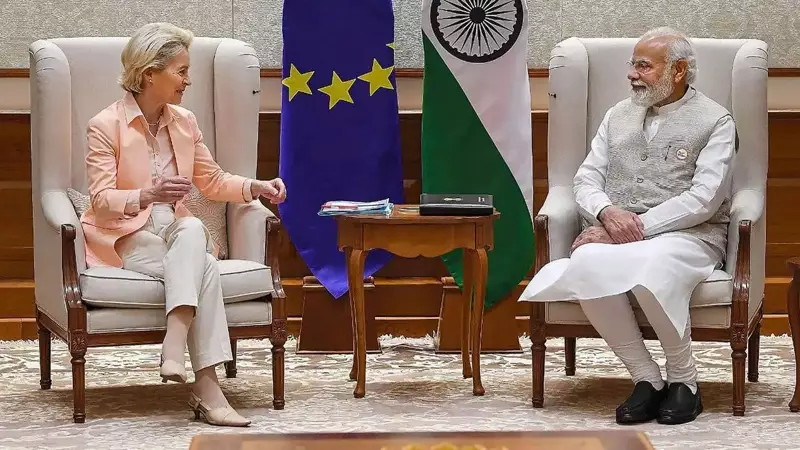
In a landmark development, India and the European Union have successfully completed official-level negotiations for a comprehensive trade agreement. Prime Minister Narendra Modi and European Commission President Ursula von der Leyen are poised to formally announce this achievement at the upcoming India-EU summit on Tuesday. This breakthrough concludes a negotiation process that was initially launched back in 2007, demonstrating the complex journey of international trade diplomacy.
The Acceleration of Negotiations in Recent Months
While the trade talks have spanned nearly two decades, the most significant progress occurred within the past six months. By July of last year, negotiators had managed to close only seven out of twenty-one chapters. However, in a remarkable turnaround, all remaining chapters were finalized last week. This rapid advancement coincided with dramatic shifts in the global economic landscape, particularly concerning trade policies from the United States.
US Tariff Pressures as a Catalyst
The United States' increasingly protectionist stance has created substantial anxiety among trading nations worldwide. Washington has imposed steep 50 percent tariffs on Indian goods since August last year, severely impacting India's labor-intensive export sectors. Simultaneously, the European Union continues to face threats of US tariffs over technology regulations and disputes concerning Greenland.

This uncertainty in US trade policy has significantly affected both India and the EU, as the United States remains the largest export market for both economies. The tariff measures have not only disrupted trade flows but have also influenced investment patterns, resulting in notable shifts in foreign portfolio investment into India.
Reevaluating Positions Amid Global Economic Realignment
While US tariff threats certainly accelerated the negotiation timeline, India and the EU managed to bridge their differences by fundamentally reevaluating their negotiating positions. This reassessment occurred against the backdrop of rapid geo-economic shifts that have challenged the relevance of traditional multilateral bodies like the World Trade Organization.
At the recent Davos forum, US Secretary of Commerce Howard Lutnik delivered one of the clearest messages about America's departure from liberal trade principles, declaring that globalization has "failed" the West. He advocated for other nations to adopt similar "America First" policies, emphasizing tighter immigration controls and prioritizing domestic workers.
The Chinese Overcapacity Challenge
Another crucial factor driving the revival of India-EU negotiations in 2022 was China's growing trade surplus and manufacturing dominance. Both India and the European Union import substantial portions of their industrial requirements from China, despite Beijing's record $1.2 trillion annual trade surplus and ongoing trade friction with the United States.
Both economies have implemented measures to restrict Chinese products in strategic sectors. The EU imposed tariffs up to 35 percent on Chinese electric vehicles in 2024, while India maintains over 100 percent duties on imported automobiles while opening its automotive sector to developed countries through free trade agreements.
Diversification Strategies and New Partnerships
In response to these challenges, both New Delhi and Brussels have actively pursued diversification strategies. The European Union recently concluded a trade agreement with Mercosur, the South American trade bloc, while India has signed trade deals with the United Kingdom, New Zealand, and Oman in efforts to expand its export markets.
Experts note that India's trade agreement with the United Kingdom particularly strengthened the case for an India-EU deal. New Delhi's market access concessions to London in various product categories, especially in the automobile sector, created a precedent that benefited EU negotiations. The UK-India deal, signed in July last year, represents Britain's largest trade agreement since Brexit and has shown significant potential benefits for sectors like beverages, tobacco, and motor vehicles.

Building Resilient Supply Chains
The COVID-19 pandemic starkly exposed the vulnerabilities of over-reliance on China-centric supply chains. According to a report by the Delhi Policy Group, both India and the European Union remain significantly dependent on China, but have been actively pursuing de-risking strategies to build more resilient, secure, and sustainable supply chains.
US officials have explicitly pressured both India and the EU to reduce their dependence on Chinese products and avoid becoming transshipment hubs for Chinese goods. Secretary Lutnik has publicly questioned European commitments to climate goals given their battery manufacturing dependence on China, while also highlighting India's pharmaceutical industry reliance on Chinese ingredients.
A New Chapter in India-EU Economic Relations
The completion of these negotiations represents more than just a trade agreement—it signifies a strategic realignment in response to global economic pressures. As traditional trade relationships face uncertainty and new economic powers reshape global supply chains, India and the European Union have demonstrated their commitment to building a more diversified and resilient economic partnership.
This agreement comes at a critical juncture when both economies face similar challenges from external trade pressures while recognizing mutual opportunities for growth and cooperation. The formal announcement expected this week will mark the beginning of a new chapter in India-EU relations, one shaped by the complex geo-economic realities of our time.