Historic India-US Trade Agreement Reached After Year-Long Negotiations
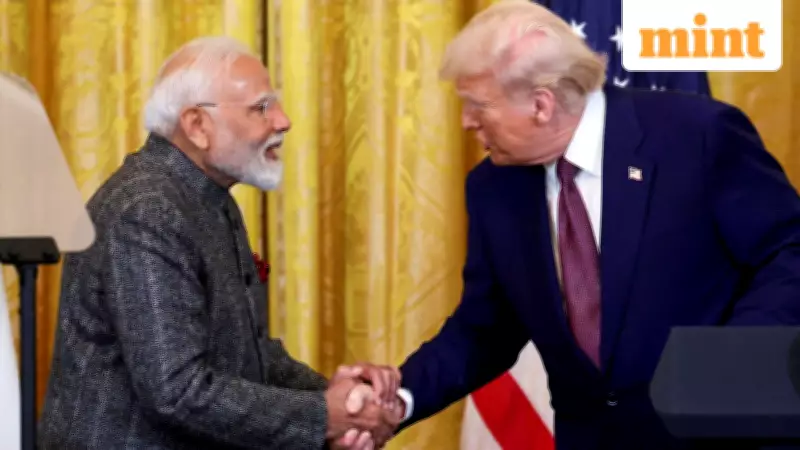
In a significant development for global trade relations, US President Donald Trump declared on Monday that he and Prime Minister Narendra Modi have successfully concluded a bilateral trade agreement between India and the United States. This announcement comes nearly a year after both nations committed to pursuing a comprehensive trade pact, marking a pivotal moment in their economic partnership.
Key Provisions of the Breakthrough Agreement
President Trump outlined the fundamental components of the newly minted deal, stating that Washington will reduce its reciprocal tariff on Indian goods from 25% to 18%. In return, India has agreed to eliminate its tariffs and non-tariff barriers against American imports, effectively bringing them down to zero. According to Bloomberg reports citing officials familiar with the negotiations, the United States is also removing the additional 25% duty imposed on Indian goods in response to India's crude oil purchases from Russia.
The agreement has been made "effective immediately," as confirmed by Trump in a social media post where he revealed having spoken with Prime Minister Modi earlier in the day. Their discussion reportedly covered a wide range of issues, including trade matters and collaborative efforts to end the ongoing conflict between Russia and Ukraine.

Strategic Energy and Economic Commitments
In a notable strategic shift, President Trump asserted that Prime Minister Modi has agreed to halt India's purchases of Russian oil. Instead, India will increase its energy imports from the United States and potentially from Venezuela as well. The US president further elaborated that India has committed to purchasing more than $500 billion worth of American goods, encompassing energy resources, technology products, agricultural commodities, coal, and various other items. Additionally, India has pledged to significantly elevate its 'Buy American' initiatives, demonstrating a strengthened commitment to bilateral trade.
Prime Minister Modi's Enthusiastic Response
Prime Minister Narendra Modi expressed his delight through a post on X, stating, "Wonderful to speak with my dear friend President Donald Trump today. Delighted that Made in India products will now have a reduced tariff of 18%. Big thanks to President Trump on behalf of the 1.4 billion people of India for this wonderful announcement."
Modi emphasized the mutual benefits of collaboration between the world's two largest democracies, noting that such cooperation unlocks immense opportunities for both nations. He praised President Trump's leadership as "vital for global peace, stability and prosperity" and affirmed India's full support for his peace efforts. The Prime Minister looks forward to working closely with President Trump to elevate their partnership to unprecedented levels.
Market Reactions and Industry Perspectives
The financial markets responded positively to the news, with the SGX Nifty—now known as Gift Nifty—registering a 2.6% increase at 11:40 PM India time. This overseas futures contract linked to the Nifty 50 serves as an early indicator of how Indian markets might open, suggesting optimistic investor sentiment.
Nilesh Shah, Managing Director of Kotak Mahindra AMC, commented, "The India-US trade deal has gone through ups-and-downs like a roller coaster. While devil is in the details, it removes a hanging sword over rupee, equity and rates market."
US Ambassador to India Sergio Gor shared his excitement on X, writing, "As I have said many times, President Trump genuinely considers Prime Minister Modi a great friend! Thrilled by the news of the trade deal this evening. The relationship between the United States and India has LIMITLESS POTENTIAL!"
Sector-Specific Impacts and Economic Analysis
Industry leaders across various sectors welcomed the agreement. Ashwin Chandran, Chairman of the Confederation of Indian Textile Industry (CITI), noted that the move would help Indian textile and apparel exporters regain competitiveness in the US market, which remains India's single largest destination for such exports.

Madhavi Arora, Chief Economist at Emkay Global Financial Services, provided insightful analysis: "While we await the final text of the deal, indications suggest that the additional punitive 25% tariff risk has been removed and the base tariff has been reduced from 25% to 18%. This brings India broadly in line with its Asian peers on tariff rates, at the very least removing the earlier unfair and disproportionate drag on exports and, by extension, the rupee." She added that while there are no incremental advantages over Asian peers, restoring a level playing field represents a meaningful reset from a trade perspective.
Colin Shah, Managing Director of Kama Jewelry, expressed relief for the gems and jewellery sector: "The slashing of the reciprocal tariff to 18% comes as a great relief for the Indian gems and jewellery sector. The US has been a key consumer market for Indian gems and jewellery, and sentiment had been hit by the tariff implications. This partial relaxation will help restore confidence among Indian jewellery manufacturers and exporters, as well as buyers in the American market."
Background and Comparative Context
The journey toward this agreement began on February 13, 2025, when a joint statement during Prime Minister Modi's visit to Washington indicated both countries' commitment to working toward a trade pact. Negotiations persisted despite challenges, including strains caused by Washington's significant tariff increases on Indian exports. Prior to this deal, US tariffs on most Indian goods stood at 50%, which included a 25% punitive tariff related to New Delhi's Russian oil purchases.
The newly proposed 18% tariff on Indian goods positions India favorably compared to several South and Southeast Asian nations:
- Bangladesh: 20%
- Sri Lanka: 20%
- Vietnam: 20%
- Indonesia, Cambodia, Malaysia, Pakistan, Philippines, Thailand: Approximately 19%
This rate is slightly higher than tariffs faced by more developed economies like Japan and South Korea (both at 15%) under negotiated frameworks. In stark contrast, China continues to confront much steeper duties, with average US tariffs on Chinese exports currently at 47.5%.
Strategic Timing and Broader Trade Initiatives
The timing of President Trump's announcement is particularly strategic, following India's Union Budget for fiscal year 2027 (FY27), which included measures to address challenges from higher US tariffs. This development also comes shortly after New Delhi announced the conclusion of negotiations for what it described as the "mother of all trade deals" with the European Union on January 27, highlighting India's concerted push to secure major trade agreements with key global partners.
President Trump and Prime Minister Modi have maintained regular communication since last summer, including during Modi's Washington visit. Their last publicly acknowledged call in December 2025 involved reviewing bilateral progress and discussing expanded cooperation in trade, critical technologies, energy, defense, and security.
Trade Performance and Sectoral Implications
Despite previous tariff challenges, India's exports to the United States—its largest overseas market—demonstrated resilience. December exports rose to $7.01 billion from $6.98 billion in November, indicating sustained demand even amid higher tariffs, though exporters faced pricing and margin pressures. For the first nine months (April–December) of the current fiscal year, shipments increased by approximately 10% to $65.88 billion.
Bilateral goods trade between India and the US reached $105.31 billion during April-December, with India recording a trade surplus of $26.45 billion. This compares favorably to the corresponding period in the previous fiscal year, which saw bilateral trade of $94.97 billion and a trade surplus of $25.09 billion.
In November of last year, the US had already exempted certain agricultural and food-related products from reciprocal tariffs imposed earlier. The November 14 decision removed commodities such as coffee, tea, tropical fruits, spices, cocoa, bananas, tomatoes, beef, and specific fertilizers from the April 2 tariff list, subjecting them only to normal Most-Favoured-Nation (MFN) duties instead of higher reciprocal tariffs up to 50%.
Approximately 30% of India's exports to the US, including electronics, energy products, and medicines, had been kept outside the tariff net. However, labor-intensive sectors like textiles, gems and jewellery, and seafood bore the brunt of the 50% tariff implemented on August 27. The new agreement promises substantial relief for these affected industries, potentially revitalizing their export competitiveness and contributing to broader economic growth.