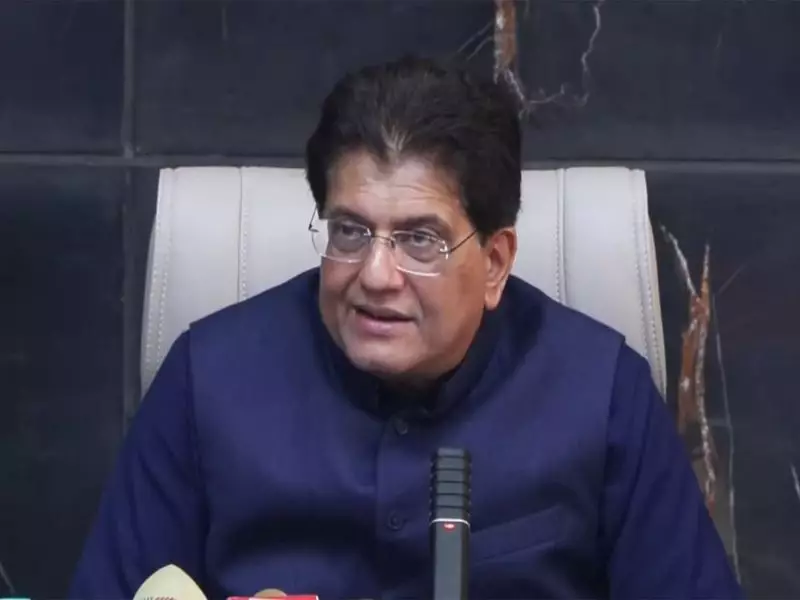
Commerce and Industry Minister Piyush Goyal has underscored the pivotal role of Free Trade Agreements (FTAs) and Comprehensive Economic Partnership Agreements (CEPAs) in India's ambitious journey to become a developed nation, or 'Viksit Bharat', by the year 2047. He emphasized that these strategic trade pacts are instrumental in enhancing market access, boosting exports, and integrating India more deeply into global value chains.
Strategic Trade Pacts as Growth Engines
Addressing a key gathering of industry leaders and stakeholders, Goyal articulated a clear vision. He stated that the government's proactive approach to negotiating and signing modern trade agreements is a cornerstone of its long-term economic strategy. These agreements are not merely about tariff reductions but are comprehensive frameworks designed to facilitate trade in services, promote investments, and protect intellectual property rights.
The Minister pointed to the recently concluded agreements with countries like the United Arab Emirates and Australia as prime examples of this successful strategy. He noted that the India-UAE CEPA, operational since May 2022, has already led to a significant surge in bilateral trade. Similarly, the Economic Cooperation and Trade Agreement (ECTA) with Australia is opening new avenues for Indian exporters in sectors ranging from textiles to information technology.

Focus on Quality and Mutually Beneficial Outcomes
Piyush Goyal assured that India is entering these negotiations from a position of strength and with a clear focus on securing fair and balanced terms. The approach is cautious yet confident, ensuring that domestic industry is protected while simultaneously creating opportunities for expansion into new markets.
"Our negotiations are thorough," Goyal remarked, highlighting that the government conducts extensive consultations with industry bodies to understand sector-specific challenges and opportunities. The objective is to craft agreements that are truly mutually beneficial and support the 'Make in India' initiative, thereby creating jobs and fostering innovation within the country.
Ongoing and advanced negotiations with key economic partners like the United Kingdom, the European Union, and Canada were also mentioned. These potential agreements are seen as critical for providing Indian businesses with preferential access to some of the world's largest and most lucrative consumer markets.
Building a Resilient and Self-Reliant Economy
The Minister connected the dots between strategic trade diplomacy and the broader national goal of 'Atmanirbhar Bharat' (self-reliant India). He argued that integrating with the global economy through well-negotiated FTAs strengthens domestic manufacturing by providing scale and exposure to best practices. This, in turn, enhances competitiveness, which is essential for long-term, sustainable development.
The target of achieving developed nation status by 2047, the 100th year of India's independence, provides a clear timeline for this economic transformation. Goyal expressed confidence that a continued focus on export-led growth, supported by a network of modern trade agreements, will be a major driver in achieving this historic milestone. The strategy positions India not just as a market but as a crucial and reliable partner in the global supply chain of the future.
In conclusion, Piyush Goyal's message was one of optimism and strategic intent. The government views FTAs and CEPAs as essential tools in its economic toolkit, carefully deployed to build a more prosperous, resilient, and globally integrated India by 2047.