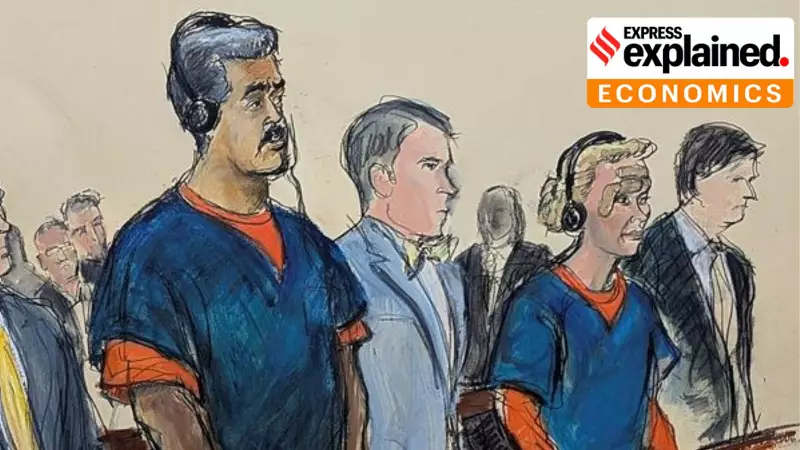
An anonymous individual has triggered a major controversy in the world of finance and online betting by netting a staggering $436,000 from a wager placed on the capture of Venezuelan President Nicolas Maduro. The bet was made on a prediction market platform mere hours before the United States government publicly announced the successful military operation.
The Windfall Wager and Suspicious Timing
The trader, identifiable only by a blockchain code, joined the prediction market platform Polymarket in December 2025. This user's activity was highly focused, placing only four bets, all concerning outcomes related to Venezuela. Starting with an initial investment of $32,537, the account's value skyrocketed when US forces apprehended President Maduro on Saturday, January 3, 2026.
Data from Polymarket reveals a telling pattern. On the afternoon of Friday, January 2, traders on the platform assessed the probability of Maduro's exit from power at a lowly 6.5%. By midnight, this had inched up to 11%. However, the most dramatic shift occurred in the early hours of Saturday, just before former President Donald Trump posted on Truth Social that Maduro was in US custody. The odds surged, indicating that some traders may have positioned themselves with non-public, advanced knowledge of the imminent operation.

What Are Prediction Markets and How Are They Regulated?
Platforms like Polymarket and Kalshi operate in the sector known as prediction markets or opinion trading. These allow users to wager on the outcome of future events, ranging from politics and sports to weather and cryptocurrency prices. Participants bet on a yes/no proposition; a correct prediction yields profit, while an incorrect one results in a loss.
While these platforms often use financial terminology like "trading" and "profits," they are not traditional stock exchanges. In the United States, they fall under the purview of the Commodity Futures Trading Commission (CFTC), but oversight is generally less stringent compared to securities markets. Polymarket itself faced scrutiny from the US Department of Justice in the past for allowing trades from US-based users before it was registered with the CFTC in late 2025.
India's Strict Ban on Online Prediction Markets
The incident underscores the global regulatory patchwork governing such platforms. In India, the government has taken a hardline stance. Following a caution from the Securities and Exchange Board of India (SEBI) in early 2025, which highlighted the lack of investor protection, a comprehensive ban was enacted.
The Promotion and Regulation of Online Gaming Act, 2025 placed a blanket prohibition on all online money gaming services in August 2025. This law directly impacted Indian opinion trading startups like Probo and Opinio. Violators, including platform operators and promoters like social media influencers, face severe penalties including imprisonment and hefty fines. Financial institutions are also barred from processing transactions for these platforms.
This crackdown followed a period of rapid growth where the opinion trading sector in India had attracted over 5 crore users and secured funding exceeding Rs 4,200 crore from prominent investors including PeakXV Partners (formerly Sequoia Capital India) and Elevation Capital.
The massive, well-timed profit from the Maduro bet has ignited a fierce debate about the potential for insider trading on these largely unregulated global platforms. It raises critical questions about market integrity, the ethical boundaries of wagering on geopolitical events, and the identity of traders who might profit from confidential information.