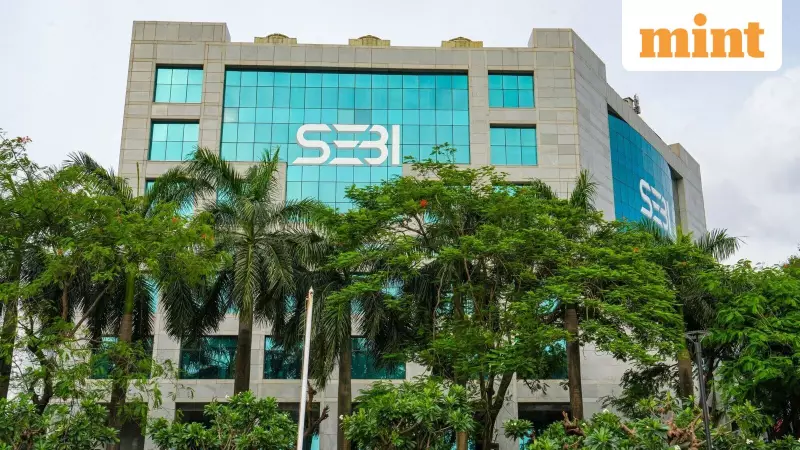
The Securities and Exchange Board of India (Sebi) has ushered in a new era of regulation for merchant bankers, announcing a comprehensive set of stricter rules focused on capital adequacy, governance, and operational integrity. The phased implementation, detailed in a circular published on Friday, gives the existing 224 registered entities, including major players like 360 ONE WAM Ltd, AK Capital Services Ltd, JM Financial Ltd, and Kotak Mahindra Capital Company Ltd, a two-year window to achieve full compliance.
Stricter Capital and Net Worth Requirements
In a significant move, Sebi has categorized merchant bankers based on net worth and mandated a gradual increase in their financial robustness. Category I merchant bankers must achieve a net worth of ₹25 crore and a liquid net worth of ₹6.25 crore by January 2027. These thresholds will further double to ₹50 crore and ₹12.5 crore, respectively, by January 2028. Firms classified under Category II face lower, yet enhanced, capital requirements.
The regulator has clearly defined the consequences of non-compliance. Entities failing to meet the Category I benchmarks will be automatically reclassified as Category II. More severely, those unable to meet even the Category II standards will be prohibited from accepting any new business mandates. These norms, officially introduced into The Gazette of India on 5 December, are scheduled to take effect from 3 January 2026.

Enhanced Governance and Professional Standards
Sebi has placed a strong emphasis on governance and accountability within merchant banking firms. A key change is the expansion of mandatory professional certification. Previously required only for key personnel, the NISM Series-IX: Merchant Banking Certification Examination will now be mandatory for all qualified professionals employed by these firms.
Existing employees have until 2 January 2027 to obtain this certification, while those appointed on or after 3 January 2026 will have a 90-day window from their joining date. Furthermore, Sebi has raised the bar for leadership, stipulating that principal officers responsible for managerial decisions must possess at least five years of experience in financial markets.
The regulator has also tightened the definition of usable capital by specifying eligible liquid assets and applying haircuts on various holdings, from listed equities to government securities. Concurrently, it has capped underwriting exposure at 20 times the liquid net worth, with existing firms given until January 2028 to align with this new limit.
Tighter Operational Controls and New Revenue Mandate
In a bid to ensure core activities remain in-house, Sebi has prohibited merchant bankers from outsourcing their fundamental merchant banking functions. Firms with existing outsourcing contracts must terminate them within 90 days starting from 3 April 2026.
To prevent conflicts of interest, clearer segregation is now required between Sebi-regulated activities and other business ventures run by a merchant banker. This includes mandates for separate business units, Chinese walls, distinct grievance redressal mechanisms, and prominent disclosures for activities outside Sebi's purview.
Introducing a first-of-its-kind rule for the industry, Sebi has set a minimum revenue requirement. Category I firms must generate at least ₹25 crore from permitted activities over a rolling three-year period, while Category II firms must earn ₹5 crore. Although enforcement of this rule begins only in April 2029, failure to meet the threshold could result in cancellation of registration, barring exceptional circumstances like pandemics or global recessions.
Industry experts view the reforms as a positive step towards market stability. "Sebi is being proactive in making markets more robust and intermediaries more accountable. The intention is not to rule out players, but to create adequate guardrails to ensure smooth capital market transaction execution. The regulations are in line with industry expectations," commented Bhavesh A. Shah, Managing Director and Head of Investment Banking at Equirus Capital.