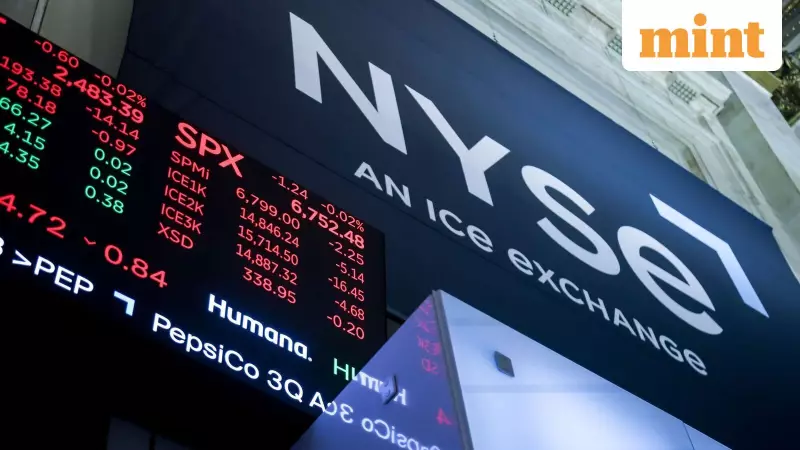
Indian stock market investors are increasingly looking beyond domestic boundaries to diversify their portfolios and participate in the growth of global technology giants like Apple, Tesla, Nvidia, Microsoft, and Alphabet. This strategic shift toward international markets reflects a growing sophistication among Indian investors seeking to spread risk and capture growth opportunities worldwide.
Three Popular Routes to US Market Exposure
Indian investors now have multiple pathways to access US stocks and other global markets. The three primary methods gaining popularity include opening international accounts with traditional brokers, using specialized fintech platforms that aggregate US investing services, or purchasing Indian ETFs and mutual funds that track US indices. Each approach comes with distinct cost structures and features that cater to different investor profiles.
Direct Brokers: Full Control at a Cost
The first method involves opening a global trading account with domestic brokerage firms that have partnerships with US brokerage entities, or directly onboarding with overseas brokers. This approach provides investors with complete flexibility to pick individual stocks, US-listed ETFs, and even thematic baskets according to their preferences.

However, this comprehensive access comes with several cost considerations. Investors typically face account opening and maintenance charges, higher brokerage fees per trade compared to domestic equity transactions, foreign exchange conversion costs, and bank remittance fees each time they transfer money abroad under the Liberalised Remittance Scheme (LRS). Some platforms may also impose minimum balance or activity requirements.
For investors making small or infrequent transactions, these fixed and foreign exchange-related costs can make direct brokerage comparatively expensive on a per-transaction basis, potentially eating into returns for retail investors with limited capital.
Fintech Brokers: Simplifying Global Investing
Fintech platforms specializing in US stock market investments through partnerships with global brokers aim to democratize international investing. They offer streamlined, app-based onboarding with digital KYC processes, enable fractional investing for those with smaller budgets, and provide packaged portfolios or thematic investments for easy diversification.
According to Viram Shah, Founder & CEO of Vested Finance, direct brokers "offer full access but can be costly and a bit complex," while "fintech platforms like Vested try to strike the middle ground by offering easy, low-cost access with the flexibility to build a diversified US portfolio, all while staying compliant."
These platforms typically generate revenue through platform or subscription fees, markups on foreign exchange conversions, or embedded costs in premium features and advisory models. Their value proposition lies in balancing cost efficiency with user-friendly interfaces and educational resources.
Indian ETFs and Mutual Funds: Rupee-Denominated Convenience
The third approach provides indirect exposure to US stocks through Indian mutual funds or ETFs that invest in US markets or track global indices like the S&P 500 or NASDAQ 100. Investors can purchase these instruments using Indian rupees through regular demat or mutual fund platforms, eliminating the need to remit funds abroad under LRS.
Key cost considerations for this route include the Total Expense Ratio (TER) of the fund or ETF, brokerage charges on ETF trades (for exchange-traded units), and tracking error, which measures how closely the fund follows its underlying index. Low-cost index funds and ETFs can be competitively priced for long-term, passive exposure, though some international funds carry relatively high TERs. The main limitation is that investors cannot select individual stocks—only broad market baskets.
Which Route Offers the Best Value?
There is no universal winner in the cost-effectiveness comparison, as the optimal choice depends heavily on individual investment patterns and preferences.
For frequent traders who prioritize full control over their investments and execute larger transactions, a well-chosen direct broker can prove cost-efficient despite higher fixed costs, as these become less significant relative to trade sizes.

Retail investors starting with smaller amounts who seek diversification with minimal complexity often find fintech platforms offering low brokerage, fractional investing, and transparent fees to represent the most cost-effective balance of price and convenience for US stock trading.
Investors preferring simplicity and rupee-based transactions may opt for Indian ETFs or mutual funds, accepting potentially slightly higher ongoing costs in exchange for operational ease and familiar investment processes.
Regardless of the chosen path, investors must carefully consider tax implications, including Tax Collected at Source (TCS) under LRS where applicable, capital gains tax, dividend tax, foreign exchange charges, and brokerage fees. The truly cheapest option in the long term depends not just on headline fees but on individual factors like investment ticket size, trade frequency, and preference between passive index exposure versus active stock selection.