

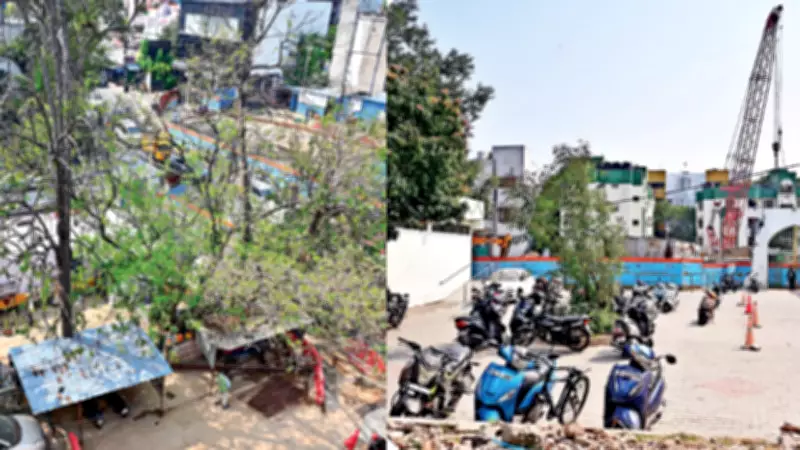
Chennai Metro Phase-II to Transform City with Major Commercial Development
Chennai is set to witness a significant urban transformation as the Chennai Metro Rail Ltd (CMRL) embarks on an ambitious plan to develop 73.4 lakh square feet of commercial property across at least 37 strategic locations along its Phase-II corridors. This large-scale initiative aims to monetize land parcels, boosting non-fare box revenue and improving the financial sustainability of the expanding metro network.
Strategic Locations and Integrated Designs
Officials have identified prominent sites for development, including the upscale Boat Club area, the heritage-rich Kutchery Road, Sholinganallur along the IT corridor, and key transport nodes such as Mandaveli, Vadapalani, and Alandur. Many of the proposed buildings will be integrated with station entry structures or situated within walking distance, creating vibrant commercial clusters that are expected to increase daily footfall and enhance connectivity.
At Kutchery Road, near the Kapaleeshwarar Temple, a four-storey integrated building is planned on a 22,000 sqft plot, offering over 43,000 sqft of built-up area at an estimated cost of ₹16.47 crore. This structure will connect directly with the underground station, facilitating seamless access for commuters. In the Boat Club residential periphery, a standalone four-storey commercial building with a basement is proposed on an 8,200 sqft plot, providing more than 17,000 sqft of space at ₹6.59 crore, with two additional integrated buildings planned nearby.

Construction Plans and Phase-II Focus
A CMRL official stated that construction will commence first at the Mandaveli terminus-cum-bus depot, with work soon to follow in Vadapalani and Alandur. The agency plans to issue design-and-build contracts for each property, marking a shift from Phase-I, where development was more limited. In Phase-I, CMRL initiated projects like a 27-storey 'central tower' near Central Station and an eight-storey multimodal complex at Broadway, along with leasing commercial spaces within stations.
Phase-II represents a departure as it involves large-scale development outside station footprints for the first time, drawing inspiration from successful models in other Indian cities. This approach aligns with global best practices for transit-oriented development, aiming to create mixed-use environments that support public transport usage.
Learning from Other Metro Systems
Delhi Metro has established a robust property-development programme, including integrated residential complexes, IT parks with eight-floor blocks, and a planned 29-storey residential property in Janakpuri West. Similarly, Bangalore Metro is catching up with projects like an 11-storey mall in KR Puram. These examples highlight the importance of non-fare revenue for metro viability, as high-cost projects cannot rely solely on ticket fares.
R Ramanathan, former CMRL director and adviser to Nagpur Metro, emphasized that non-fare revenue is crucial for sustainability. He noted that metros are planned with properties for commercial exploitation to generate as much revenue as possible, provided it does not disrupt operations. Integration and parking access will be key factors in determining the market success of these developments.
Expert Insights on Transit-Oriented Development
Sivasubramaniam Jayaraman of ITDP stressed that such projects can strengthen ridership if mobility remains central. Easy and safe access to stations is critical; if people face traffic, unsafe crossings, or poor pedestrian infrastructure, the purpose of transit-oriented development is defeated. Urban planner Karthikeyan Baskar added that denser development within 500 meters of stations could reshape commute patterns, boosting public transport and reducing private vehicle usage, but pedestrian infrastructure must improve to support this shift.
This comprehensive development plan underscores CMRL's commitment to enhancing Chennai's urban landscape while ensuring the metro's long-term financial health. By creating commercial hubs around transit nodes, the city aims to foster sustainable growth and improved connectivity for residents.






