

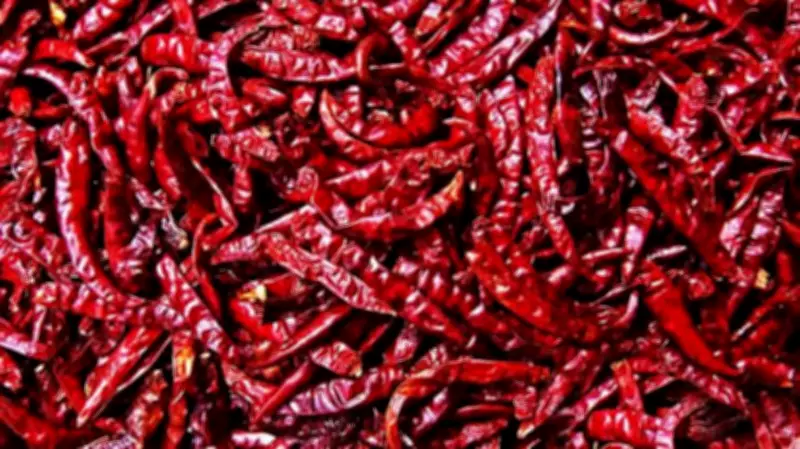
The agricultural landscape in Karnataka is witnessing a dramatic surge in the prices of dry red chillies, with rates skyrocketing to an unprecedented Rs 78,000 per quintal. This sharp increase is directly attributed to a substantial contraction in both the cultivation area and overall production, creating a severe supply crunch in the market.
Steep Decline in Cultivation and Output
According to the latest data released by the Karnataka State Seeds Development Board (KSSDB), the cultivation area dedicated to dry chilli has plummeted to approximately 79,152 hectares across the state. This represents a significant reduction, marking the smallest area under cultivation in the last five years. Concurrently, the estimated production for the current season stands at a mere 1.58 lakh metric tonnes, which also hits a five-year low. The dual decline in area and output has created a perfect storm, driving prices to record highs and putting immense pressure on consumers and industries reliant on this essential spice.
Factors Behind the Supply Shortfall
Several underlying factors have contributed to this alarming situation. Unfavorable weather conditions, including erratic rainfall and prolonged dry spells, have adversely affected crop yields. Additionally, shifting farmer preferences towards more lucrative or less labor-intensive crops may have played a role in reducing the chilli cultivation area. The cumulative effect of these challenges has resulted in a diminished harvest, exacerbating the supply-demand imbalance and fueling the price surge.

Market Implications and Future Outlook
The spike in dry red chilli prices is expected to have far-reaching consequences across various sectors. Food processing industries, restaurants, and households are likely to feel the pinch as the cost of this staple ingredient escalates. Market analysts are closely monitoring the situation, with concerns that if production does not rebound in the coming seasons, prices could remain elevated or even climb further. Stakeholders are calling for immediate interventions, such as improved irrigation facilities, better crop insurance schemes, and incentives for farmers to boost chilli cultivation and stabilize the market.






