

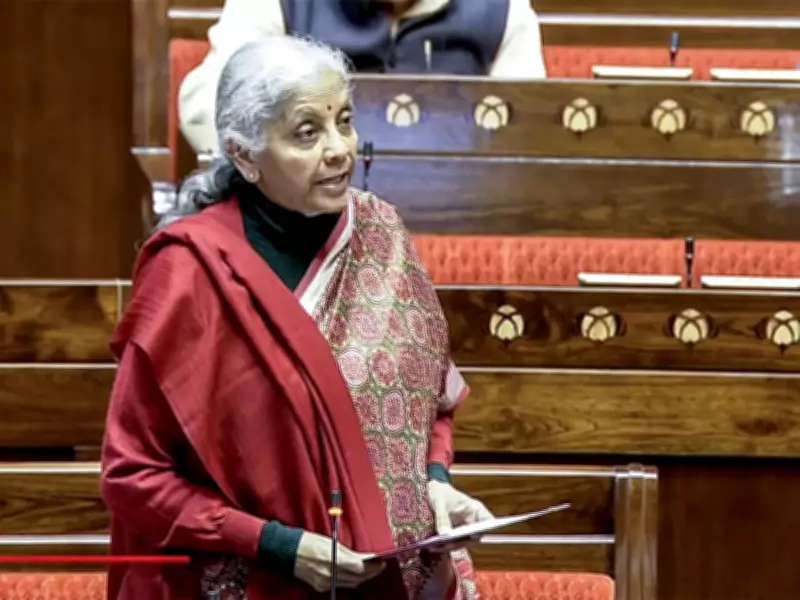
Finance Minister Nirmala Sitharaman Highlights Economic Survey's Vision for India's Strategic Growth
Union Finance Minister Nirmala Sitharaman, in a significant address on Thursday, underscored the key insights from the Economic Survey 2025-26. She articulated that the survey outlines a transformative journey for India, moving from the concept of Swadeshi to achieving strategic resilience and ultimately strategic indispensability on the global stage. This evolution, she noted, will shift the world's perception from merely considering Indian products to embracing them without hesitation.
Government's Focus on Deregulation and Manufacturing Strengthening
In her post on social media platform X, Sitharaman elaborated on the government's concerted efforts to bolster the economy. "It is in this context that our government has been focusing on deregulation and strengthening the manufacturing sector in the country through various measures," she stated. Aligning with Prime Minister Narendra Modi's vision of Aatmanirbhar Bharat and Make in India, she highlighted how India's industrial landscape has transitioned from traditional manufacturing to embracing high-tech capabilities, resilience, and global integration.
Key initiatives such as the National Logistics Policy and the Unified Logistics Interface Platform (ULIP) are playing a pivotal role in enhancing logistics efficiency and reducing transaction costs. These measures are directly contributing to the enhanced competitiveness of Indian manufacturing on an international scale.

Robust Manufacturing Growth and PLI Scheme Achievements
The Economic Survey 2025-26 paints a promising picture of the manufacturing sector's revival. According to the data presented:
- Manufacturing sector growth recorded impressive figures of 7.72% in Q1 and 9.13% in Q2 of FY 2025-26.
- This growth is largely driven by the Production Linked Incentive (PLI) scheme and ongoing reforms.
- As of September 2025, the PLI schemes have attracted actual investments exceeding Rs 2 lakh crore.
- These investments have resulted in incremental production of over Rs 18.70 lakh crore.
- Employment opportunities have been created for more than 12.60 lakh people.
Reflecting the government's push for modernization, medium- and high-technology activities now constitute 46.3% of India's total manufacturing value added, indicating a significant shift towards advanced industrial capabilities.
Strengthening Human Capital: Education and Health Milestones
Sitharaman emphasized that India's growth strategy is firmly anchored in strengthening human capital, with measurable gains in both education and health outcomes as highlighted in the Economic Survey 2025-26.
In the realm of school education, there is a decisive move towards quality enhancement:
- 13,076 PM SHRI schools are operating as model institutions.
- Post-pandemic learning recovery is evident, with Grade III mathematics proficiency rising to 65% from 42% in 2021.
- Digital integration is accelerating through more than 4.6 crore APAAR IDs, enabling seamless tracking of student progress.
Higher education has also seen substantial expansion and rising standards:
- The Gross Enrolment Ratio has increased to 29.5.
- Premier institutions have expanded to include 23 IITs, 21 IIMs, and 20 AIIMS.
- International campuses are extending India's academic presence globally.
Health indicators demonstrate parallel structural progress:

- Infant mortality has declined from 40 in 2013 to 25 in 2023, reflecting sustained improvements in public health delivery.
- A nationwide primary healthcare network is anchored by 1.82 lakh Ayushman Arogya Mandirs.
- Large-scale protection for families is evident with 42.78 crore Ayushman cards and over 10.98 crore hospital admissions.
- Disease control efforts are strengthening, with tuberculosis incidence falling by 21% since 2015.
Building Strategic Resilience Through State Capacity
The Finance Minister further elaborated that the survey recognizes state capacity as the foundational element for building strategic resilience and achieving strategic indispensability. She explained that strategic resilience is co-created through the everyday behavior of the state, firms, and citizens, resting on a shared obligation and reciprocal contract among these three pillars.
This concept resonates deeply with Prime Minister Narendra Modi's clarion call of 'Sabka Saath, Sabka Vikas, Sabka Vishwas, Sabka Prayaas'. Additionally, the survey notes that the state-level deregulation drive is gaining momentum, embodying the spirit of cooperative and competitive federalism, further strengthening India's economic framework.





