

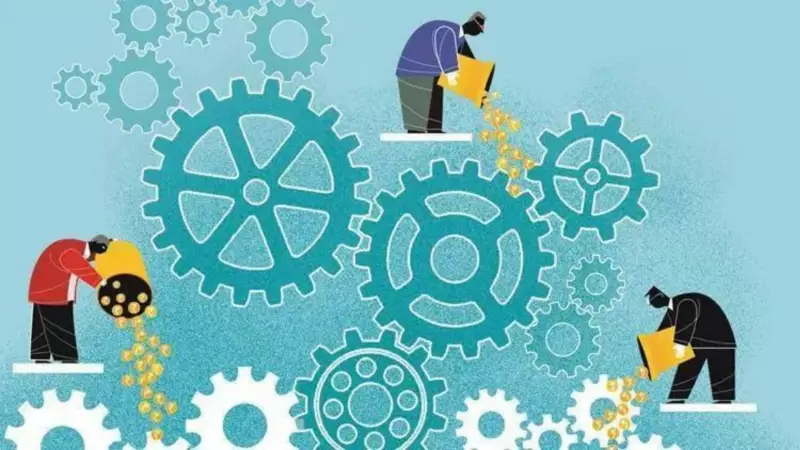
India stands at a critical economic juncture, with the ambitious goal of achieving high-income status. According to Professor Prachi Mishra of Ashoka University, this transformation would require the nation to sustain a real growth rate of 8 per cent for two decades, in a manner that is both sustainable and generates widespread employment. The central challenge lies in embracing the process of creative destruction—the economic upheaval caused by innovation—while effectively managing its disruptive social consequences.
The Global Backdrop and India's 'Goldilocks' Phase
Despite historic global uncertainties, the world economy showed resilience in 2025. However, this momentum faces tests from shifting technology, trade, and policies. Notably, while the US saw GDP growth, job creation slowed. China displayed strength through record current account surpluses but grappled with domestic issues like real estate distress and weak consumer spending. A significant easing cycle saw nine of the ten major central banks cut rates, marking the most aggressive monetary easing since 2009.
In contrast, India presents a more encouraging picture, described by the RBI Governor as being in a "Goldilocks" phase. By December 2025, the Reserve Bank of India had reduced the repo rate by a cumulative 125 basis points to 5.25 per cent, supported by liquidity measures. Bank health improved, with gross NPAs expected to bottom at 2.3-2.5 per cent by March 2026. Fiscal consolidation and the National Monetisation Pipeline progressed, earning a credit rating upgrade from S&P that validated policy commitment to stability.

Persistent Risks and Structural Hurdles
Despite progress, significant risks cloud the horizon. India's overall output remains more than 3 per cent below pre-pandemic trends. Sovereign debt is elevated, partly due to competitive pre-election transfers. Foreign Direct Investment (FDI) inflows are below potential, and a broad-based private capital expenditure boom is yet to materialise, despite successes in electronics exports and investments like Google's AI centre.
Financing the next growth phase is a pivotal question. Household financial savings have softened, and corporations are deleveraging rather than expanding capacity aggressively. While reforms like streamlined labour codes and impressive infrastructure investment are underway, softer constraints like policy credibility and regulatory predictability are as crucial as interest rates for spurring sustained private investment.
Deep-seated structural challenges in health, education, and urban development persist. India ranks as the world’s third most polluted country, with clean air yet to become a major political priority. Regional disparities are stark, exemplified by Bihar, which houses 9 per cent of India's population but contributes less than 2 per cent to national GDP, despite its economic output tripling in two decades.
The Technology-Demography Paradox and the Path Forward
A core paradox defines India's strategy. As a labour-abundant nation with a young population, economics suggests a focus on labour-intensive production. Yet, the trend is toward adopting capital-intensive technologies. The solution, experts argue, is to adapt technology to India's context. India’s greatest gains may lie not in competing at the frontier but in deploying AI across agriculture, logistics, health, and public services.
This requires addressing gaps in innovation investment. India's research spending is modest at around 0.65 per cent of GDP, and patent applications tell a telling story: 70,000 in India versus 1.6 million in China. However, history shows that successful growth often comes from scaling existing technologies through skills, firm capabilities, and strong institutions, not just frontier innovation.
Sustained prosperity demands institutional frameworks that harness creative destruction while protecting displaced workers. This involves adapting technology locally, prioritising labour-absorbing sectors, securing long-term capital, and building adaptive labour market institutions. For India, the ultimate task is to balance rapid growth ambitions with the serious management of its disruptions, ensuring that resilience translates into durable, broad-based prosperity for all.






