

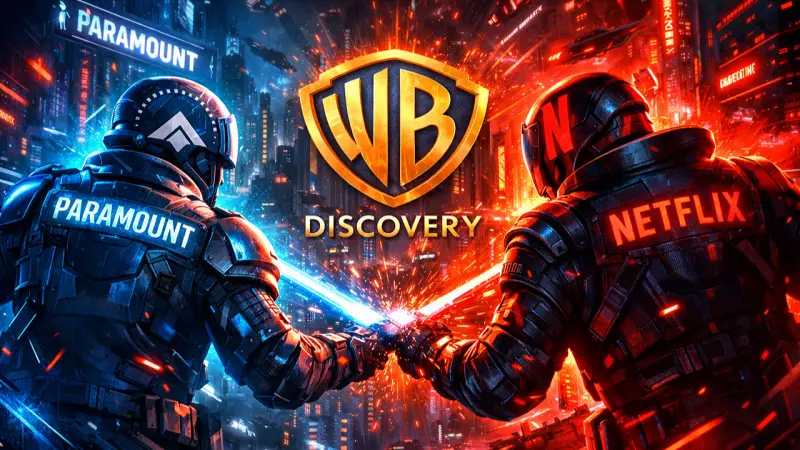
In a major corporate showdown that has reshaped the media landscape, Warner Bros Discovery (WBD) has formally rejected a hostile takeover bid from Paramount Skydance, opting instead to proceed with a sale of key assets to streaming giant Netflix. The decision culminates a fierce four-month campaign led by Paramount's David Ellison and reveals high-stakes negotiations involving personal compensation packages worth hundreds of millions for WBD's CEO.
The Battle for Warner Bros: A Timeline of Rejection
The aggressive pursuit began in earnest after a September 11 report in the Wall Street Journal sent WBD's share price climbing. Just three days later, on September 14, Paramount CEO David Ellison met with WBD chief David Zaslav to express formal interest in an acquisition. Ellison's initial proposal valued WBD at approximately $19 per share, suggesting a merger where WBD shareholders would receive $11.40 in cash and 0.404 shares of Paramount Skydance stock for each of their shares.
This opening bid was swiftly rejected by the WBD board on September 22. Directors cited that the offer significantly undervalued the company and raised concerns about Paramount's own inflated share price and the Ellison family's controlling voting structure. Undeterred, Paramount returned with a series of progressively higher bids over the following months: $22 per share on September 30, $23.50 on October 13, $25.50 on November 20, $26.50 on December 1, and a final offer of $30 per share on December 4.

Ellison's final push included a personal text to Zaslav, calling it the "honour of a lifetime" to partner with him and own WBD's iconic assets. However, this too received no response, and the WBD board formally rejected the $30-per-share hostile bid on December 17.
The Netflix Deal and the "Hundreds of Millions" Offer to Zaslav
While fending off Paramount, WBD had been pursuing another path. On December 5, the company announced a deal to sell Warner Bros Studios and its HBO Max service to Netflix. According to an official SEC filing, the WBD board views this $72 billion agreement with Netflix as a superior value proposition for shareholders compared to Paramount's $108 billion takeover attempt.
The filing also unveiled a critical detail of the takeover battle: the Ellisons' attempt to secure Zaslav's support. In exchange for his backing of the merger, they offered the WBD CEO a compensation package reportedly valued at "hundreds of millions of dollars." The proposal suggested Zaslav could become Chairman of the combined company's board. However, Zaslav reportedly ended these discussions, informing the WBD board that "it was inappropriate to discuss any such arrangements at that time."
What This Means for Shareholders and Zaslav's Future
For Paramount's hostile bid to have succeeded over the Netflix agreement, it would have required approval from both WBD's board of directors and its stockholders. The only alternative would have been for Paramount to secure at least 90% of WBD's outstanding common stock in favour of the proposal—a formidable hurdle.
Financially, David Zaslav stands to gain substantially regardless of the outcome due to his significant stock holdings in WBD. Projections suggest he could become a billionaire if either major deal proceeds. However, his future moves are constrained by his employment contract. The filing notes Zaslav is subject to non-competition and non-solicitation covenants that apply for 24 months after his employment ends, unless he is terminated without cause or leaves for good reason, in which case the restriction period reduces to 12 months.
The detailed chronology released by WBD starkly contrasts the unsolicited and aggressive approach from Paramount with the company's own chosen strategic path. This decision marks a pivotal moment in the ongoing consolidation of the global media and entertainment industry, with Netflix emerging as a powerful buyer of legacy studio assets.






