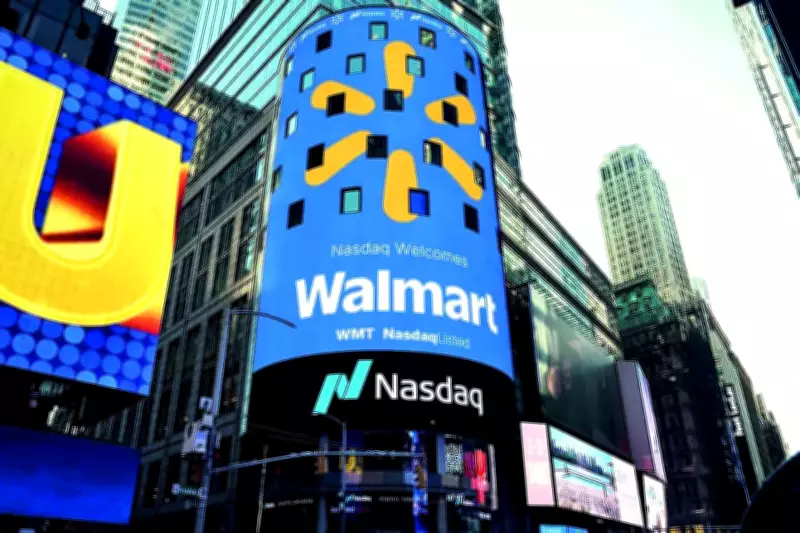
In a landmark achievement for the retail industry, Walmart reached a market capitalization of over $1 trillion on Tuesday, February 3. This historic milestone positions the American company as the first retailer in the world to enter an exclusive club of corporations with a 13-figure valuation, a group predominantly composed of technology giants such as Google, Nvidia, Amazon, Microsoft, and Meta.
A Year-Long Rally and Strategic Moves
The company has been riding a year-long rally that has seen its shares surge by nearly 26%. Walmart's ascent to the $1 trillion mark occurred merely two weeks after it transitioned from the New York Stock Exchange (NYSE) to the Nasdaq-100. Notably, this trillion-dollar valuation also comes just two days after new CEO John Furner assumed leadership, succeeding longtime CEO Doug McMillon.
Walmart's remarkable growth has been driven by its ability to simultaneously appeal to higher-income customers seeking value and convenience while retaining its core base of lower-income shoppers. This dual strategy has allowed the retail giant to expand its market reach and strengthen its financial performance.

Embracing Technology and AI
Walmart has made significant early and aggressive bets on artificial intelligence, investing billions into supply-chain automation. These investments have enabled the company to stock fresher produce, accelerate deliveries, and enhance inventory forecasting and search capabilities. Over the past five years, Walmart has reportedly expanded its online marketplace to include over half a billion items, launched one-hour delivery services, created Walmart+ to compete with Amazon Prime, and built a $4+ billion advertising business that has boosted profit margins.
Eric Clark, chief investment officer at Accuvest Global Advisors, emphasized this transformation in a statement to Reuters: "They've gone from just being the local retailer for good prices to really embracing technology. It's been a massive digital business transformation that this company has gone through over the last five years."
Positioning as an AI Leader
Walmart has been actively positioning itself as a leader in AI commerce. In January of this year, the company announced a partnership with Google, allowing customers to purchase products using Google's Gemini chatbot. This collaboration has led analysts to dub Walmart as "the new AI giant," highlighting how AI is reshaping the commerce landscape.
The partnership was unveiled at the National Retail Federation's Big Show, where Google CEO Sundar Pichai and then-incoming Walmart US CEO John Furner detailed the initiative. As a result, shoppers can now discover and buy Walmart and Sam's Club products directly through the Gemini chatbot. Furner underscored Walmart's commitment to innovation, stating, "What won't change ... is our purpose, our values, the way we think about people leading." He added, "But everything else we are willing to change — what we sell, how we interact with customers, with our associates."
How the Google Partnership Works
The integration with Google's Gemini means that users researching products on the chatbot will automatically receive product recommendations from Walmart when relevant. If users decide to purchase a recommended item, they can complete the transaction instantly, with Walmart's checkout environment appearing seamlessly within the conversation.
Brian Mulberry, senior client portfolio manager at Zacks Investment Management, told Reuters that Walmart's strategic weaving of technology, including AI, into its operations—from reducing the cost of goods to capturing a larger share of consumer spending—solidifies its status as an emerging "new AI giant."
Competing in the AI Race
By increasing investments in AI, Walmart is actively competing with online behemoth Amazon, which had an early advantage with its GenAI-powered assistant, Rufus, designed to answer shopping queries. Walmart's focused efforts have helped narrow the gap with Amazon, demonstrating the retailer's commitment to leveraging cutting-edge technology to enhance customer experiences and drive growth.
This trillion-dollar achievement not only marks a financial milestone but also underscores Walmart's successful pivot from a traditional retailer to a technology-forward enterprise, setting a new benchmark for the global retail industry.