

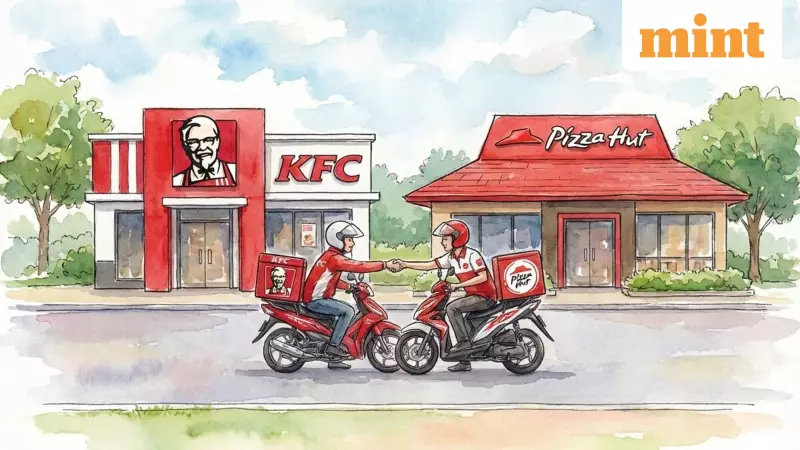
As India welcomed 2026, the country's quick-service restaurant (QSR) landscape witnessed a seismic shift. Two of the largest operators of global fast-food giants, Devyani International and Sapphire Foods, announced a landmark merger on January 1, 2026. This consolidation creates a single superpower to manage the entire portfolio of Yum! Brands—KFC, Pizza Hut, and Taco Bell—across India and neighboring regions.
The Anatomy of the Mega Merger
The merger is structured as a share-swap arrangement between the two listed entities. Sapphire Foods shareholders will receive 177 shares of Devyani International for every 100 shares they hold. Post-merger, only Devyani International will remain listed on the stock exchanges. The entire process is anticipated to take between 15 to 18 months to complete.
This union will result in a colossal entity operating over a thousand outlets. Beyond the Yum! Brands portfolio, Devyani also brings its other ventures to the table, including Costa Coffee, the South Indian chain Vaango, and the acquired delivery-only brand Biryani By Kilo. The company has informed shareholders it expects annual benefits of ₹210 to 225 crore from the second year post-merger, driven largely by cost synergies and operational efficiencies.

Pressure Cooker: The Struggling Indian QSR Market
The merger is not born out of ambition alone but is a strategic response to significant headwinds buffeting India's fast-food sector. The market is experiencing a pronounced slowdown characterized by weaker consumer demand, reduced footfall, and severe pressure on profitability.
Key industry metrics tell a sobering tale. Same-store sales growth (SSSG), a critical gauge of demand at existing outlets, has turned negative for many players. For instance, in the first half of FY26, Devyani's KFC outlets saw SSSG decline by 2.4%, while its Pizza Hut stores fared worse with a 4.1% drop. Sapphire's Pizza Hut network recorded an 8% fall in SSSG during the same period.
Brokerage firm Nuvama Institutional Equities noted in November 2025 that Ebitda margins for most brands contracted due to lower productivity and soft discretionary spending, exacerbated by seasonal factors like Shravan and Navaratri impacting non-vegetarian sales. This trend has affected nearly all major operators, making scale and consolidation a survival imperative.
The Global Pizza Hut Conundrum
A pivotal factor behind this deal is the global and local struggle of the Pizza Hut brand. In November 2025, Yum! Brands' CEO Chris Turner announced a strategic review of Pizza Hut, hinting at a potential sale, stating the brand might realize its full value outside the parent company.
In India, the pizza segment faces intense competition and a consumer shift towards at-home ordering, denting the dine-in model. While Devyani managed a modest 1.8% sales growth for Pizza Hut in H1 FY26, it did so by adding 28 new outlets, indicating pressure on existing stores. Sapphire saw its Pizza Hut sales fall by 6% year-on-year in the same period.
Strategic Gains and Market Reaction
The combined entity aims to achieve multiple strategic advantages. Scale will allow focused expansion on stronger formats like KFC, which remains the fried chicken category leader. The diversification into non-Yum! brands provides a crucial hedge against the volatility in the pizza business. Analysts from JP Morgan have noted that while Pizza Hut weakens, Devyani could leverage a potential recovery in KFC.
The stock market reacted with clear bias. On January 2, 2026, Devyani International's shares opened 8% higher, while Sapphire Foods' stock fell by 3%. Analysts generally favor Devyani due to its larger scale, international footprint, and more diversified brand portfolio.
This merger sets a new precedent in India's QSR industry. It signals a move towards consolidation in a fragmented market facing growth challenges. Other operators, including those like Curefoods which is planning an IPO, will be watching closely as this new QSR behemoth navigates the path to profitability in a cost-conscious market.






