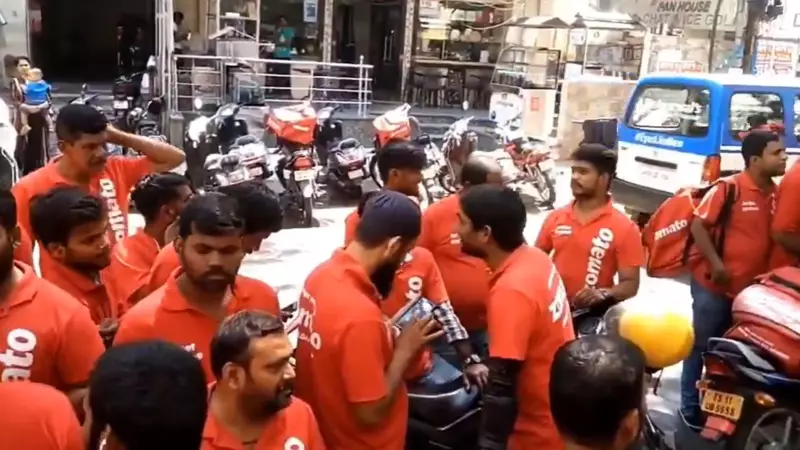
The recent declaration by Zomato CEO Deepinder Goyal that a gig workers' strike had "failed" was framed as a statement of operational normalcy. However, a deeper examination reveals this moment as a stark affirmation of how successfully platform capitalism has organised labour to absorb disruption and silence collective resistance. The uninterrupted flow of orders during the strike is less a sign of fairness and more proof of a system engineered to make exploitation invisible.
The Historical Roots of Invisibility: Caste and Informal Labour
To understand the gig economy's structure in India, one must look at the historical role of caste. Long before digital platforms existed, labour performed by Dalit and caste-oppressed communities—such as sanitation, waste management, and care work—was systematically hidden, segregated, and devalued. This labour was visible only as a social necessity, never as rights-bearing work. Caste functioned as a social technology that stabilised exploitation across generations, creating a blueprint for invisibility that modern platforms have perfected.
The gig economy did not stumble upon this model; it actively organised labour's disappearance from social recognition. It positions itself as a benevolent solution to unemployment, rather than a symptom of a crisis-ridden labour market where stable employment is eroding.

Operational Visibility vs. Political Voicelessness
What platforms like Zomato offer is not emancipatory visibility for workers, but a regime of operational visibility oriented entirely toward capital. Every aspect of labour—tracking, timing, rating, and pricing—is monitored with unprecedented precision. Yet, the worker remains politically invisible and structurally voiceless.
To the consumer, a delivery partner appears only as an interface: a moving dot on a map or a body at the door. They are not seen as workers with collective bargaining power, claims, or rights. This is exposure without power, and bodily presence without legal or social recognition. Goyal's defence, highlighting that many workers treat gig work as secondary income and enjoy flexible login times, frames this precarity as freedom of choice. This framing mistakes the effects of a surplus labour pool for genuine autonomy.
Engineering Surplus and Shifting Responsibility
The platform economy thrives amid chronic unemployment and informalisation. By over-onboarding workers, platforms convert consumer demand for services into an oversupply of labour. This replaceability is not an accident; it is the core organising principle. The resulting low average working days signal income volatility and algorithmic discipline, not worker autonomy.
This system cleverly recruits the consumer to legitimise itself. Goyal's narrative suggests the problem is not exploitation but a public misunderstanding of the platform's design. Every order becomes a referendum on the economy itself, making criticism of the platform feel like a critique of one's own convenience. Structural exploitation is thus reframed as a personal moral discomfort for the user, effectively dissolving class antagonism into individual lifestyle choices.
The ramifications are profound: collective demands for minimum pay, algorithmic transparency, and social security are dismissed as anti-consumer. Platforms govern labour without being legally recognised as employers, and the state often retreats into a facilitative rather than regulatory role.
The Real Threat of the 'Failed' Strike
In this context, the so-called "failed" strike in early January 2026 does not signal the illegitimacy of worker demands. It has done something far more threatening to capital: it has forced a moral panic. The flurry of CEO statements and public reassurances following the action is a tactic of deflection, not confidence.
The strike exposed the fundamental design of platforms: to fragment labour, absorb disruption, and sustain extraction while insisting exploitation does not exist. What capital truly fears is not consumer discomfort, but the organisation of workers. Visibility becomes dangerous only when it hardens into collective refusal.

Ultimately, the contemporary discourse around guilt and tipping individualises responsibility and moralises consumption, diverting attention from the core issues of wages, control, and power. Working-class politics must focus on who controls production, sets prices, and captures surplus value. Exploitation becomes a political problem only when caste-segmented and informal labour begins to act cohesively as a class.