

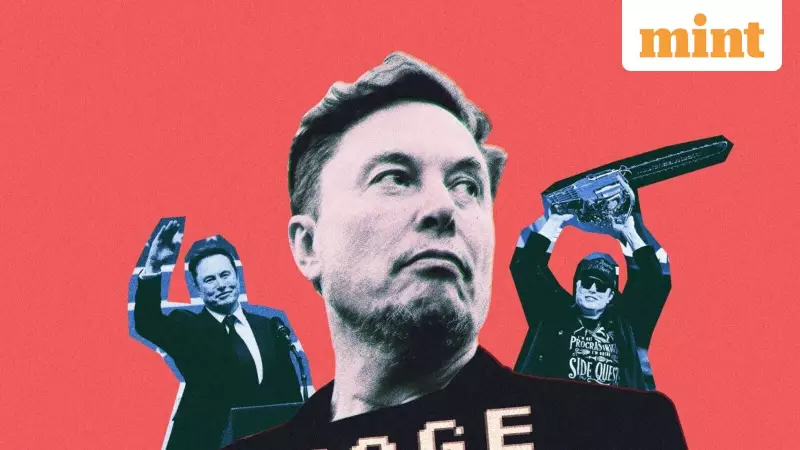
The year 2025 was so extraordinary for Elon Musk that even he might question its reality. The world's richest man navigated dizzying twists in politics and business, setting the stage for a 2026 where he could potentially become the planet's first trillionaire. This monumental wealth milestone could be achieved even before he receives a single dollar from his newly approved, record-shattering Tesla compensation package.
A Year Fit for a Simulation
Musk has long pondered the simulation hypothesis—the idea that our existence is a sophisticated computer program, akin to The Matrix. For him, the chaotic narrative of 2025 serves as a compelling proof point. "I do have this theory about predicting the future, which is that the most interesting outcome is the most likely," Musk stated on a recent podcast. He reasons that if reality is a simulation, it would only continue if it remains engaging, like a hit Netflix series with good ratings.
Applying this logic to his own life, 2025 was anything but boring. Musk's political influence soared as he became a close advisor to President Donald Trump, even earning the informal title "First Buddy" and spearheading a drive for government efficiency. However, this alliance spectacularly fractured, only to see a surprising reconciliation later in the year following the death of activist Charlie Kirk. Musk is now expected to channel significant funds toward Republican campaigns in the upcoming midterm elections.

Business Fortunes Defy Conventional Logic
In the corporate sphere, Musk's companies experienced paradoxical successes. Despite Tesla's electric vehicle deliveries falling for a second straight year, particularly in Europe, its market value reached new heights. Investor confidence, buoyed by Musk's exit from Washington politics, led them to approve a $1 trillion pay package for the CEO in fall 2025. The package is tied to audacious goals that would transform Tesla into a robotics powerhouse over the next decade.
Simultaneously, his aerospace venture, SpaceX, is flirting with a massive initial public offering (IPO) in 2026. The company sought an $800 billion valuation in a secondary share sale in late 2025, doubling from its prior $400 billion. Musk has discussed ambitious plans for AI data centers in space and a factory on the moon. Meanwhile, his AI startup, xAI, is raising billions to compete with giants like OpenAI and Google, even after its chatbot Grok sparked controversy with antisemitic posts.
The Trillion-Dollar Trajectory
All these moves have supercharged Musk's personal wealth. According to Forbes, his net worth more than doubled to approximately $726 billion by the end of 2025. This figure was bolstered by the SpaceX valuation jump and a crucial December 2025 ruling by the Delaware Supreme Court. The court overturned a previous decision, clearing the path for Musk to receive his contested 2018 Tesla pay package, now valued at around $139 billion.
The path to a trillion is becoming clearer. If SpaceX goes public at a $1.5 trillion valuation, as suggested by some reports, Musk's 42% stake would be a primary driver. Combined with his holdings in Tesla and other ventures, the four-comma club of a $1 trillion net worth is within reach this year. This staggering accumulation of wealth feels almost unreal, perhaps explaining Musk's lifelong fascination with the simulation theory, which he has publicly discussed for over a decade.
From the simplistic graphics of 'Pong' to today's hyper-realistic video games, Musk argues the rapid advancement of technology makes it probable that a more advanced civilization has already created simulations indistinguishable from reality. As he posed the question, reflecting on his own surreal journey: "If you were me, would you think this is real or a simulation?" For investors and observers worldwide, 2026 will reveal just how high this simulated—or very real—story arc can go.






