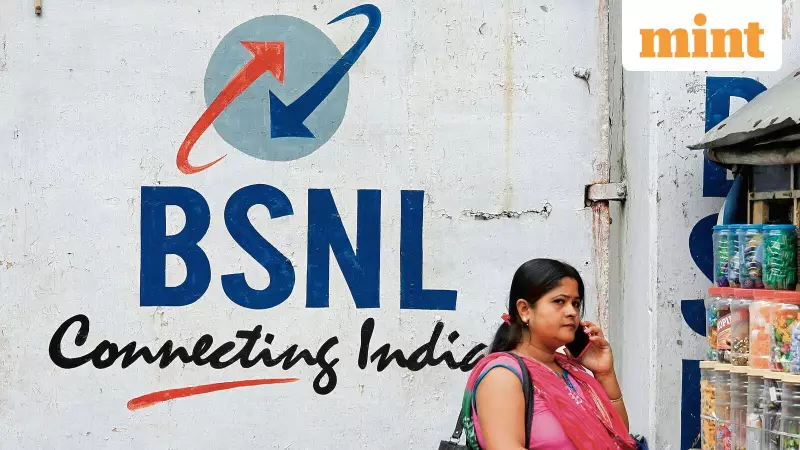
BSNL's Financial Setback Continues Despite Revenue Improvement
State-owned telecom operator Bharat Sanchar Nigam Ltd (BSNL) has returned to loss-making territory after briefly achieving profitability in the previous financial year. The company reported a net loss of ₹1,357 crore for the September quarter, marking a significant deterioration from the ₹1,048 crore loss recorded in the preceding June quarter.
This disappointing performance comes despite BSNL showing operational improvements, with revenue from operations climbing to ₹5,166.7 crore - representing a 2.8% sequential increase and a 6.6% year-on-year growth. The revenue boost was primarily driven by the company's long-awaited 4G services launch, which began generating meaningful returns.
What's Driving BSNL's Widening Losses?
The primary factors behind BSNL's increased losses stem from non-operational financial burdens. Depreciation and amortization expenses surged to ₹2,477 crore during the quarter, representing a massive 57% increase compared to the same period last year and a 14.5% rise from the previous quarter.

Communications Minister Jyotiraditya Scindia had previously warned about this financial impact, noting that BSNL's substantial ₹25,000 crore capital expenditure in FY25 would result in approximately ₹2,500 crore non-cash impact on the bottom line due to depreciation charges.
Additionally, the company faced higher finance costs, further pressuring its profitability despite improving operational metrics.
Silver Linings in BSNL's Performance
Despite the financial losses, several positive indicators emerged from BSNL's quarterly performance. The company's Average Revenue Per User (ARPU) showed impressive growth, increasing by 12% to ₹91 in the July-September period from ₹81 in the preceding quarter.
BSNL's subscriber base stood at 92.3 million mobile users as of end-September, with the company successfully converting over 20 million users to its newly launched 4G services. The nationwide 4G rollout, which finally commenced on 26 September using India-made technology across 92,000 towers, has been instrumental in driving both revenue growth and subscriber additions.
Another significant improvement came in employee cost management. Employee expenses, which previously constituted 43% of operational revenue, now account for 37% due to accounting changes that moved these costs to Capital Work-in-Progress during network expansion phases.
Market Position and Future Outlook
BSNL continues to operate as India's fourth-largest telecom operator, trailing significantly behind private sector rivals. Reliance Jio leads with 506 million subscribers, followed by Bharti Airtel (364 million) and Vodafone Idea (196.7 million).
The state-run operator has set an ambitious target to grow revenues by 20% in FY26 to ₹27,500 crore, building on the ₹23,000 crore revenue posted in FY25. For the first half of the current financial year, BSNL's operational revenue increased by 10.4% to ₹10,193 crore, while losses narrowed to ₹2,404.8 crore from ₹2,952 crore in the comparable period.
The enterprise services business showed mixed results, with revenue declining 10% quarter-on-quarter to ₹1,321.7 crore, though it managed a slight 0.9% year-on-year improvement.
BSNL's journey back to sustained profitability remains challenging, with the company needing to balance substantial capital investments against growing competitive pressures in the Indian telecom market.