Major US-Israel Military Operation Targets Iran Amid Calls for Regime Change
In a dramatic escalation of Middle East tensions, the United States and Israel launched a coordinated military attack on Iran on Saturday. The strikes targeted multiple locations across the country, including military bases, leadership compounds, and strategic facilities. US President Donald Trump made an extraordinary appeal to the Iranian public, urging them to "seize control of your destiny" by rising up against the Islamic leadership that has governed Iran since the 1979 revolution.
Widespread Strikes and Immediate Aftermath
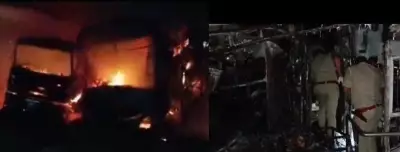
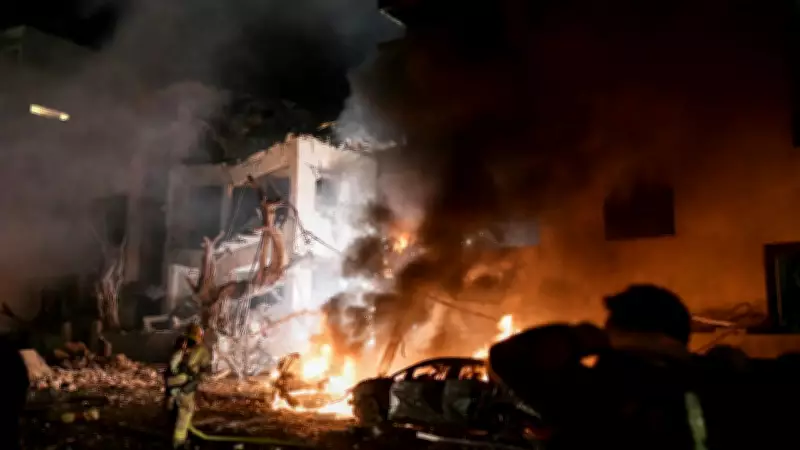
The attack began with waves of explosions shaking Tehran around 9am local time, creating chaos as residents rushed to seek shelter and locate loved ones. Satellite imagery revealed significant damage at the high-security compound of Iran's Supreme Leader Ali Khamenei, with visible plumes of smoke indicating direct hits. Israel's military confirmed targeting a gathering of senior Iranian officials in their opening strikes.
Iran responded by launching missiles and drones toward Israel and US military bases across the Middle East. Israel's defense systems intercepted "dozens" of incoming projectiles, with no serious injuries reported initially. Gulf states hosting US bases also reported successful countermeasures against the missile attacks.

Leadership Status and Casualties
The status of Iran's top leadership remains uncertain following the strikes. Iranian Foreign Minister Abbas Araghchi told NBC News that Supreme Leader Khamenei and President Masoud Pezeshkian were still alive "as far as I know." However, reports from The Times of Israel suggest that Defense Minister Amir Nasirzadeh and Islamic Revolutionary Guard Corps commander General Mohammad Pakpour were likely killed in the attacks.
General Pakpour had been appointed by Khamenei after his predecessor, Hossein Salami, was killed in an Israeli strike during the 12-day war in June 2025. There has been no official confirmation from Tehran regarding these casualties.
International Reactions and Diplomatic Fallout
Global leaders expressed deep concern about the potential for broader regional escalation. French President Emmanuel Macron called for an emergency UN Security Council meeting, stating that "the escalation underway is dangerous for everyone. It must stop." European Union leaders issued a joint statement calling for restraint and emphasizing the need to protect civilians and respect international law.
British Prime Minister Keir Starmer chaired an emergency committee meeting, with a government spokesperson stating: "We do not want to see further escalation into a wider regional conflict." Germany and other European nations held their own emergency security meetings while evacuating some diplomatic staff from the region.
Nuclear Concerns and International Law
Iran requested an urgent session of the International Atomic Energy Agency's board of governors to address "threats to safeguarded nuclear facilities." The UN's nuclear watchdog confirmed it was closely monitoring developments but had seen "no evidence of radiological impact" from the attacks.
In a letter to international bodies, Foreign Minister Araghchi declared that "all bases, facilities, and assets of the hostile forces in the region shall be regarded as legitimate military objectives." This statement raises concerns about potential retaliatory strikes against US and allied installations throughout the Middle East.
Political Divisions and Strategic Questions
The attack has created significant political divisions both domestically and internationally. Democrats in the United States criticized President Trump for taking military action without congressional authorization. White House spokesperson Karoline Leavitt countered that the administration had briefed several Republican and Democratic leaders in Congress prior to the attack.
European leaders face a dilemma: while they oppose Iran's nuclear program and human rights record, they are reluctant to endorse unilateral military action that could violate international law and trigger wider conflict. Similar concerns emerged following Trump's previous strikes on Iran in June 2025 and the arrest of Venezuela's Nicolas Maduro last month.

Broader Regional and Global Implications
Malaysian Prime Minister Anwar Ibrahim condemned the strikes, warning that the escalating conflict has pushed the Middle East to the "edge of catastrophe." Pakistan's Foreign Minister Ishaq Dar described the attacks as "unwarranted" during a phone call with his Iranian counterpart.
Russia's Foreign Ministry called the operation "a pre-planned and unprovoked act of armed aggression against a sovereign and independent UN member state," demanding an immediate halt to military actions and a return to diplomacy. The International Campaign to Abolish Nuclear Weapons condemned the strikes as "totally irresponsible" and warned they increase the danger of nuclear proliferation.
As tensions continue to mount with American warships deployed to the region, the international community watches anxiously for Iran's next moves and whether Trump's call for regime change will resonate with the Iranian public. The situation represents one of the most serious geopolitical crises in recent decades, with potential ramifications for global security, energy markets, and international diplomatic relations.