

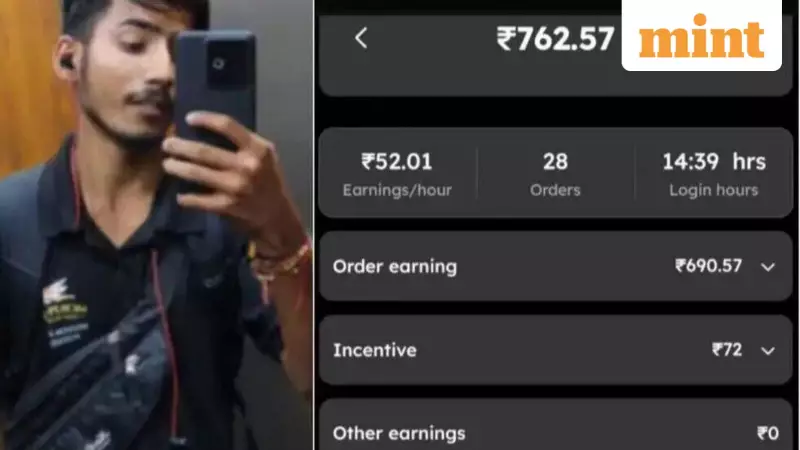
Aam Aadmi Party (AAP) Rajya Sabha MP Raghav Chadha ignited a crucial debate on Tuesday by spotlighting the severe economic hardships faced by workers in India's gig economy. The discussion was triggered by a social media post revealing the meagre earnings of a Blinkit delivery executive, who took home a paltry sum despite a gruelling day's work.
The Stark Reality Behind the Screenshot
Chadha shared a screenshot on platform X that laid bare the financial strain on delivery personnel. The image showed that the rider earned a total of ₹762.57 for completing 28 deliveries in a single day. To achieve this, the worker was on duty for nearly 15 hours, specifically 14 hours and 39 minutes. The breakdown of earnings included ₹690.57 from the deliveries themselves and a mere ₹72 as an incentive. This translates to an average hourly income of approximately ₹52, a figure far below dignified living standards.
"This is not a 'gig economy success story'," Chadha asserted in his post. "This is systemic exploitation hidden behind apps and algorithms." The parliamentarian emphasized that this single case reflects the daily ordeal of millions of gig workers across the country, who grapple with low pay, relentless performance targets, and a complete lack of job security or social safety nets. He also mentioned having recently raised these pressing concerns about gig worker conditions within Parliament.

Online Uproar and Economic Breakdown
The post catalyzed a widespread conversation online, with many users and experts dissecting the economics of such earnings. One investor provided a detailed analysis, highlighting the hidden costs that drastically reduce take-home pay. Assuming an average trip of 4km per delivery (including pick-up and drop), the rider would have traveled roughly 112km throughout the day.
With an average vehicle mileage of around 40km per litre, fuel costs alone could amount to nearly ₹300. When basic daily expenses like food are factored in—where a decent meal costs between ₹50 to ₹100—the rider spends an additional ₹150 to ₹300 daily. After accounting for these essential costs, the investor estimated the delivery worker might be left with a shockingly low ₹150 to ₹200 as actual savings, despite enduring over 100km of travel in heavy traffic and stressful conditions.
The investor noted that these personnel "do a fabulous job" and unequivocally deserve higher compensation, while also questioning if the Indian consumer's reluctance to pay adequately for delivery services is a root cause of the problem.
Calls for Reform and Systemic Change
The incident has forcefully redirected public attention to the working conditions within India's rapidly expanding, yet often exploitative, gig economy. This scrutiny comes even as quick-commerce platforms like Blinkit continue to report aggressive growth. Chadha issued a powerful statement, declaring, "India cannot build a digital economy on the backs of underpaid, overworked human beings." He called for urgent reforms, including the implementation of fair wages, humane working hours, and robust social security safeguards for all gig workers.
The public response on social media was one of solidarity and anger. One user wrote, "Delivery riders battle heavy traffic, extreme heat, rain, and pollution every day, risking their lives for 10-minute orders and low pay. Ban ultra-fast deliveries! Ensure fair pay & safety for gig workers." Another demanded legislative action: "Make it law: like in the USA and Canada, you must be paid at least minimum wage per day. How does this make sense?"
A third comment pointed to a larger systemic issue: "All that Gig economy workers get is peanuts. Consumers' cheap convenience is being burdened on millions of jobless youth who are forced to work cheaper than uneducated unskilled labour." This collective outcry underscores a growing demand for accountability and ethical practices in the nation's digital labour market.






