

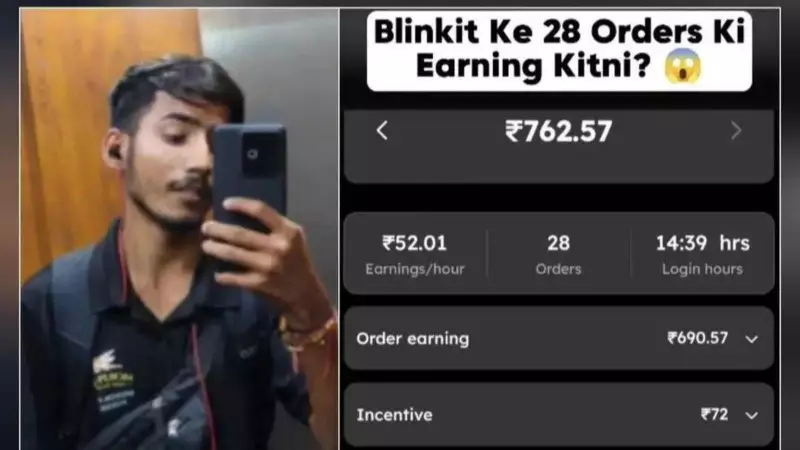
Aam Aadmi Party (AAP) Rajya Sabha MP Raghav Chadha has ignited a crucial debate on the working conditions within India's app-based gig economy. The politician spotlighted a case of alleged severe underpayment, where a delivery agent for the quick-commerce platform Blinkit earned a mere Rs 763 for a duty lasting over 14 hours and 39 minutes.
The Stark Details of a Delivery Agent's Earnings
On December 16, 2025, Chadha took to social media platform X to share a revealing screenshot. The image detailed the earnings breakdown of a Blinkit delivery executive. The agent completed 28 deliveries during the marathon shift. The core earnings from these orders amounted to Rs 690.57, with an additional Rs 72 coming from incentives, bringing the total daily income to Rs 762.57.
Accompanying the post, Chadha did not mince words. He stated that this was far from a success story of the modern gig economy. "This is systemic exploitation hidden behind apps & algorithms," he wrote. The MP further emphasized that he had raised this pressing issue on the floor of the Parliament, demanding accountability and reform.

Political and Public Outcry Over Worker Rights
Chadha elaborated on the broader implications, pointing to the precarious existence of millions of gig workers across the country. He highlighted the combination of low pay, crushing targets, absence of job security, and a lack of dignity that defines their daily reality. "This Blinkit case only confirms what millions live every day," he asserted.
The AAP leader issued a strong warning about the foundations of India's digital growth. He argued that the nation cannot build a prosperous digital economy "on the backs of underpaid, overworked human beings." For Chadha, the demands are clear and non-negotiable: fair wages, humane working hours, and comprehensive social security for all gig workers.
Netizens React: A Mirror to Ground Realities
The post resonated deeply with social media users, many of whom echoed and expanded upon Chadha's concerns. One user, Gourav Thakur, performed a grim calculation, noting that after deducting operational costs like petrol, food, and bike maintenance, the agent's effective daily earning would not exceed Rs 200. The user also warned of long-term health consequences and labeled the situation as peak exploitation, criticizing labour laws as ineffective and biased.
Another comment called for legislative action, drawing parallels with standards in countries like the USA and Canada. "Make it law: you must be paid at least minimum wage per day. How does this make sense?" the user questioned, underscoring the global benchmarks for worker protection that India's gig economy currently lacks.
This incident has thrust the working conditions in India's fast-growing quick-commerce and delivery sectors back into the national spotlight. It raises urgent questions about the sustainability of a business model that relies heavily on flexible labour while often bypassing traditional safeguards and benefits, prompting calls for regulatory intervention and corporate responsibility.






