

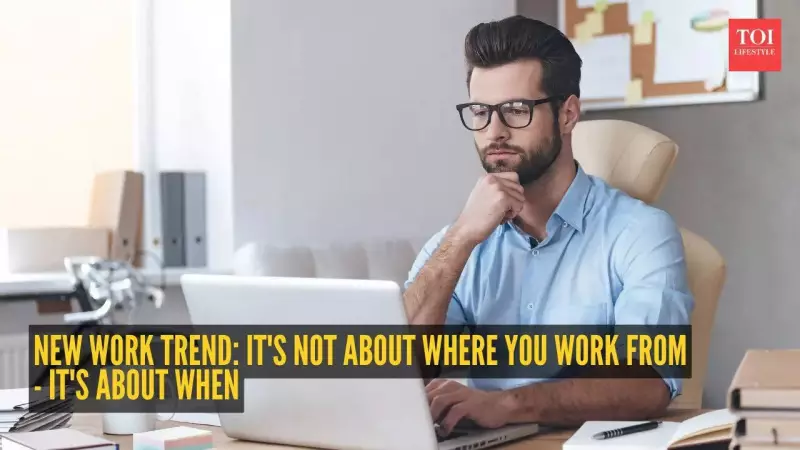
The great workplace debate has undergone a fundamental transformation. For years following the COVID-19 pandemic, the central conflict revolved around the physical location of work—the office versus the home. However, fresh data from 2025 indicates that the battleground has decisively shifted. The new frontier in the employer-employee relationship is not about where work gets done, but when.
The New Priority: Autonomy Over Time, Not Just Space
According to the JLL Workforce Preference Barometer 2025, which surveyed 8,700 workers across 31 countries, a hybrid work structure is now widely accepted. The report finds that 66% of global workers are comfortable with this model. Yet, beneath this surface-level agreement, a new tension brews. Both companies and their staff are now vying for control over the schedule. The data underscores a significant change in employee priorities: for a growing majority, achieving a work-life balance is now more critical than securing a high salary.
This sentiment is held by 65% of employees in 2025, a notable increase from 59% in 2022. While competitive pay remains a powerful lure for job switchers, it is the autonomy over one's schedule that proves crucial for long-term talent retention. Employees are no longer just negotiating for desk days at home; they are demanding agency over their daily and weekly rhythms.

Coffee Badging, Burnout, and the Failure of Rigid Models
The phenomenon of "Coffee Badging"—where employees swipe into the office only to grab a coffee and then leave to work remotely—is a telling clue to this deeper issue. JLL's data, while not naming the trend explicitly, points directly to it: 57% of workers believe flexible hours significantly improve their quality of life, but a disconnect exists as only 49% actually have access to such flexibility.
This gap contributes directly to burnout, which the report identifies as a silent killer of employee retention. A staggering 40% of office employees report feeling overwhelmed. Among those contemplating leaving their jobs, 57% cite exhaustion as the primary reason. The standard hybrid model is failing a significant portion of the workforce, particularly caregivers. 42% of employees who are primary caregivers at home state they require short-notice leave, but feel their employers fail to understand this need.
Gen Z's Mindset and the Demand for Tailored Solutions
The generational perspective adds another layer. Management expert Suzy Welch highlighted on the Masters of Scale podcast that Gen Z workers have watched previous generations grind tirelessly, only to face layoffs despite their loyalty. This experience has led them to question the sacrifice of personal time, making them strong proponents of work-life integration.
The JLL survey concludes that beyond salary and basic flexibility, employees now deeply crave visibility, a sense of being valued, and opportunities for future-ready skill development. One-third of employees might leave for better professional development, and an equal number are rethinking the role of work in their lives entirely. Breaching the new psychological contract comes at a cost—employees demand commuting stipends or hours back as compensation.
The solution, as emerging from the data, is tailored flexibility. The one-size-fits-all approach is obsolete. Forward-thinking companies are moving towards asynchronous work models, transforming offices into support hubs with extended access, smart lighting, and bookable collaboration spaces—not mandated time prisons. The future of work hinges on ditching rigid rules and embracing individual autonomy over working hours, recognising that productivity and retention are won by respecting an employee's time, not just their presence.






