

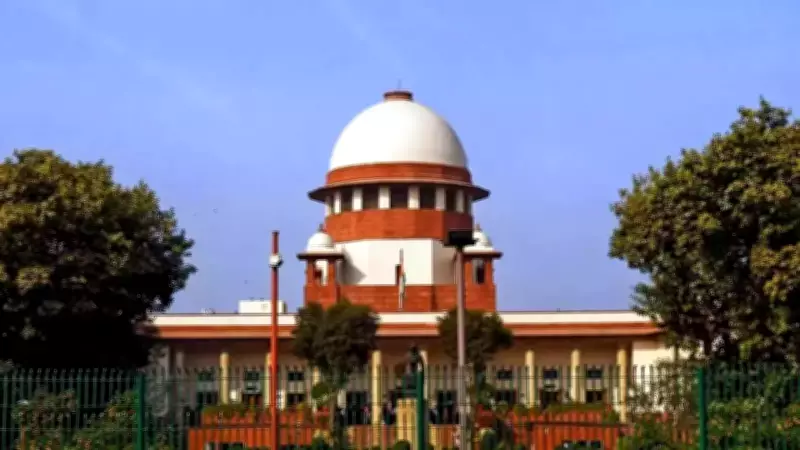
Supreme Court Directs Centre and RBI to Clarify Policy on Deceased Account Disclosure
The Supreme Court of India has taken a significant step by demanding an explanation from the Central Government and the Reserve Bank of India (RBI) regarding the non-disclosure of bank account details belonging to deceased individuals to their legal heirs. In a hearing on Tuesday, the apex court emphasized the necessity for the government to develop a comprehensive policy framework to tackle this pressing issue.
Court Questions Lack of Transparency for Heirs
A bench comprising Justices Vikram Nath and Sandeep Mehta was presiding over a public interest litigation (PIL) filed by journalist Sucheta Dalal. The petition calls for the establishment of a mechanism to inform legal heirs about unclaimed deposits lying dormant in bank accounts of deceased depositors. During the proceedings, the bench highlighted practical challenges faced by heirs, such as when a person holds multiple accounts across different countries without proper Know Your Customer (KYC) documentation.
The bench remarked, "Suppose a man has got 10 different accounts in different countries, he dies intestate, how do his heirs get the details? He may not have done the KYC... It’s not a question of policy; we are not saying that the transfer is illegal. What we are saying is, what is wrong if we give the information to the legal heirs? You will have to come out with some policy."

Advocate Prashant Bhushan's Submissions
Representing the petitioner, advocate Prashant Bhushan argued that the plea seeks directions to make details of such unclaimed accounts publicly accessible. He pointed out that the RBI had previously recommended the creation of a "Centralised and Searchable Database" to assist individuals in tracing bank accounts of their deceased parents, underscoring the urgency of this initiative.
Government's Response and Current Framework
Additional Solicitor General N Venkataraman, appearing for the Centre, stated that genuine heirs who approach authorities are refunded from the Depositor Education and Awareness Fund. This fund, established by the RBI in 2014, holds unclaimed deposits transferred from commercial and co-operative banks. However, the petitioner's data reveals a staggering increase in the fund's balance, raising concerns about the efficiency of the current system.
- The Depositors’ Education and Awareness Fund had Rs 39,264.25 crore as of March 2021.
- This marks a rise from Rs 33,114 crore in March 2020 and Rs 18,381 crore at the end of March 2019.
Court's Directives and Future Proceedings
The Supreme Court has directed the Centre and the RBI to file fresh affidavits on this matter, with the next hearing scheduled for May 5. Previously, the court had also requested the finance ministry to respond to the PIL, which advocates for a centralised database to provide information on various assets held by deceased persons, including:
- Bank accounts
- Insurance policies
- Deposits
- Post office funds
The petition further urges the court to mandate a streamlined procedure to reduce litigation faced by legal heirs when claiming these assets. It argues for an RBI-controlled centralised online database that would include key details of deceased account holders, such as their name, address, and the last transaction date, to enhance transparency and accessibility.
This development underscores a critical need for regulatory reforms to protect the interests of legal heirs and ensure that unclaimed deposits do not remain inaccessible due to bureaucratic hurdles.






