Iran Reimposes Military Restrictions on Strait of Hormuz Following US Blockade Decision
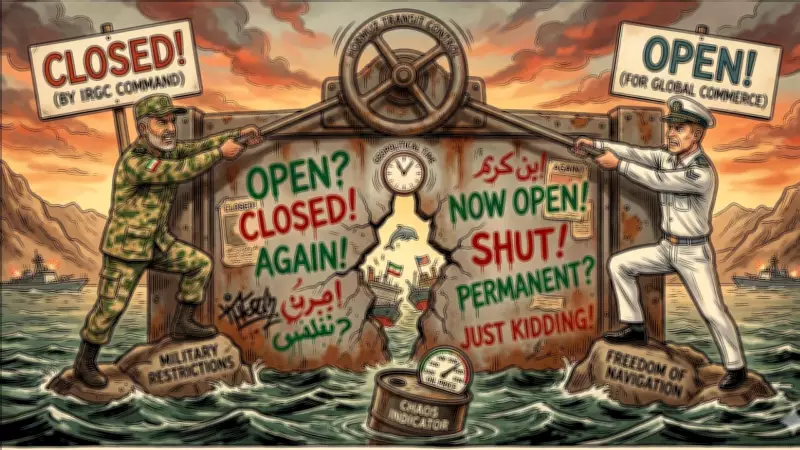
Iran has announced the reimposition of strict military controls over the Strait of Hormuz, a critical global oil chokepoint, after the United States declined to end its naval blockade targeting Iranian-linked vessels. The Islamic Revolutionary Guard Corps (IRGC) Naval Command declared that it will take firm action against what it termed "bad-faith violations" by the US, asserting that the strait will remain under tight military supervision until all threats to ships heading to and from Iranian ports are eliminated.
Iran's Statement and Accusations Against the US
In a statement, Iran's joint military command accused the US of violating agreements, stating, "control of the Strait of Hormuz has returned to its previous state under strict management and control of the armed forces." It further warned that these restrictions will persist as long as the US blockade on Iranian ships remains in effect. This announcement came in response to US President Donald Trump's declaration on Friday that the naval blockade would continue regardless of Iran's actions to open the strait.
Trump posted on Truth Social, "The Strait of Hormuz is completely open and ready for business and full passage, but the naval blockade will remain in full force and effect as it pertains to Iran, only, until such time as our transaction with Iran is 100% complete. This process should go very quickly in that most of the points are already negotiated."

Background: Recent Developments and Ceasefire Link
On Friday, Iran had initially announced the full reopening of the Strait of Hormuz to commercial vessels, linking it to a 10-day truce between Israel and the Iranian-backed Hezbollah militant group in Lebanon. Iran's foreign minister, Abbas Araghchi, declared on X, "In line with the ceasefire in Lebanon, the passage for all commercial vessels through Strait of Hormuz is declared completely open for the remaining period of ceasefire, on the coordinated route as already announced by Ports and Maritime Organisation of the Islamic Rep. of Iran."
However, this reopening was short-lived. Ebrahim Azizi, head of Iran's National Security Committee, updated on the situation, stating that according to a new maritime system, only commercial vessels with authorization from the IRGC Navy after paying tolls are permitted to navigate designated routes. He emphasized, "As long as the traffic of vessels to and from Iran is threatened by the US, the status of the Strait of Hormuz will be as before, more restricted."
Iranian Media Reports and Military Supervision
Iranian state media reported statements from military spokespersons attributing the situation to "breach of trust" by the United States. They confirmed full supervision by the Iranian navy over ship passages, adding that such passage is considered null and void if the US naval blockade continues. The statement criticized the US for "repeated breaches of trust" and engaging in "piracy and maritime theft under the so-called title of blockade." It concluded that control of the strait remains "under the strict management and control of the armed forces" until the US ends its blockade.
Global Impact and Oil Supply Concerns
Notably, approximately one-fifth of the world's oil passes through the Strait of Hormuz. Further restrictions could squeeze already constrained supply, potentially driving oil prices higher once again, impacting global markets and economies.
Timeline of the Hormuz Crisis
February 28: Iran declared the Strait of Hormuz closure following "Operation Epic Fury" by the US and Israel and the assassination of Supreme Leader Ali Khamenei. The IRGC laid sea mines and targeted merchant vessels.
Early March: Shipping traffic came to a halt.
March 7: Tehran formalized the closure, barring vessels from "hostile nations," including the US, Israel, and allies, leading to soaring global oil prices.
March 9: US President Donald Trump claimed the strait was open, though it remained under Iranian control.
March 15: Iran introduced a toll system, charging up to $2 million per vessel, with exemptions for countries like India, China, and Russia.

April 6: Trump issued an ultimatum demanding Iran reopen the strait or face strikes on its energy infrastructure.
April 8: A fragile ceasefire was brokered by Pakistan, but talks collapsed by April 11–12 as Iran retained strict control and continued tolls.
April 13: Washington announced a naval blockade targeting ships to and from Iranian ports, exempting others.
April 17: Iran announced reopening linked to a 10-day Israel-Lebanon truce.
April 18: Tehran reversed course, citing the ongoing US naval blockade, with parliament scrapping the reopening agreement and military stating control had "reverted to its previous state," effectively re-closing the strait.