
QatarEnergy Reduces Petrol, Diesel Prices for January 2026
QatarEnergy slashes fuel prices for January 2026, offering relief to consumers. Premium petrol now QR 1.95, Super & Diesel at QR 2 per litre. Read the full details.

QatarEnergy slashes fuel prices for January 2026, offering relief to consumers. Premium petrol now QR 1.95, Super & Diesel at QR 2 per litre. Read the full details.

A landmark US-India partnership aims to develop thorium as a nuclear fuel, leveraging India's vast reserves. This move accelerates India's three-stage nuclear program and enhances energy security. Essential reading for UPSC aspirants.

NTPC Ltd is forging international collaborations with Rosatom, EDF & Holtec to achieve 30 GW of nuclear power by 2047, diversifying India's energy mix with SMRs and new fuel tech.

In a major price revision, commercial LPG rates surge by Rs 111 per cylinder, while aviation fuel (ATF) sees a steep 7% reduction. Get the latest updates on fuel costs impacting businesses and airlines.

Essential guide for UPSC aspirants on new labour codes, India's thorium energy plans, and the PRAGATI platform. Learn key facts, relevance for Prelims & Mains, and previous year questions.

Aviation turbine fuel price reduced sharply in Delhi after three hikes. Commercial LPG cylinder price up by ₹111. Read the latest fuel price revisions and their impact.

India and Pakistan exchanged lists of nuclear installations on New Year's Day under a bilateral agreement. The MEA confirmed the annual exchange aimed at preventing attacks. Read the full report.

The Indian Sugar Mills Association urges the GST Council to lower taxes on flex-fuel vehicles, a crucial step for India's ethanol blending and energy security goals. Read more.

India and Pakistan exchanged lists of nuclear installations under a 1988 pact, a key confidence-building measure. This marks the 35th uninterrupted annual exchange since 1992.

The UAE fuel price committee announced a significant drop in petrol and diesel rates for January 2026, reversing December's hike. Get the latest price list and analysis.

The Indian government invites public comments on draft rules for four new Labour Codes, set for April 2026 implementation. Also, Supreme Court's 2026 docket and gig worker strikes in focus.
NTPC to invest in US-based Clean Core Thorium Energy to develop advanced thorium-based nuclear fuel for India's reactors, boosting energy security after the SHANTI Act 2025. Read more.
Top nuclear scientist Dr Anil Kakodkar discusses SMR challenges, PHWR scalability, and how India can fast-track its thorium program. Key insights on the new SHANTI Act and private sector role.

India's SHANTI Act ends state monopoly on nuclear energy, inviting private investment. Learn about the liability reforms, pricing debates, and the road ahead for clean energy goals. Read more.
India's petrol pump network has doubled since 2015, crossing 100,000 outlets. State-run firms lead the expansion, boosting rural and highway access. Discover the details of this massive growth.

Japan's Niigata assembly debates restarting the Kashiwazaki-Kariwa nuclear plant, the world's largest. A decision by Dec 22 could impact global energy trends. Read the full story.

The US welcomes India's SHANTI Bill 2025, calling it a step towards stronger energy security ties and opening civil nuclear sector to private players. Read more.

The SHANTI Bill sparks debate on private sector involvement in nuclear energy. Can smart regulation ensure safety? Explore the implications for India's regional energy security.

President Droupadi Murmu has given assent to the SHANTI bill, a landmark law allowing private companies to build and operate nuclear power plants in India. Read how this reforms the energy sector.

President Droupadi Murmu grants assent to the Shanti Bill, enabling private sector participation in India's nuclear energy sector. A landmark move for energy security and clean power.

Manipur faces a severe fuel crisis as petrol pump dealers warn of a statewide shutdown over bomb threats and extortion. Read about the urgent security concerns and potential impact.
India's new SHANTI Bill allows private investment in nuclear energy and limits supplier liability for accidents. Learn about the policy shift and its implications for India's energy future.
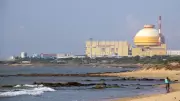
India's Parliament passes the landmark SHANTI Bill 2025, opening the civil nuclear sector to private and foreign investment for the first time, aiming for 100 GW nuclear capacity by 2047. Read the full analysis.
India's Lok Sabha approves the SHANTI Bill 2025, enabling private sector participation in civil nuclear energy to boost capacity and modernize safety regulations. Read the key changes.

India's proposed Shanti Bill 2025 allows private sector into nuclear energy but leaves critical accident liability questions unanswered. Read the full analysis of the bill's implications.

The proposed Shanti Bill 2025 aims to amend India's nuclear liability law, boosting foreign investment and domestic manufacturing for a clean energy future. Read the full analysis.

India's new SHANTI nuclear policy marks a significant liberalisation, aiming to boost energy capacity. However, experts raise credible concerns over relaxed liability norms and regulatory oversight. Read the full analysis.

Delhi petrol pump dealers highlight legal risks and outdated tech ahead of 'No PUC, No Fuel' rule. They seek safeguards and NCR-wide rollout for effectiveness. Read more.

Lok Sabha passes SHANTI Bill 2025, allowing private firms to build nuclear power plants and removing supplier liability. Aims for 100 GW nuclear capacity by 2047. Read more.

The Lok Sabha has passed a landmark bill allowing private sector participation in India's nuclear energy sector. Union Minister Jitendra Singh hails it as a milestone for national development. Read more.