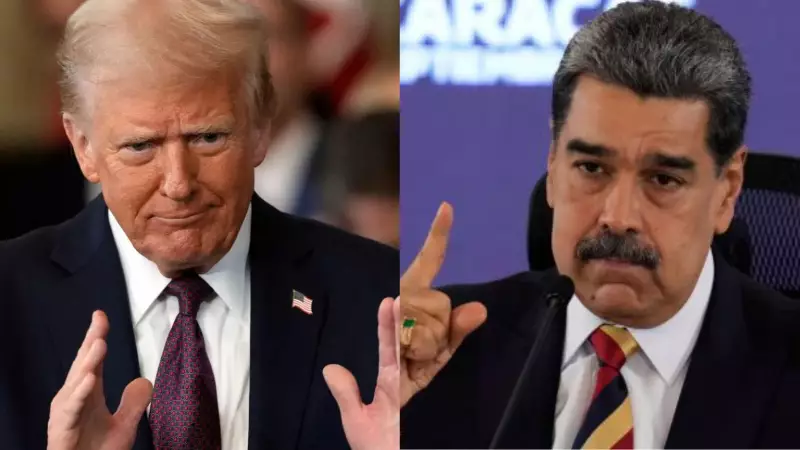
Venezuela has issued a fierce condemnation of former US President Donald Trump, branding his recent call for a "total and complete" naval blockade of the South American nation as an act of aggression and a violation of international law. The sharp rebuke came directly from the Venezuelan government, highlighting a significant escalation in the long-standing tensions between Caracas and Washington.
Trump's Provocative Statement and Venezuela's Swift Response
The controversy ignited when Donald Trump, during a campaign speech, declared his intention to impose a comprehensive maritime blockade against Venezuela if he were to return to the White House. He framed the drastic measure as a necessary step to exert maximum pressure on the government of President Nicolas Maduro.
In an official statement released on a social media platform, the Venezuelan government denounced Trump's proposal in the strongest possible terms. Authorities labeled the idea a "blatant violation" of the United Nations Charter and fundamental principles of international law. The statement accused Trump of openly advocating for criminal actions that would severely impact global peace and the well-being of the Venezuelan people.

The Venezuelan response emphasized that such a blockade would constitute an act of war and economic terrorism. Officials argued it would illegally restrict the nation's freedom of maritime commerce and directly threaten the livelihoods of innocent civilians by blocking essential imports of food, medicine, and other humanitarian goods.
The Backdrop of Escalating Sanctions
This fiery exchange is not an isolated incident but the latest chapter in years of hostile relations. The United States, under multiple administrations, has maintained a stringent regime of economic sanctions and diplomatic pressure aimed at ousting President Nicolas Maduro. Washington, along with dozens of other countries, recognizes opposition figure Juan Guaido as Venezuela's legitimate interim leader.
The sanctions, which have targeted Venezuela's crucial oil industry, state-owned companies, and key government figures, have significantly crippled the nation's economy. They have contributed to a profound humanitarian crisis marked by hyperinflation, severe shortages, and mass migration. Trump's suggestion of a naval blockade represents a potential hardening of this approach, moving from financial and diplomatic measures to a direct physical and military constraint on the country's trade.
Venezuela possesses the world's largest proven oil reserves, and its economy is heavily dependent on petroleum exports. A successful naval blockade would effectively cut off this lifeline, plunging the country into even deeper economic isolation and potentially causing catastrophic shortages of fuel and other vital commodities domestically.
Regional Implications and the Path Forward
The prospect of a US naval blockade has sent ripples across Latin America and the Caribbean. Many nations in the region, regardless of their stance on the Maduro government, have historically opposed unilateral coercive measures and foreign intervention, upholding the principle of national sovereignty. Trump's statement is likely to reignite debates about US foreign policy in the hemisphere and the use of extreme economic weapons.
For the Venezuelan government, this episode serves as a powerful rallying cry. It allows officials to frame their struggle as one of national defense against an imperialist power, potentially consolidating domestic support. The condemnation also serves to draw international attention and possibly garner sympathy from other nations critical of US hegemony.
As the 2024 US presidential election cycle heats up, foreign policy towards Venezuela remains a contentious topic. While Trump's comments represent a campaign promise, they underscore the volatile and unpredictable nature of the bilateral relationship. The current Biden administration has continued a policy of sanctions and support for the opposition, but has also engaged in limited diplomatic contacts, including a recent prisoner swap. The threat of a full blockade, however, marks a dramatic escalation in rhetoric that could shape the geopolitical landscape for years to come.

Ultimately, Venezuela's denunciation of Trump's order highlights the fragile state of international norms and the severe human cost of geopolitical confrontations. The situation continues to evolve, with the Venezuelan people caught in the crossfire of a prolonged political and economic standoff.